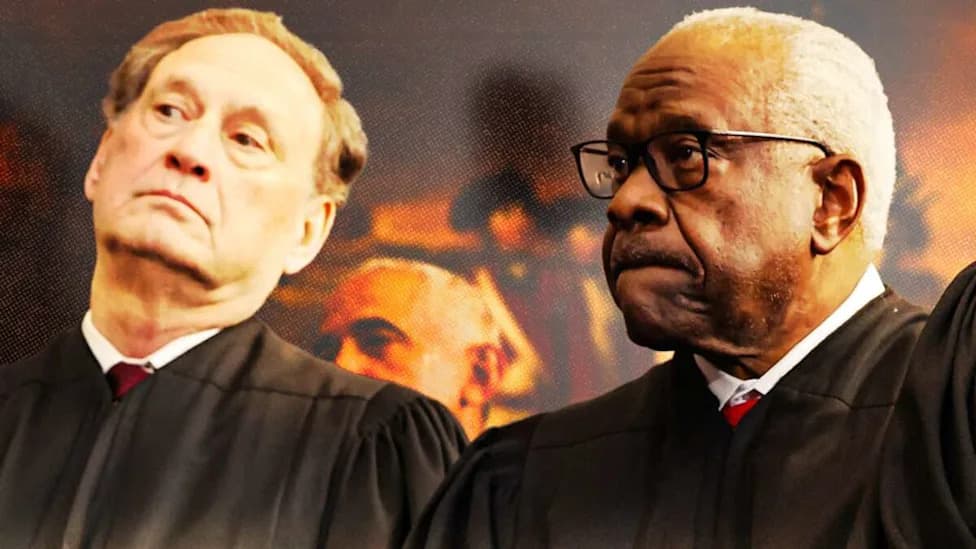
The Supreme Court’s majority held that President Trump lacked the authority he had claimed under the International Emergency Economic Powers Act (IEEPA). Three justices (Kavanaugh, Thomas and Alito) dissented, suggesting similar tariffs might be authorized under other statutes, but that view is not part of the majority ruling. Chief Justice Roberts made clear the Court would not speculate about hypothetical alternative authorities, noting those statutes include procedural limits and requirements. As a result, the Court did not preapprove any “backup” tariff plan, which remains the subject of separate litigation.
No — Supreme Court Didn’t Give Trump an “Absolute Right” to Impose Tariffs by Other Means
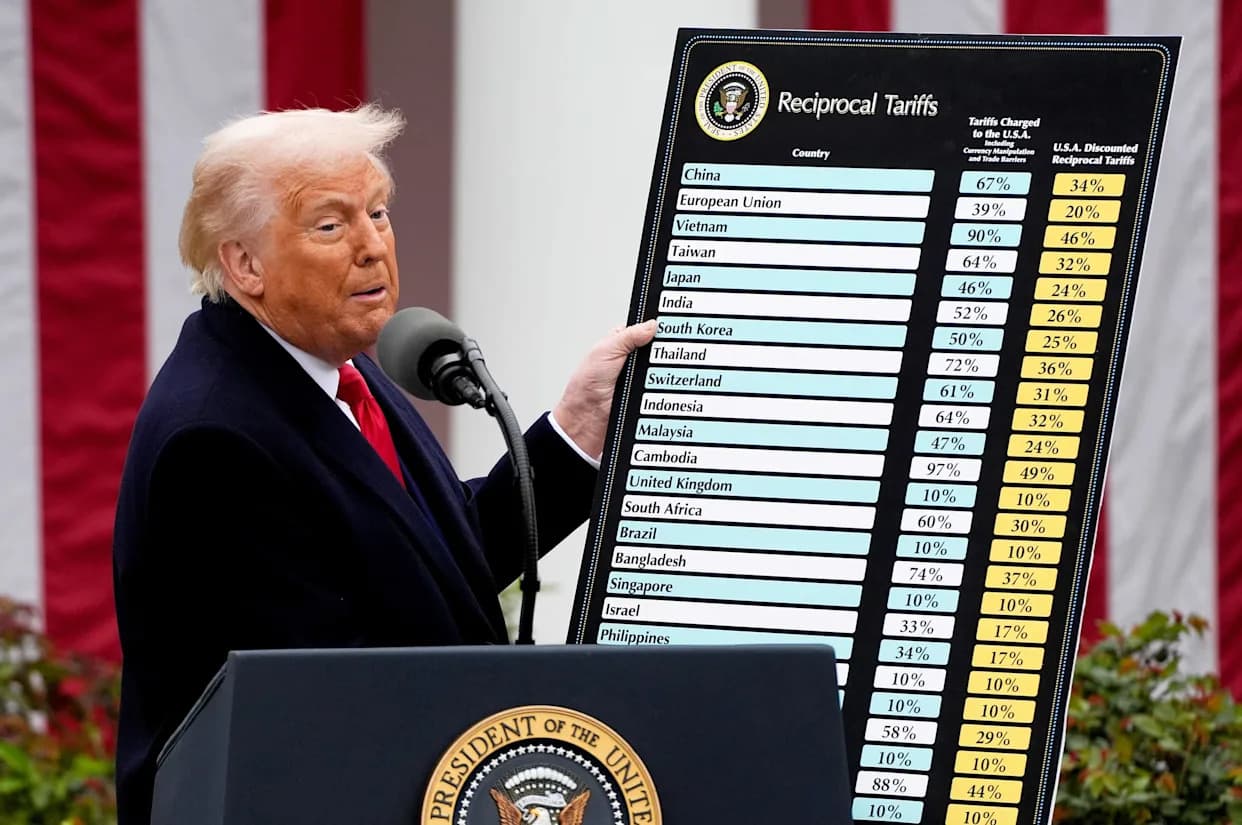
President Donald Trump holds a “reciprocal tariffs” poster during a tariff announcement in the Rose Garden of the White House on April 2, 2025.(Kent Nishimura / Bloomberg via Getty Images)
President Donald Trump has claimed — inaccurately — that the Supreme Court’s recent ruling on tariffs effectively confirmed he has an “absolute right to charge TARIFFS in another form.” The Court’s decision instead centered on whether the president had authority under the International Emergency Economic Powers Act (IEEPA). The majority concluded he did not.
What the Court actually said
Justice Brett Kavanaugh, joined by Justices Clarence Thomas and Samuel Alito, wrote a dissent observing that the Court’s ruling on IEEPA might not prevent presidents from imposing similar tariffs under other statutes. That view, however, represents only the three dissenting justices and is not binding precedent.
Chief Justice John Roberts, writing for the majority, explicitly refused to decide the scope of those alternative statutory authorities. In a footnote he noted that Kavanaugh’s dissent “surmises that the President could impose ‘most if not all’ of the tariffs at issue under statutes other than IEEPA,” but added that those other statutes contain “various combinations of procedural prerequisites, required agency determinations, and limits on the duration, amount, and scope of the tariffs they authorize.” The majority therefore declined to speculate about hypothetical cases not before the Court.
What this means now
Contrary to the president’s social-media posts, the Supreme Court did not preauthorize a fallback tariff plan. Whether similar tariffs can be lawfully imposed under other statutes is the subject of separate, ongoing litigation and could ultimately be resolved by courts — possibly by the Supreme Court in a future case — but that outcome was not predetermined by the recent IEEPA decision.
Bottom line: The decision held Trump lacked authority under IEEPA; the suggestion that he has an “absolute” backup power comes only from a three-justice dissent, and the majority expressly declined to decide the issue.
Help us improve.