The classic mirror test marks an animal and checks whether it inspects the mark using a reflection; only a few species historically passed. Recent studies show bluestreak cleaner wrasse — small reef fish that remove parasites from other fish — can use mirrors to find and scrape marks on their bodies. While some interpret this as self-related awareness, others argue it may reflect learned associations between visual feedback and sensations. The findings challenge assumptions about cognitive limits and stress the need for species-appropriate tests.
A Tiny Fish Sparks Big Questions: Cleaner Wrasse Use Mirrors to Find Marks
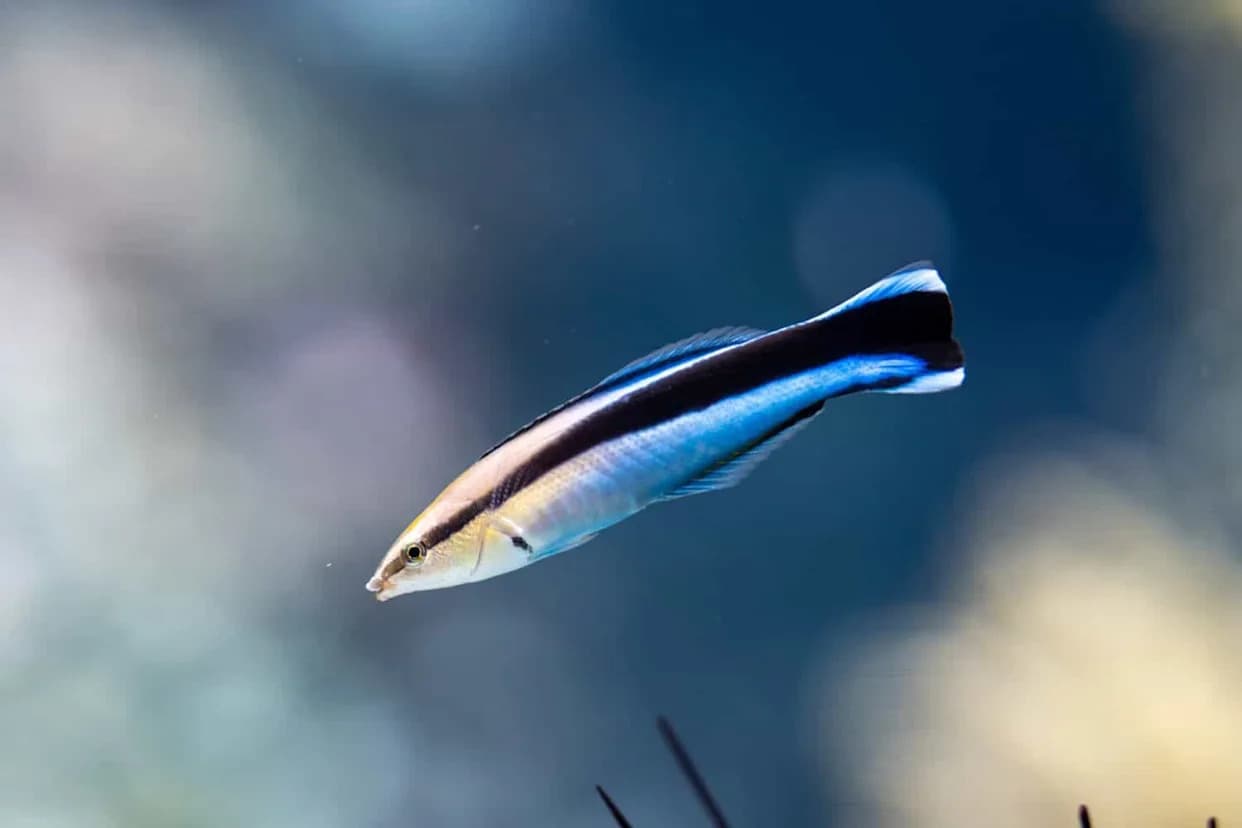
Bluestreak Cleaner Wrasse (Labroides Dimidiatus) Fish Marine Life© jinhong.ljh/Shutterstock.com
New experiments with the bluestreak cleaner wrasse — a small reef fish that removes parasites from other fish — have reignited debate about what the classic mirror test actually measures. Researchers found these fish can use a mirror to locate and scrape at brown marks placed on their bodies, behavior that stopped when the mirror was removed. The results challenge assumptions about which animals can exhibit mirror-guided, mark-directed behavior and how scientists interpret such findings.
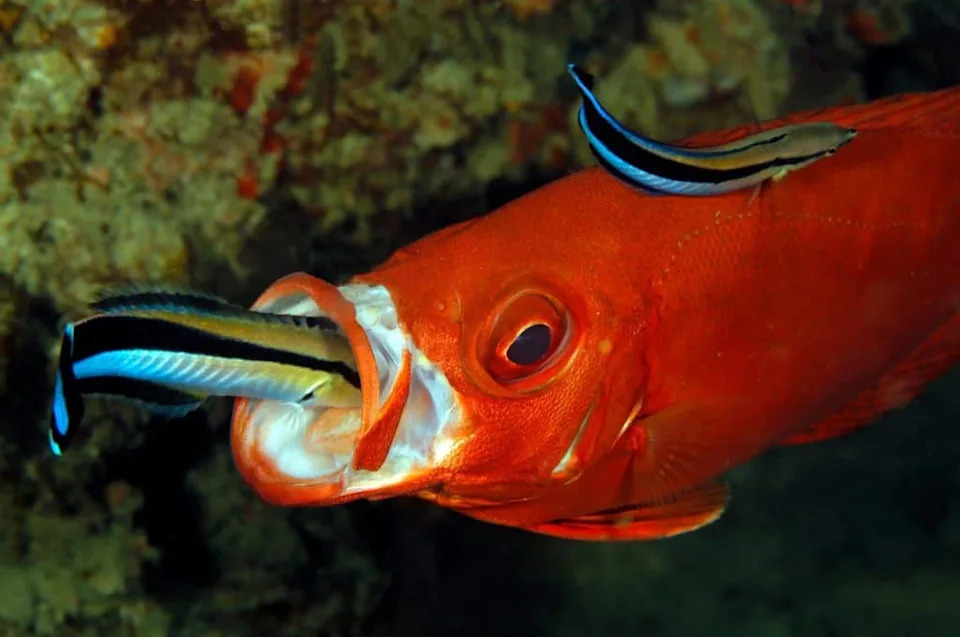
Other fish tolerate the bluestreak cleaner wrasse, removing parasites from their bodies—even from inside their mouths.©Daniel Lamborn/Shutterstock.com(Daniel Lamborn/Shutterstock.com)
What Was the Mirror Test?
Psychologist Gordon Gallup Jr. developed the mirror self-recognition test in the early 1970s. In the standard protocol, an animal is familiarized with a mirror and then given a visible mark on a body part it cannot see directly. If the animal inspects, touches, or otherwise investigates that mark after seeing its reflection, researchers consider the result evidence that it used the mirror to guide behavior toward its own body.
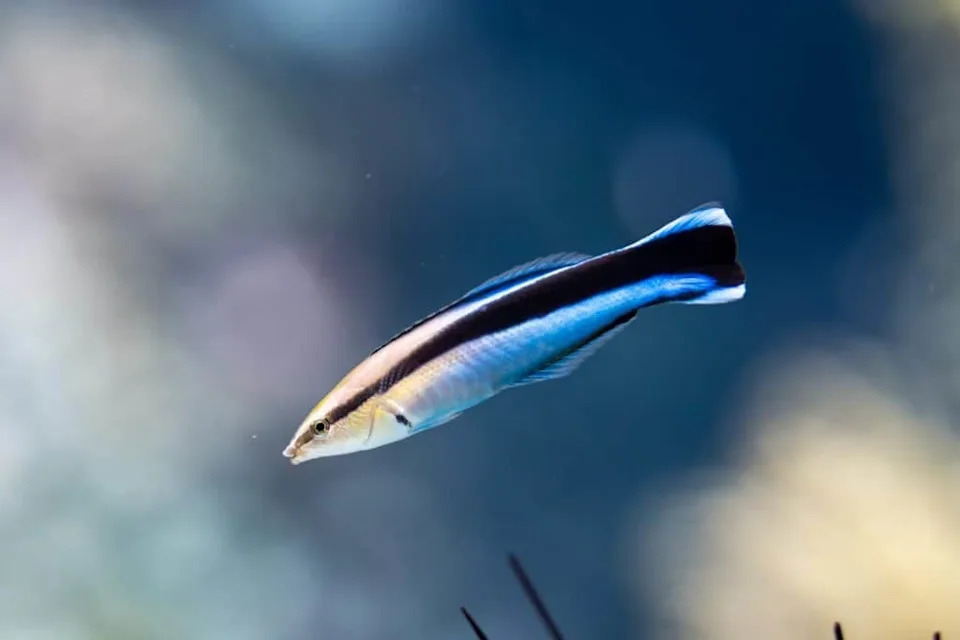
In experiments, this small fish was able to use a mirror to notice a brown mark placed on its own body.©jinhong.ljh/Shutterstock.com(jinhong.ljh/Shutterstock.com)
Cleaner Wrasse Experiments
When mirrors were introduced into tanks with bluestreak cleaner wrasse, fish initially responded aggressively, treating reflections as rivals. With repeated exposure, their behavior shifted from aggression to inspection: they adopted unusual postures and movements in front of the mirror as if checking their appearance.
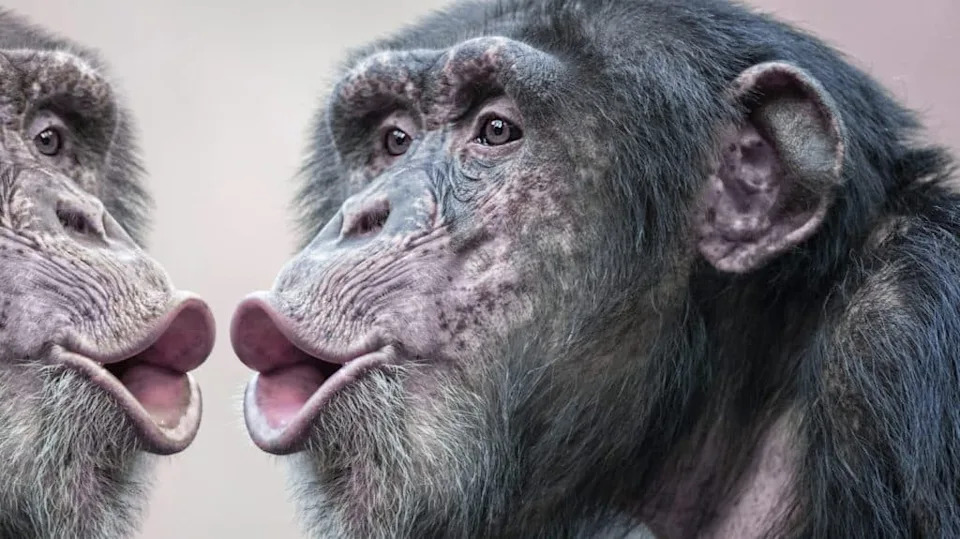
Chimpanzees are one of only a handful of animals that have passed the mirror test.©Umesh Jayasekara/Shutterstock.com(Umesh Jayasekara/Shutterstock.com)
Researchers then applied a small brown mark to the fish’s throat that resembled a parasite. With the mirror present, some individuals scraped the marked area against the substrate — a scraping motion identical to their parasite-removal behavior during cleaning interactions. When the mirror was removed or when the mark was invisible, scraping largely stopped.
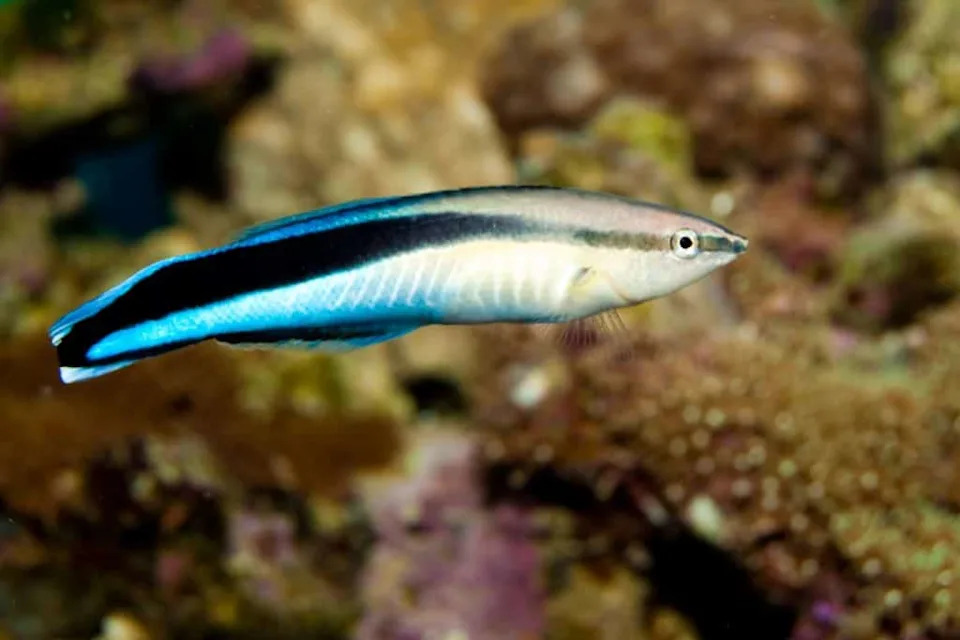
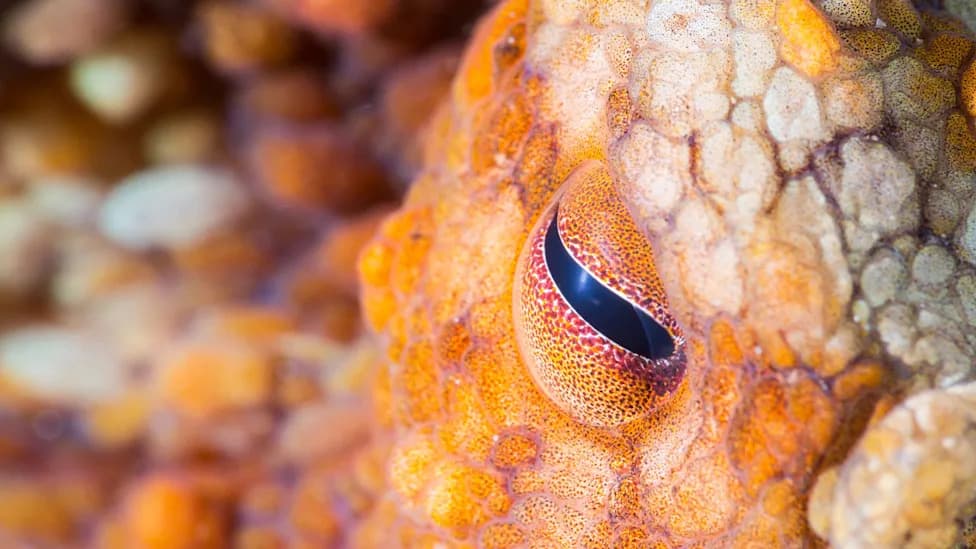
The wrasse’s environment likely influences its ability to process visual details.©iliuta goean/Shutterstock.com(iliuta goean/Shutterstock.com)
Ruling Out Alternative Explanations
Critics argued the wrasse might simply see the reflection as another fish carrying a parasite and trigger a cleaning response rather than act with self-directed awareness. To address this, scientists reversed the usual sequence: they applied the mark before exposing fish to a mirror so the animals felt the mark but could not see it. When the mirror was later introduced, many individuals began scraping the marked spot within about an hour — much faster than in earlier tests. Some fish also displayed contingency-testing behaviors, such as moving to see whether the reflection matched their actions or dropping food to watch the image respond.
What Do These Results Mean?
Passing the mirror test does not automatically imply humanlike self-awareness. The experiment demonstrates that an animal can use visual feedback from a reflection to guide behavior toward its own body. Explanations range from learned associations between visual cues and bodily sensations to a more sophisticated representation of the body that allows comparison of sight and touch. The wrasse results are compatible with both accounts, keeping the debate open.
Broader Implications
The cleaner wrasse example highlights two important points: first, cognitive abilities can arise in animals with very different brain structures and ecologies; second, standard tests developed for primates may miss species-specific forms of intelligence. Cleaner wrasses’ ecology — precise visual inspection of other fish and rapid decision-making while cleaning — may favor fine visual discrimination and flexible behavior, which can produce mirror-guided mark-directed responses.
Ethics and Experimental Design
Evidence of advanced cognitive skills in fish raises animal-welfare considerations. Cleaner wrasse are collected for aquaria and used in fish farms, and better understanding of their behavior may guide improvements in housing and care. The findings also reinforce the need to design experiments that fit a species’ sensory world and natural behaviors rather than applying one test to all animals without modification.
Bottom line: Cleaner wrasse can use mirrors to find and scrape marks that resemble parasites, a behavior that complicates how scientists interpret the mirror test and encourages species-appropriate approaches to studying animal cognition.
Help us improve.