New research published in Scientific Advances shows that bonobo behavior is more complex than the long-standing label "peaceful primate" suggests. A Utrecht University study of 22 zoo-housed apes finds that female-led social hierarchies and richer, more evenly distributed resources south of the Congo River reduce visible territorial aggression among bonobos—but do not eliminate aggressive behavior. The study underscores how social structure and ecology, rather than an absolute lack of violence, shape primate aggression.
Bonobos Aren’t Always Peaceful: New Study Shows Aggression Is Shaped By Social Structure And Ecology
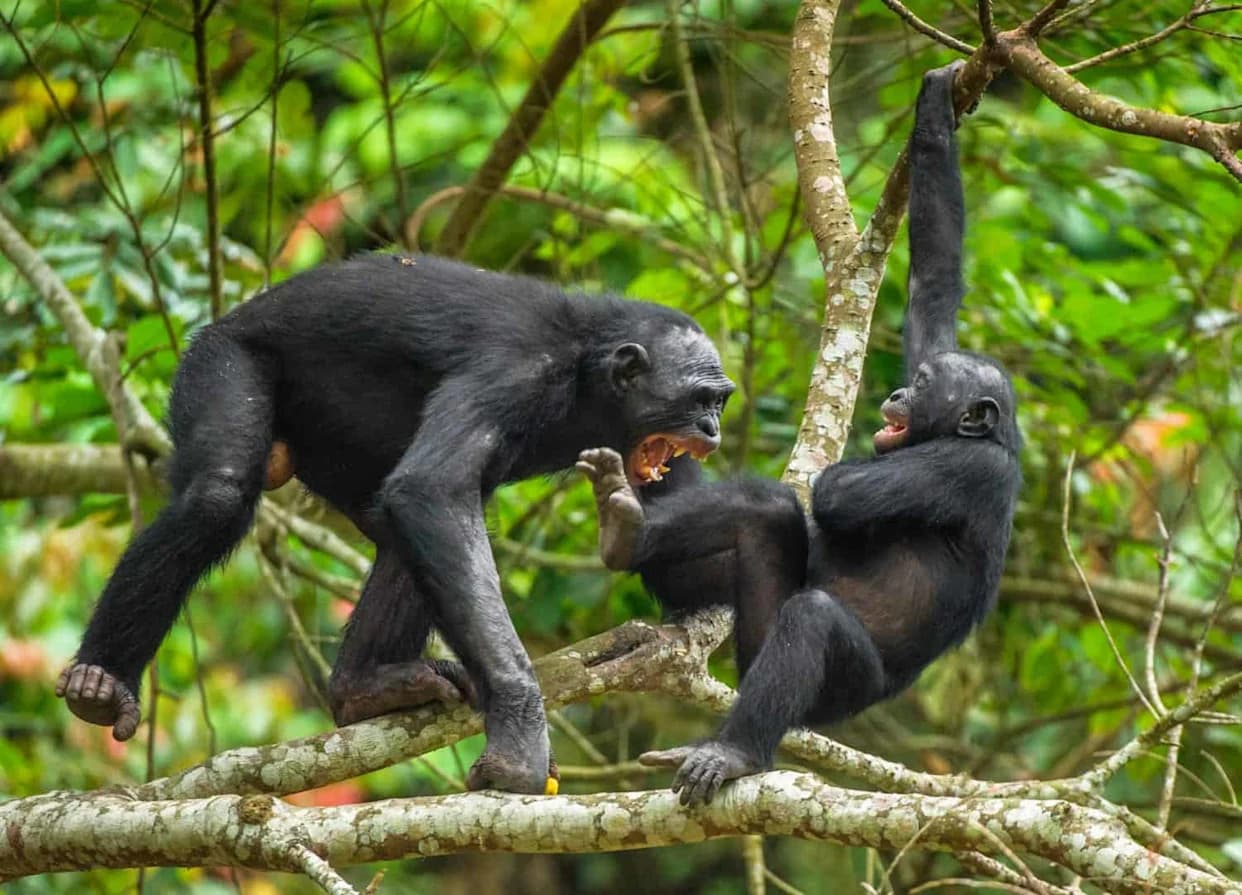
Bonobos (Pan Paniscus) on a tree branch. The Swearing and Aggressive Bonobo ( Pan paniscus). Democratic Republic of Congo. Africa© Sergey Uryadnikov/Shutterstock.com
For decades bonobos have been cast as the placid counterpart to aggressive chimpanzees. New research in Scientific Advances complicates that tidy story: bonobos may be no less aggressive overall than chimpanzees, but their aggression is expressed in different ways that reflect social hierarchy and ecological context.
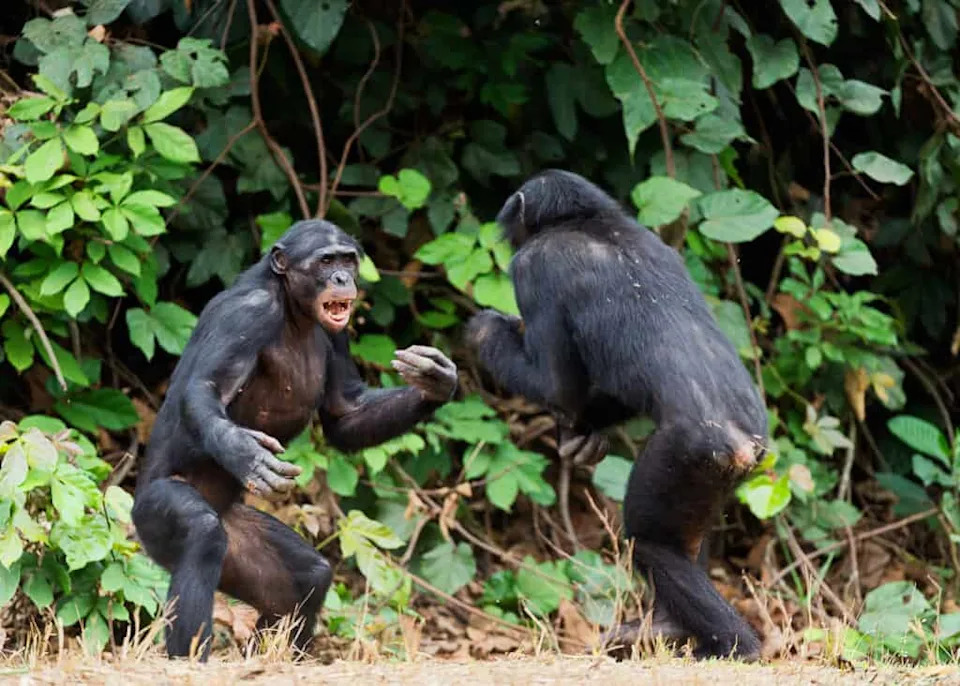
Just because bonobos are not as prone to using aggression first, doesn’t mean they don’t display it if a male steps out of line.©iStock.com/USO(iStock.com/USO)
Study Details
Behavioral biologists at Utrecht University observed 22 apes—both bonobos and chimpanzees—housed in a zoo environment to compare patterns of aggression. The study does not simply overturn prior estimates (one commonly cited figure held that chimpanzees are at least 2.8 times more aggressive than bonobos); instead, it shows that where and how aggression appears depends on group structure and local resource pressure.
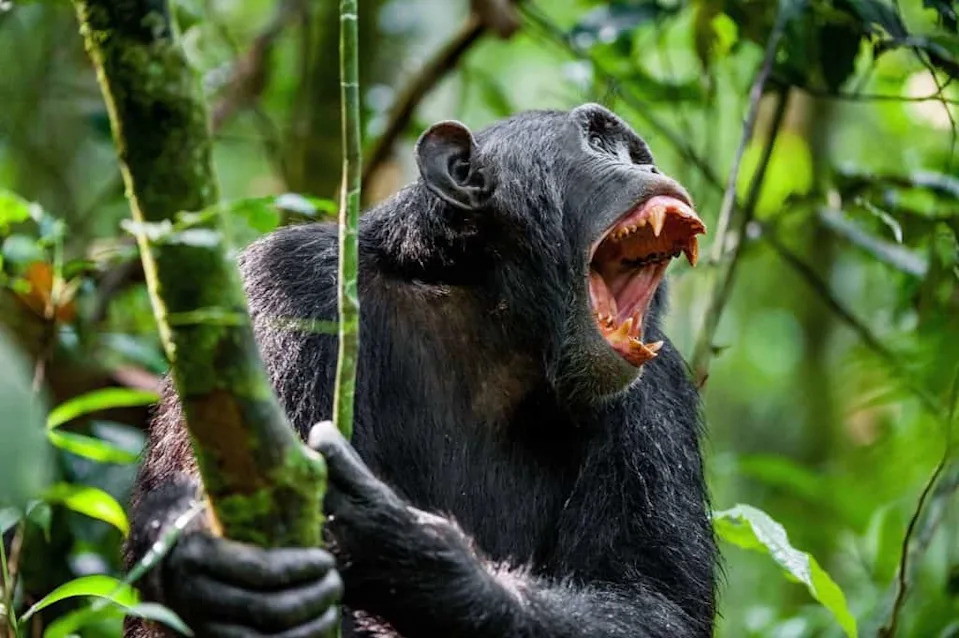
Chimpanzees have long been thought to be the more aggressive species, but this may come down to territory and competition for resources.©Sergey Uryadnikov/Shutterstock.com(Sergey Uryadnikov/Shutterstock.com)
How Social Structure Shapes Behavior
Bonobo societies are largely matriarchal: females occupy dominant social positions and often form coalitions. As a result, male bonobos typically defer to females and are less likely to engage in broad territorial or intergroup warfare. When aggression does occur in bonobos, it is often directed at males who challenge the female-led hierarchy rather than at neighboring groups.
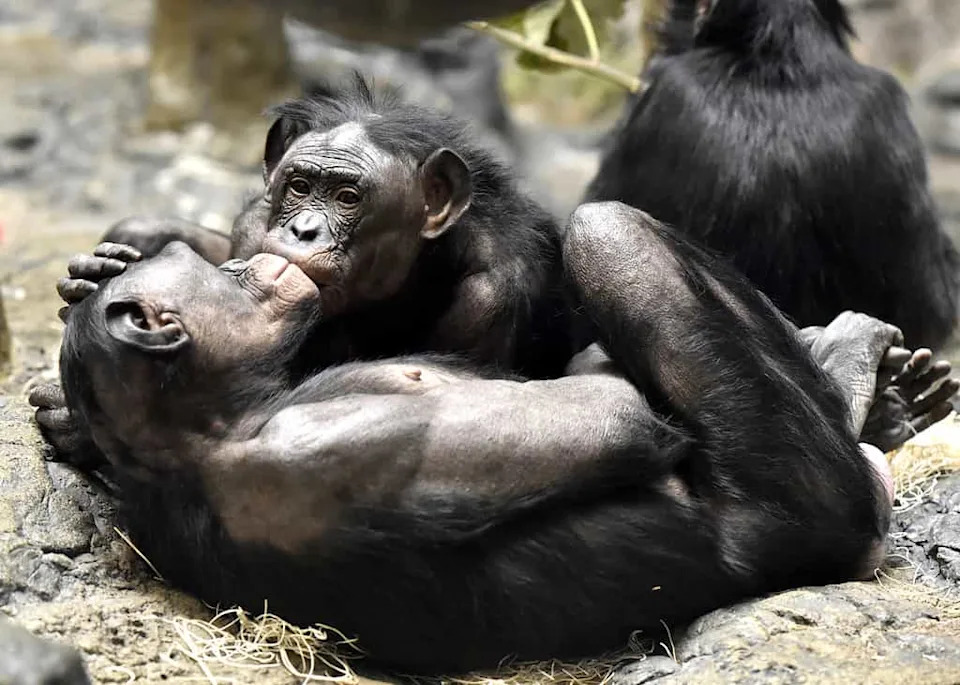
Bonobos, who are slightly darker, smaller, and generally more peaceful than chimpanzees, will mate facing each other.©Jeff McCurry/iStock via Getty Images(Jeff McCurry/iStock via Getty Images)
Ecology and the Congo River Divide
The study highlights the role of ecology. Bonobos live primarily south of the Congo River, in habitats where food and other resources tend to be more abundant and evenly distributed. Lower competition for critical resources reduces the incentive for large-scale territorial fighting. Chimpanzees live mainly north of the river, where they overlap with gorilla populations and face stiffer competition for food and territory—conditions that can amplify male-driven intergroup aggression.
Conflict Resolution: Sociosexual Behavior
A distinctive aspect of bonobo social life is the frequent use of sociosexual interactions to defuse tension. Members of a troop—regardless of gender—sometimes engage in affiliative sexual behavior to reduce stress and prevent escalation. The study notes that these behaviors appear primarily as reconciliation tools rather than strategies to increase reproductive rates: bonobo fertility is not unusually high compared with other great apes.
Key Takeaway: Bonobos are not inherently nonviolent; female-led hierarchies and more favorable resource distributions make visible aggression less common or differently targeted compared with chimpanzees.
Caveats And Next Steps
Important limitations remain. The study used a relatively small sample in a zoo setting, which can influence behavior compared with wild populations. Field studies across different bonobo and chimpanzee communities, with larger sample sizes, are needed to confirm how widely these patterns hold. Still, the findings invite a more nuanced view of primate—and human—aggression that emphasizes social organization and environmental pressures over simple labels of "peaceful" or "violent."
Source: Scientific Advances (Utrecht University study). Researchers call for follow-up field research to test these patterns in wild populations.
Help us improve.