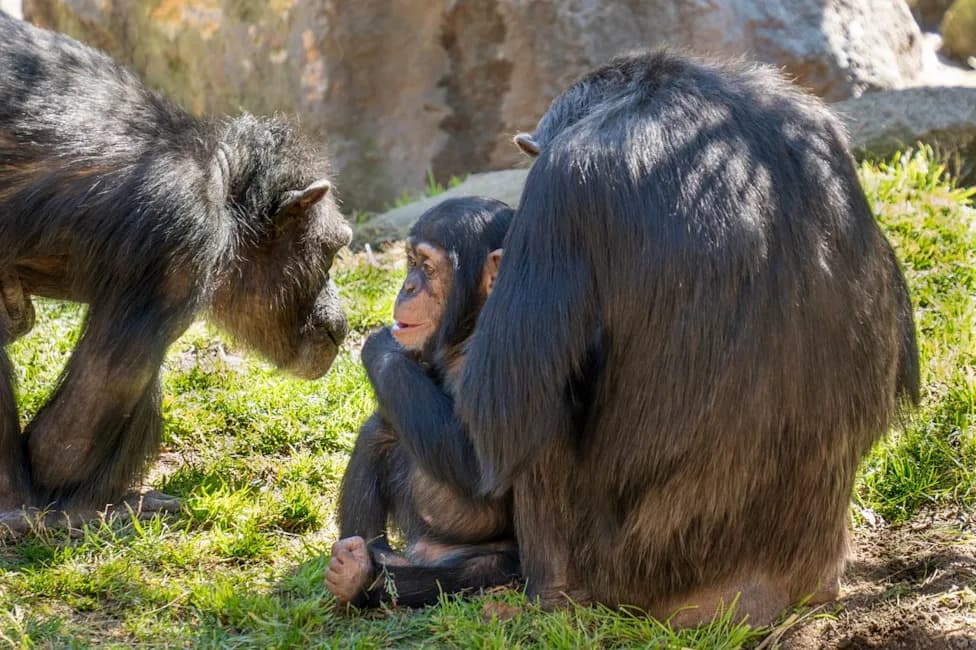
A new study of 22 groups in 16 European zoos finds that bonobos and chimpanzees show similar overall rates of aggression, but differ in whom they target and who initiates it. Chimpanzee aggression is largely male-driven and directed at both sexes, while female bonobos show relatively higher levels of aggression and bonobo attacks tend to target males. The findings, published in Science Advances, highlight how matriarchal versus patriarchal social structures shape the distribution of aggression.
New Study Challenges Idea That Bonobos Are Naturally More Peaceful Than Chimps
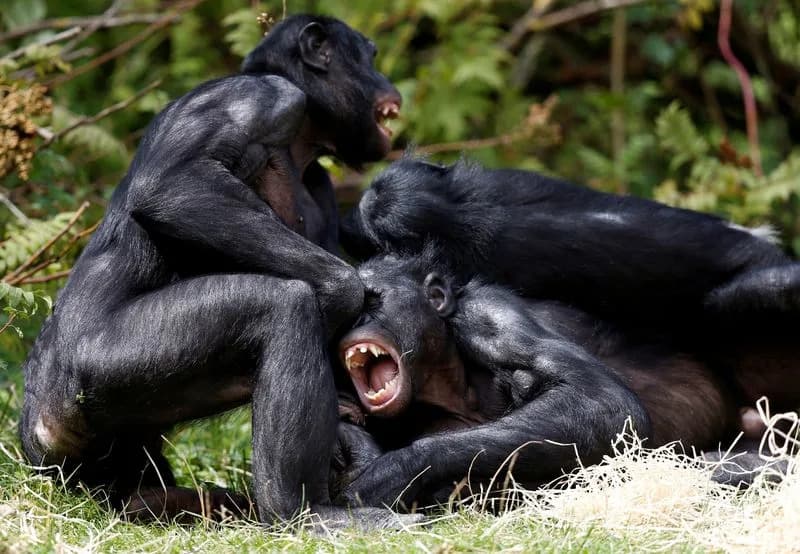
FILE PHOTO: Bonobos interact in their enclosure at Planckendael zoo in Mechelen, Belgium August 9, 2017. REUTERS/Francois Lenoir/File Photo
Bonobos have long been portrayed as the relaxed "make love, not war" cousins of chimpanzees. A new analysis of zoo-housed groups, however, suggests that bonobos are not inherently less aggressive than chimpanzees — they simply direct aggression differently.
Study Design and Sample
Researchers observed and tallied aggressive behaviors — including charging, hitting, biting, slapping, kicking and trampling — across 22 groups (nine chimpanzee groups and 13 bonobo groups) at 16 European zoos. The study covered 101 chimpanzees and 88 bonobos located in Belgium, England, France, Germany, Italy, the Netherlands and Spain. Results were published in the journal Science Advances, with Emile Bryon of Utrecht University as lead author.
Key Findings
Overall rates of aggression (both contact and non-contact) were similar for bonobos and chimpanzees. The main distinction lay in who initiated aggression and who was targeted.
In chimpanzee groups, aggression was predominantly male-driven and directed at both males and females. By contrast, female bonobos were more aggressive than female chimpanzees; in bonobo groups, aggression was initiated by both sexes but was primarily directed toward males.
"Chimpanzees are patriarchal. Males associate with one another and compete for dominance," Bryon explained. "Bonobos are matriarchal: females form strong bonds and influence group dynamics, which shapes how aggression is distributed."
Why Bonobos Seem 'Peaceful'
Several behavioral and social factors contribute to bonobos' reputation for tranquility. Bonobo groups typically maintain more peaceful relations with neighboring groups, rarely commit lethal violence within their groups, and frequently use socio-sexual behavior — such as genital rubbing and diverse mating interactions — to defuse tension and reinforce social bonds.
Caveats and Relevance to Wild Populations
The study is based on zoo populations, so caution is needed when extrapolating to wild communities. Wild chimpanzees have been observed engaging in lethal, war-like encounters with neighboring groups, whereas comparable observations of bonobos in the wild are limited — in part because bonobos are less numerous and harder to study.
Context: Relatedness to Humans
Bonobos (Pan paniscus) and chimpanzees (Pan troglodytes) share about 98.8% of their genome with humans and split from the human lineage roughly seven million years ago. Their contrasting social systems — patriarchal chimp communities versus matriarchal bonobo groups — offer insights into how social structure shapes patterns of aggression across species.
Takeaway
Aggression is a relevant part of both species' social lives. The study suggests that differences between bonobos and chimpanzees are less about overall levels of aggression and more about how power and social bonds determine who aggresses and who is targeted.
Help us improve.