Istiorachis macarthurae is a newly described sail-backed iguanodontian from the Isle of Wight, announced in 2025. Estimated at about 18 feet (5.5 m) long and 6.5 feet (2 m) tall, the herbivore sported a distinctive sail formed by elongated neural spines. Researchers suggest the sail most likely served social or display functions—such as species recognition or courtship—rather than primary thermoregulation. The find strengthens the island’s already rich Early Cretaceous record and prompts further study of sail evolution in dinosaurs.
Meet Istiorachis macarthurae — A New 18‑Foot Sail‑Backed Dinosaur From the Isle of Wight
Cretaceous Period© Daniel Eskridge/Shutterstock.com
In August 2025 paleontologists announced the discovery of a previously unknown sail-backed iguanodontian from the Isle of Wight. The new species, Istiorachis macarthurae, adds an unexpected twist to the island's rich Early Cretaceous fossil record.
Discovery And Context
The Isle of Wight—long nicknamed "Dinosaur Island"—is one of Europe’s most important sources of Early Cretaceous fossils. Coastal cliffs and beaches there expose Wealden formations deposited roughly 125–110 million years ago, when the area supported subtropical rivers, ponds and swamps. Erosion of these deposits continues to reveal new specimens and fresh insights into Early Cretaceous ecosystems.
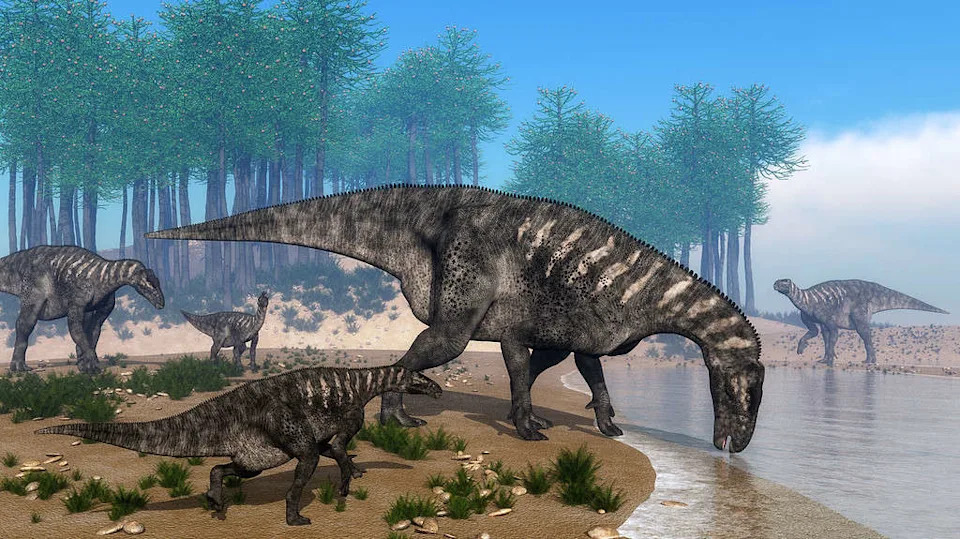
Many species of dinosaurs have been found on the Isle of Wight, including iguanodons.©Elenarts108/iStock via Getty Images(Elenarts108/iStock via Getty Images)
Fossils And Naming
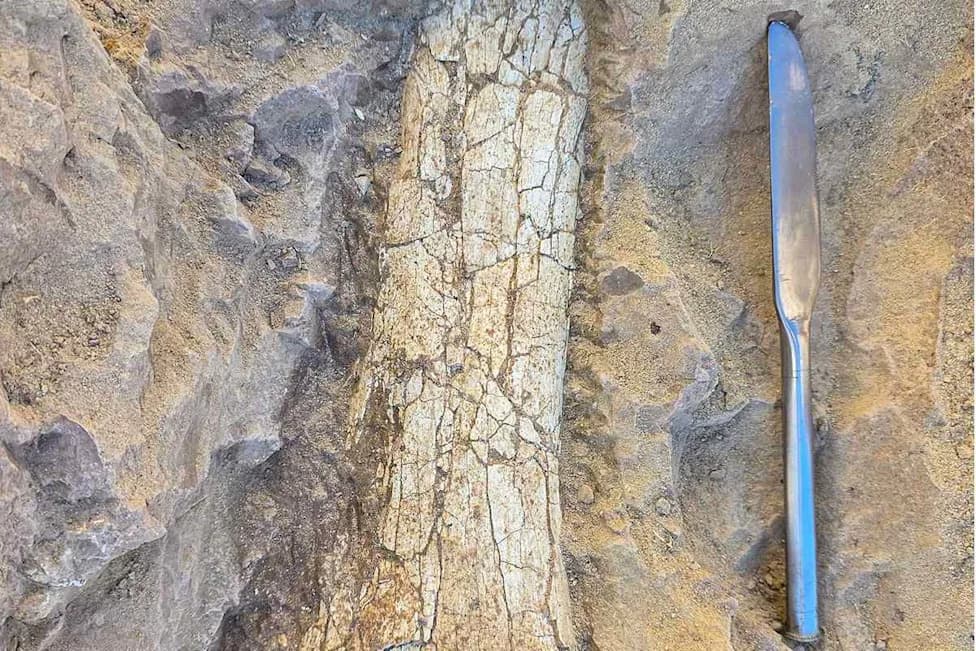
Excavations in 2025 recovered several ribs, vertebrae and part of a pelvis. Detailed study shows these bones belong to an iguanodontian dinosaur with greatly elongated neural spines that formed a prominent sail along its back. Researchers named the species Istiorachis macarthurae, with "Istiorachis" meaning "sail spine", honoring Dame Ellen MacArthur, a notable Isle of Wight resident.
Appearance, Size And Diet
Istiorachis was a medium-sized herbivore, estimated at about 18 feet (5.5 m) long and roughly 6.5 feet (2 m) tall. Built robustly like other iguanodontians, it likely fed on ferns, horsetails and conifers, cropping vegetation with a strong beak and powerful jaws.
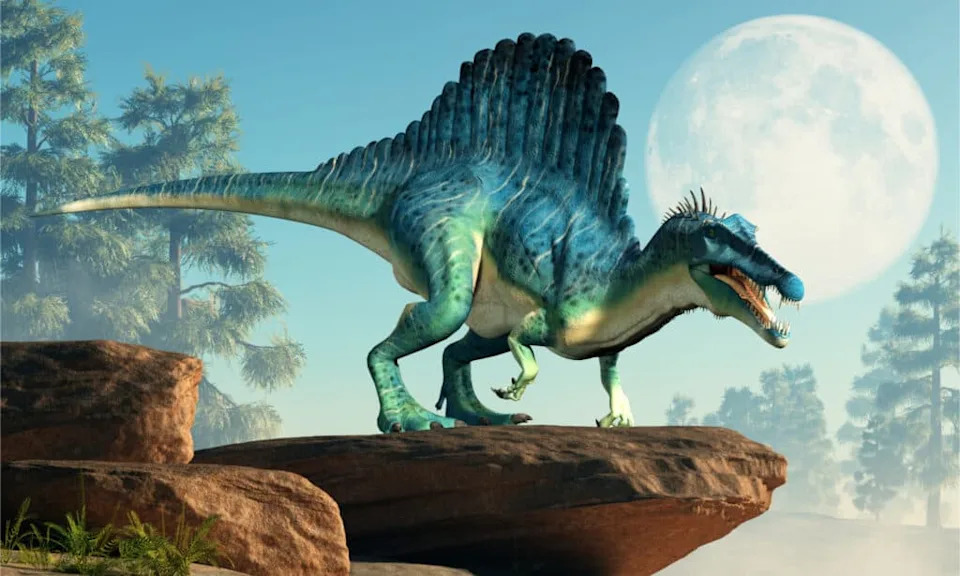
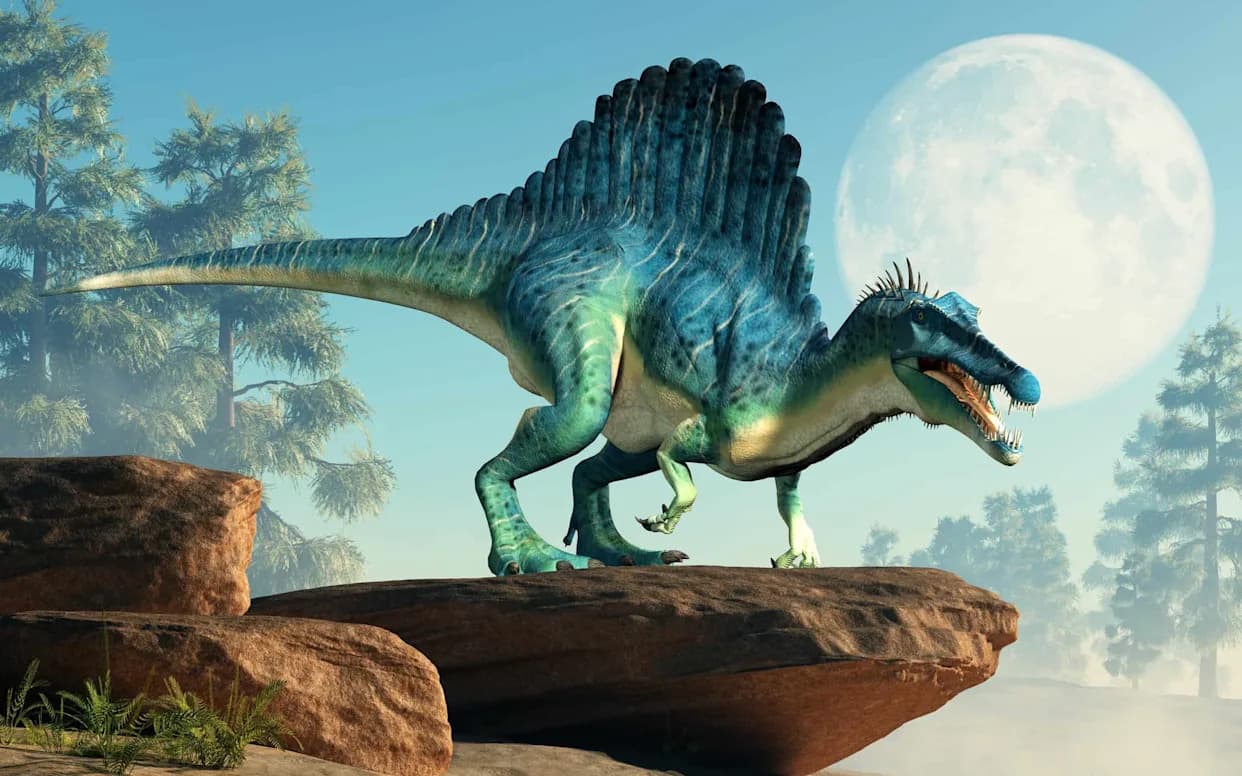
Istiorachis macarthuraehad a distinctive sail on its back, similar to that of a Spinosaurus.©Daniel Eskridge/Shutterstock.com(Daniel Eskridge/Shutterstock.com)
The Sail: What It Might Have Done
The species is notable for a series of elongated neural spines that created a clear sail-like profile along the back. Sail structures have evolved independently in several prehistoric reptiles—famous examples include Spinosaurus, Ouranosaurus and the Permian Dimetrodon—and are formed in each case by extended vertebral spines.
Scientists have proposed various functions for sails. Thermoregulation was an early idea, but critics argue that a vascularized sail would be vulnerable to injury and potentially costly if damaged. Many researchers now favor social explanations: a sail could serve as a visual signal for species recognition, territory display, or courtship. In living reptiles, comparable display structures are often sexually dimorphic and used in mate attraction or dominance displays.
Why This Matters
The discovery of Istiorachis macarthurae enriches the Isle of Wight’s dinosaur roster and highlights how even fragments—ribs, vertebrae and partial pelvic bones—can reveal surprising anatomy and behavior. Continued study and comparison with other iguanodontians will help determine Istiorachis’s precise place on the dinosaur family tree and shed light on the evolutionary pressures that produced its sail.
Note: Further fieldwork and preparation of the material may reveal additional bones or soft-tissue impressions (rare) that could refine interpretations of the sail’s structure and function.
Help us improve.