Israel prepared plans in January to launch a major operation against Hezbollah after saying Lebanon failed to disarm the Iran-backed militia under a November 2024 deal. The campaign resumed in March after Hezbollah fired rockets into northern Israel, prompting sustained Israeli strikes across southern Lebanon and expanded buffer zones north of the Litani River. Israeli officials say the goals are to degrade Hezbollah’s arsenal and fortify the northern border, while Lebanese leaders call for negotiations as civilian casualties and displacement mount.
The War That Never Ended: Israel Seizes a 'Window of Opportunity' To Weaken Hezbollah
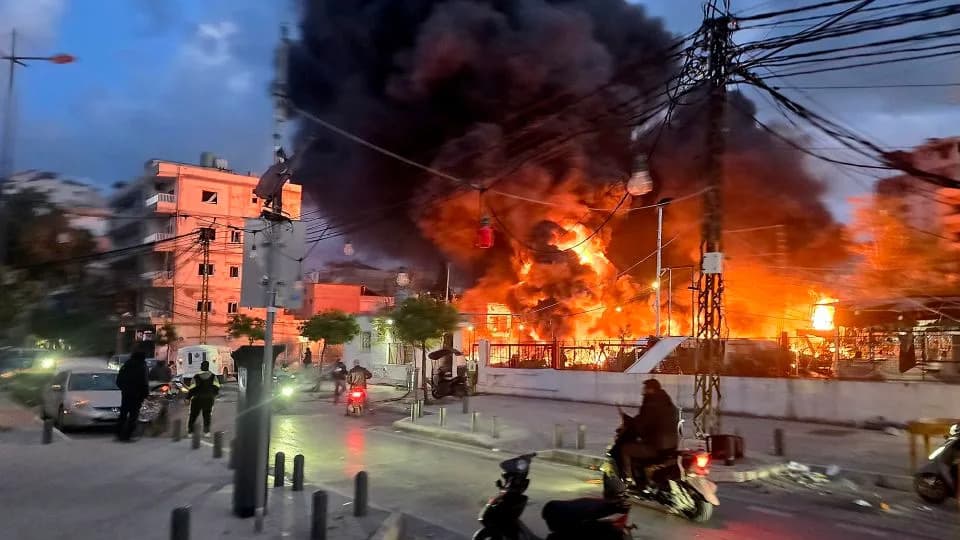
Fires rage following Israeli bombardment on a solar farm and electricity generation facility in Lebanon's southern coastal city of Tyre on March 4. - Kawnat Haju/AFP/Getty Images
In early January, Israeli planners quietly finalized contingency plans for a broad operation along the country’s northern border. More than a year after a US-brokered November 2024 ceasefire temporarily paused open combat between Israel and Hezbollah — a confrontation that had included an Israeli ground incursion into southern Lebanon — Israeli officials judged that Lebanon had not lived up to commitments to disarm the Iran-backed militia.
Israeli sources told CNN they believed it was time to eliminate Hezbollah’s capacity to launch rockets at Israeli communities once and for all. Those plans stayed on the shelf until regional events created a new opening.
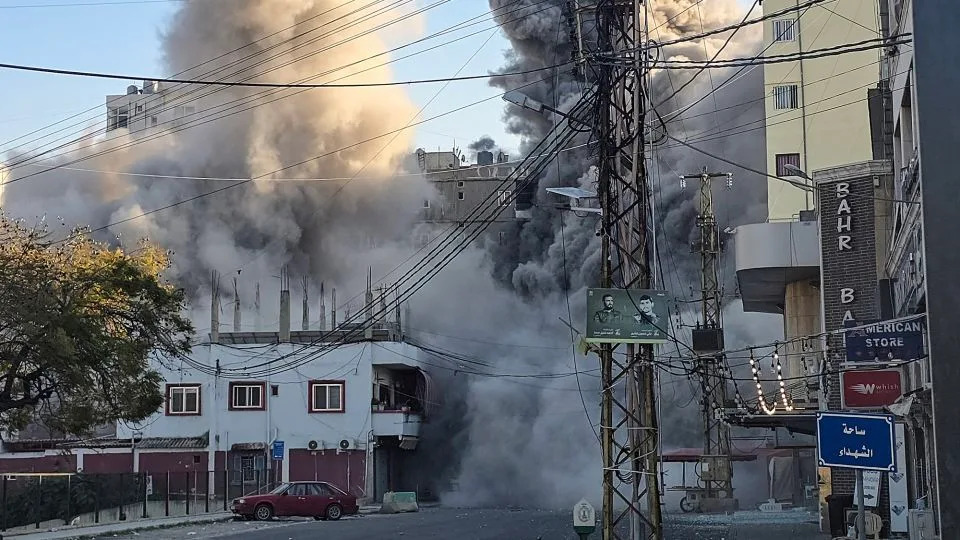
Smoke rises from the site of an Israeli airstrike that targeted the offices of Al-Qard al-Hassan, a Hezbollah-linked financial institution, in the southern coastal Lebanese city of Tyre on March 2. - Kawnat Haju/AFP/Getty Images
Regional Shock Shifts Priorities
Eight days into the new year, mass anti-regime protests erupted across Iran, diverting Tehran’s attention and upending Israeli planners’ priorities. Israel prioritized the Iranian theater — which required close U.S. coordination — but retained the Lebanon operation as a ready option.
On March 2, less than 48 hours after Israel and the United States carried out coordinated strikes on Iran-linked targets, Hezbollah fired six rockets into northern Israel. Israeli commanders said the attack presented the opening they had been awaiting.
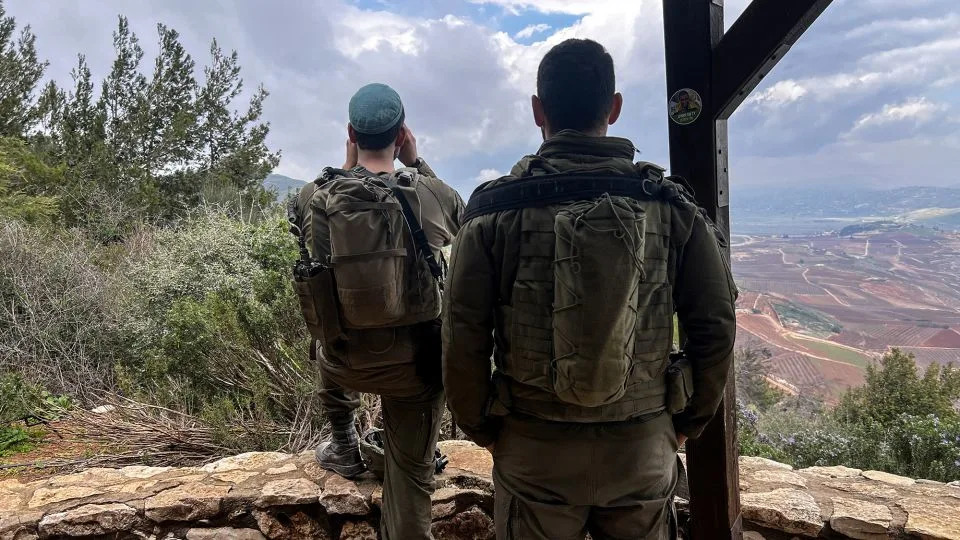
Israeli soldiers look towards Lebanon from a viewpoint at the border on March 7. - Avi Ohayon/Reuters
"Hezbollah fell into a strategic ambush," Maj. Gen. Rafi Milo, chief of Israel’s Northern Command, said, calling the rocket salvo a "serious mistake" and vowing that strikes would continue until Hezbollah suffered a "serious blow."
Escalation And Strikes Across Lebanon
Since early March, Israel has launched successive waves of strikes across Lebanon, saying it is targeting senior Hezbollah operatives, command-and-control infrastructure, weapons depots, missile launchers and training facilities. The Israel Defense Forces (IDF) has issued dozens of evacuation warnings that have displaced hundreds of thousands of Lebanese civilians north of the Litani River. Lebanon’s health ministry reported more than 680 deaths.
Israel had already established a military foothold in southern Lebanon after the November 2024 ceasefire, seizing five strategic points. In recent days, Israeli forces advanced more than one kilometer deeper into Lebanese territory, describing the push as creating a new "forward defense" buffer zone.
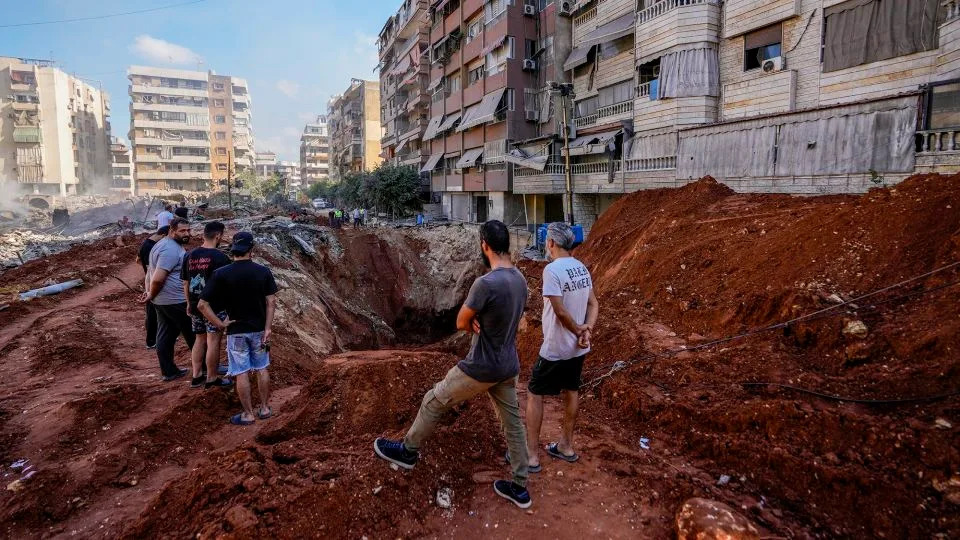
People gather at the site of the assassination of Hezbollah leader Hassan Nasrallah in Beirut's southern suburbs on September 29, 2024. - Hassan Ammar/AP
Lebanon’s President Joseph Aoun condemned the advance, accusing Israel of showing "no respect for the laws of war, nor for international laws," even as he denounced Hezbollah’s actions and declared the group’s military activities illegal.
Hezbollah's Capabilities And Continued Threat
Once regarded as one of the most powerful non-state actors in the region — reportedly receiving substantial funding and arms from Iran for years — Hezbollah was significantly degraded by the 13-month conflict that followed Hamas’s October 7 attack. Still, Israeli estimates at the time of the 2024 ceasefire suggested Hezbollah kept as much as a third of its pre-war missile stockpile. Israeli assessments say the group retained precision munitions with an 8–10 km range, anti-tank capabilities and an active drone program.
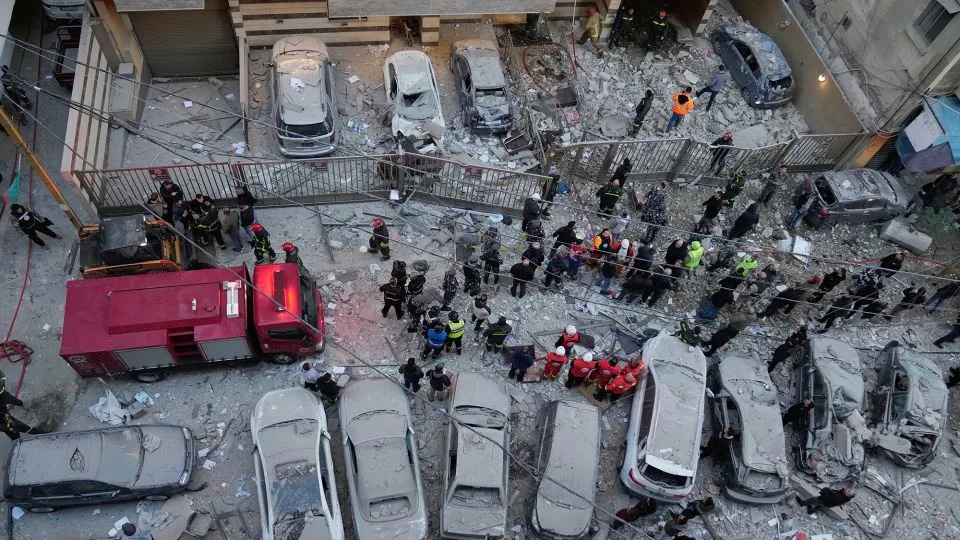
Rescue workers gather at the site where Israeli airstrikes hit apartments in Beirut, Lebanon, on March 11. - Hussein Malla/AP
Despite losses, Hezbollah has continued to strike back: launching hundreds of rockets and drones into Israel, sometimes alongside barrages of Iranian ballistic missiles. On one recent evening, Hezbollah fired more than 100 rockets in a single barrage. The group has also mounted direct assaults on IDF positions; the IDF reports multiple soldier casualties and dozens wounded in southern Lebanon.
Strategic Aims And Political Pressure
Israeli leaders describe the Lebanon campaign with two declared goals: to degrade Hezbollah’s military capacity and to strengthen Israel’s northern defenses. Israeli strategists say operations reflect a broader doctrinal shift since October 2023 toward creating buffer zones to protect civilians along Israel’s borders in Gaza, Lebanon and Syria.
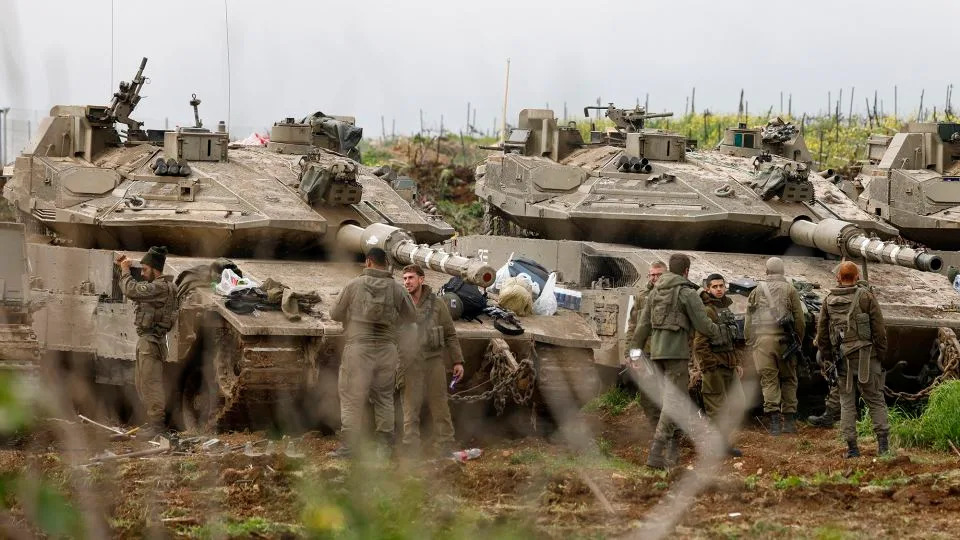
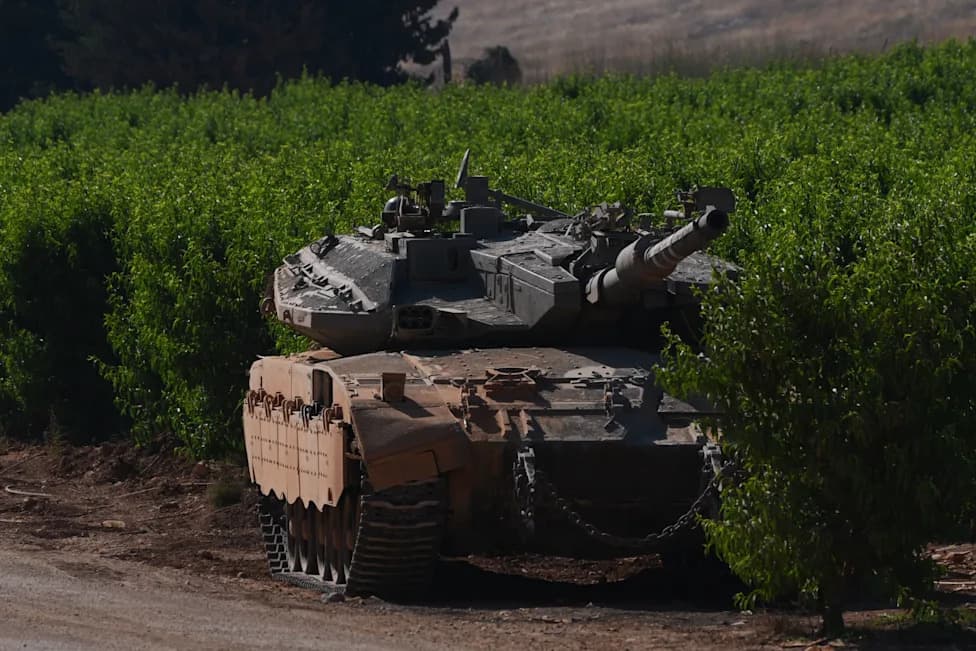
Israeli tanks gather in the upper Galilee near the border with Lebanon in northern Israel on March 7. - Jalaa Marey/AFP/Getty Images
That security logic dovetails with political pressure from Israel’s right-wing coalition. Likud lawmaker Amit Halevi said the Litani River — roughly six miles into southern Lebanon — should be treated as a new security line, echoing calls to expand buffer zones.
Some Lebanese officials — including President Aoun — have urged negotiations and condemned Hezbollah’s role as being aligned with Iranian calculations. But many Israeli officials view meaningful, durable de-escalation as unlikely without a demonstrable military setback for Hezbollah.
Assaf Orion, a retired Israeli brigadier general and analyst, summed up the view: diplomacy from Beirut will not satisfy the current government in Jerusalem unless matched by "a significant military achievement." Israeli planners say Iran remains the immediate priority; once the Iranian front stabilizes, attention could shift back to a larger campaign in Lebanon.
Human Cost And Outlook
The fighting has inflicted heavy civilian tolls and generated large-scale displacement. Israel maintains strikes are targeted at military assets, while Lebanese authorities and international observers raise urgent concerns about civilian harm and adherence to the laws of war. For now, the campaign continues as Israel seeks to use what officials call a "window of opportunity" to further degrade Hezbollah — a volatile dynamic that could widen unless diplomatic or military pressures change course.
Help us improve.