The Trump administration sued California on March 12, asking a federal court to declare the state's zero‑emission vehicle mandates and strict tailpipe greenhouse‑gas limits unlawful and preempted by federal law. The U.S. Transportation Department challenged CARB rules that the state says remain in force despite federal legislation overturning Advanced Clean Cars II. NHTSA says the suit aims to establish a single national fuel‑economy standard; California points to EPA approval of its earlier Advanced Clean Cars I rules.
U.S. Sues California Over Zero‑Emission Vehicle Rules, Seeking A Single Federal Standard
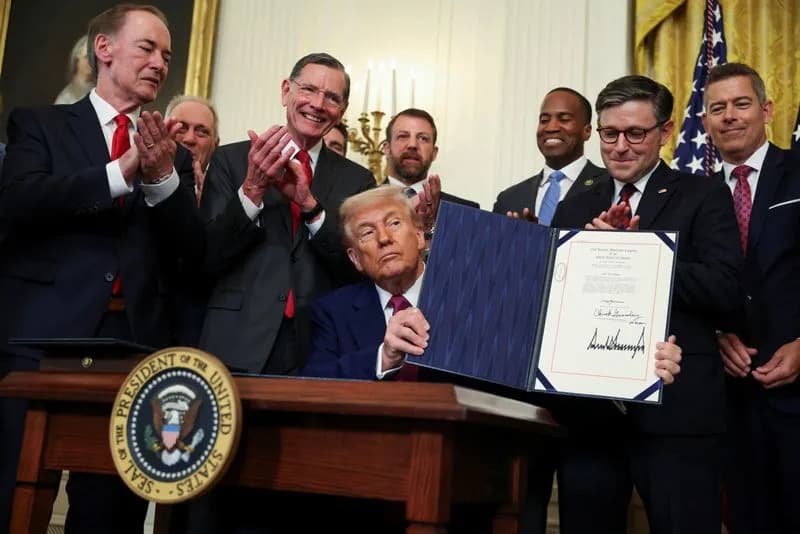
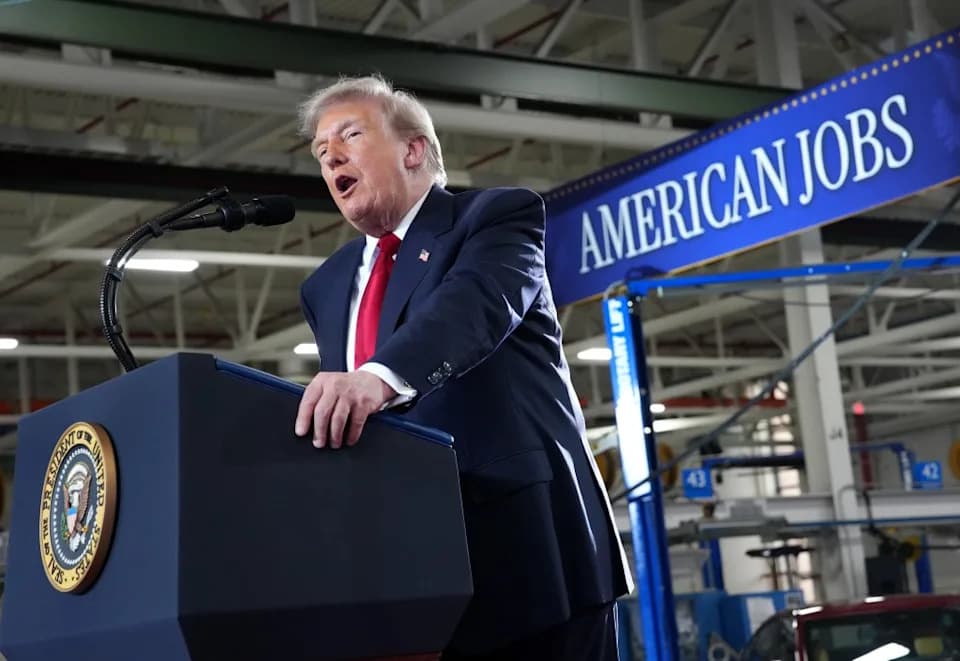
FILE PHOTO: U.S. President Donald Trump shows a signed resolution approved by Congress to rescind the EPA's 2023 approval of California's plans to require a rising number of zero-emission heavy-duty trucks, and another resolution on California's low-NOx, or low-nitrogen oxide, regulation for heavy-duty highway and off-road vehicles and engines, at the White House in Washington, D.C., U.S., June 12, 2025. REUTERS/Evelyn Hockstein/File Photo
WASHINGTON, March 12 — The Trump administration on Thursday filed a lawsuit against the state of California, arguing that the state's mandates for zero‑emission vehicles (ZEVs) and stringent tailpipe greenhouse‑gas limits are unlawful and preempted by federal law.
The U.S. Transportation Department sued the California Air Resources Board (CARB) in U.S. District Court in California, challenging vehicle rules that the state says remain in effect despite federal legislation last year that overturned California’s Advanced Clean Cars II program, which sought to phase out new gasoline‑powered cars by 2035.
The lawsuit asks the court to declare that all of California's zero‑emission vehicle mandates are unlawful and unenforceable. The administration says the suit will promote a single national fuel‑economy regime for automakers.
"This litigation will help automakers design and produce cars and trucks to meet one federal fuel economy regulation," said Jonathan Morrison, director of the National Highway Traffic Safety Administration.
California notes that the Environmental Protection Agency approved its earlier standards, known as Advanced Clean Cars I, in 2022 and says those standards remain operative. The California Air Resources Board did not immediately respond to requests for comment.
This case is the latest in a series of actions by the Trump administration aimed at limiting California's ability to set stricter vehicle emissions standards. In August, the administration also sued to prevent the state from enforcing tougher emissions rules for heavy‑duty trucks.
California's regulations require automakers to increase sales of electric vehicles over time and to meet progressively tighter tailpipe emissions limits. The state argues that lifecycle fuel savings for consumers will outweigh the higher upfront costs of electric vehicles.
Last year, Congress passed legislation that overturned Advanced Clean Cars II and curtailed California's authority to effectively ban gas‑powered new vehicles after 2035 — a change industry groups such as Toyota and the Detroit Three had lobbied for. The White House also relaxed federal tailpipe rules, and Congress passed a measure to suspend federal penalties for not meeting certain vehicle tailpipe standards.
A trade group representing major automakers did not immediately comment.
(Reporting by David Shepardson; Editing by Deepa Babington)
Help us improve.