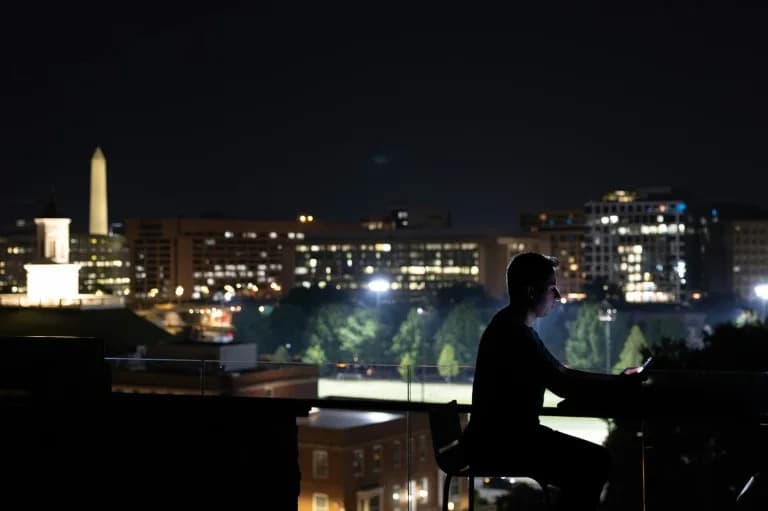
Behzad Hemmati and Rahil Nazarian, Iranian‑Americans in Southern California, say recent U.S. strikes against Iran amount to a "rescue mission" and criticize anti‑war protests as uninformed about life under the Islamic Republic. Both left Iran as young adults and described personal and family hardships after the 1979 revolution. They attend pro‑operation rallies to speak for Iranians who cannot protest at home and report relatives in Iran have expressed relief despite risks. The couple plans to visit family in Iran when travel becomes feasible.
Iranian‑American Couple in California Calls U.S. Strikes a "Rescue Mission," Rebukes Anti‑War Protests
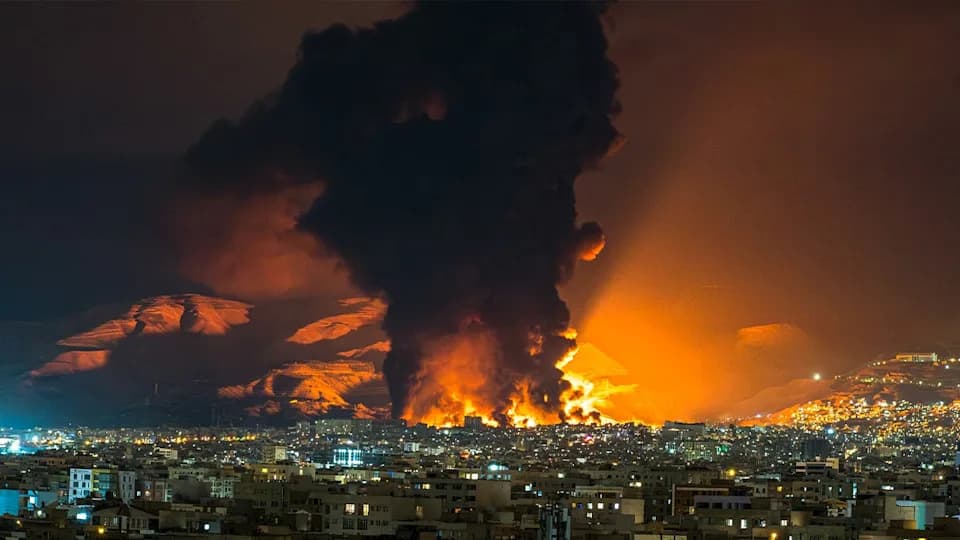
Smoke and flames are visible after U.S. and Israeli strikes on Iranian military sites.(Getty Images)
Behzad Hemmati (50) and Rahil Nazarian (42), an Iranian‑American husband and wife living in Southern California, told Fox News Digital they view recent U.S. strikes against Iran not as a conventional war but as a "rescue mission." The couple — who emigrated from Iran as young adults — say anti‑war demonstrations in the United States fail to recognize the repression many Iranians face under the Islamic Republic.
Background
Hemmati, born during the reign of Shah Mohammad Reza Pahlavi, said he left Iran because he could not accept the social restrictions imposed after the 1979 Islamic Revolution. He described everyday freedoms — dancing, socializing, and normal mixing of young people — as forbidden or strictly policed under the post‑revolutionary regime.
"I came here just because of my natural personality; I couldn’t bear with the things that were happening in Iran," Hemmati said.
Nazarian, born during the Iran‑Iraq War in the 1980s, described how her family suffered after the revolution. She said her father, a teacher, was dismissed from his job, their home and land were seized, and relatives were repeatedly detained. She recounted that her father was taken to camps run by the Islamic Revolutionary Guard Corps (IRGC) and eventually disappeared after being promised reinstatement.
Views on the Strikes and Protests
The strikes — identified in coverage as Operation Epic Fury and initiated with early‑morning strikes on Feb. 28 — have produced public debate and widespread anti‑war demonstrations in the United States. Hemmati and Nazarian say many protesters do not understand what life under the current Iranian regime is like and therefore do not grasp why some Iranian‑Americans support targeted military action.
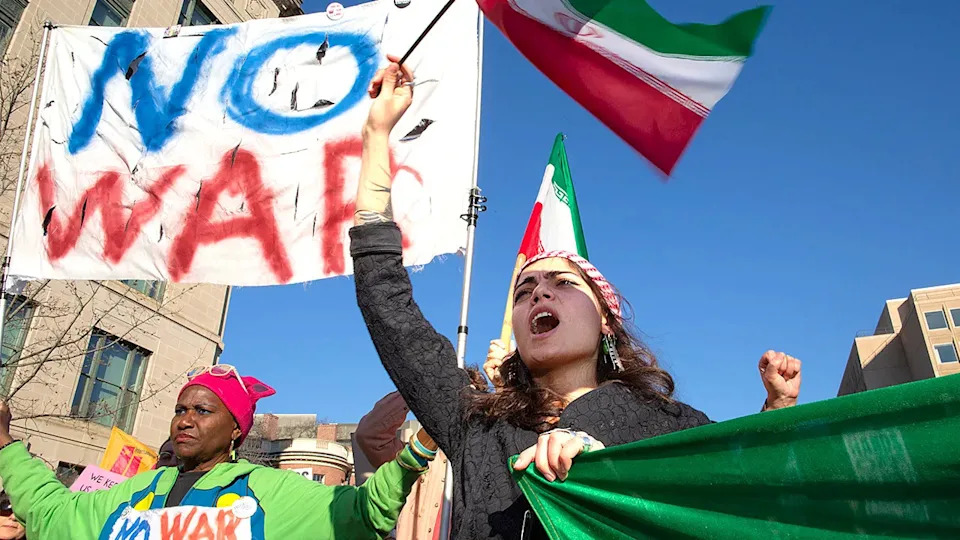
A demonstrator shouts anti-war slogans while participating in a protest near the White House, Feb. 28, in Washington, D.C.
"People are going on the street and saying no to war; I can tell you 100%, they have no idea," Hemmati told Fox News Digital.
The couple attends pro‑operation rallies across Southern California nearly every weekend. Hemmati describes these gatherings as a way to give voice to Iranians inside Iran who cannot speak openly because of censorship, surveillance, and repression.
Contact With Family in Iran
Hemmati and Nazarian say they remain in frequent contact with relatives in Iran. Despite bombardments near family homes, they report relatives expressing relief and gratitude for the strikes and a willingness to accept risks in pursuit of greater freedom.
"No matter what happens, no matter if we lose our house, no matter if the whole house is destroyed, as long as we’re alive to fight back, we’re still grateful and happy," Hemmati said. Nazarian added that relatives "were thanking President [Donald] Trump and said, it’s OK, we have to pay the price for freedom."
What They Hope Will Happen
Hemmati said the operation’s focus on IRGC sites aims to weaken what he called "the regime’s bloodlines," targeting facilities central to the security apparatus. Both he and Nazarian said they hope the strikes will create space for Iranians to act for change.
Both plan to visit family in Iran as soon as it is feasible: Nazarian has not seen relatives in nine years, and Hemmati has not returned in 19. Hemmati described the strikes as the culmination of a long struggle and acknowledged the human cost.
"This is what I’ve been waiting for for 47 years," Hemmati said. "Unfortunately, we’re going to lose some lives in this rescue mission … but again, people are saying inside Iran, ‘How many are we gonna lose? … We’re ready to sacrifice again until we get to freedom.'"
The U.S. operation and domestic protests have divided public opinion: some view targeted strikes as a step to degrade the IRGC and support Iranians seeking change, while others oppose military action and call for diplomatic or non‑military approaches. Hemmati and Nazarian represent one perspective within the Iranian‑American community that supports the strikes on humanitarian and political grounds.
Help us improve.