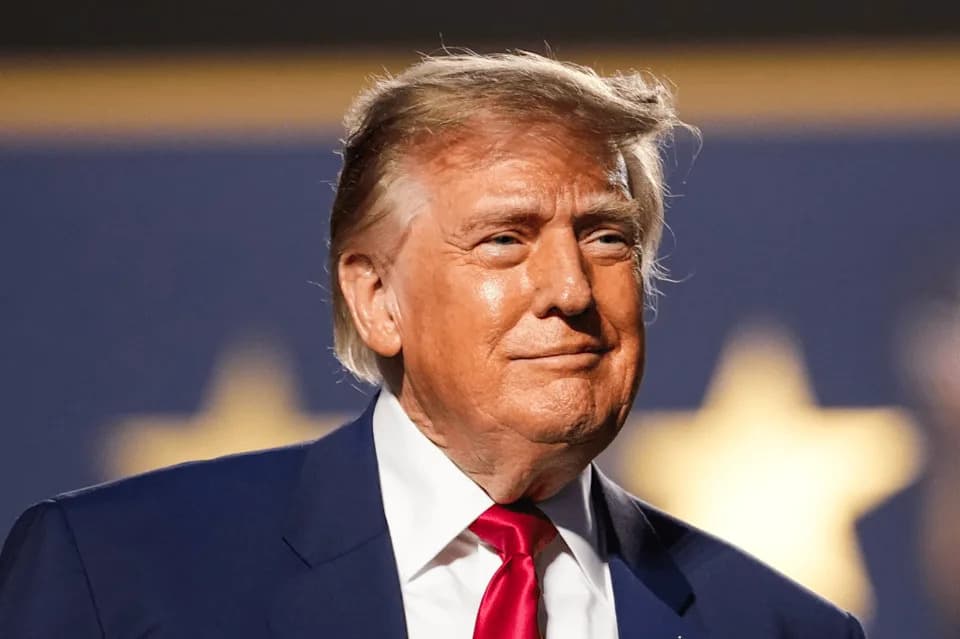
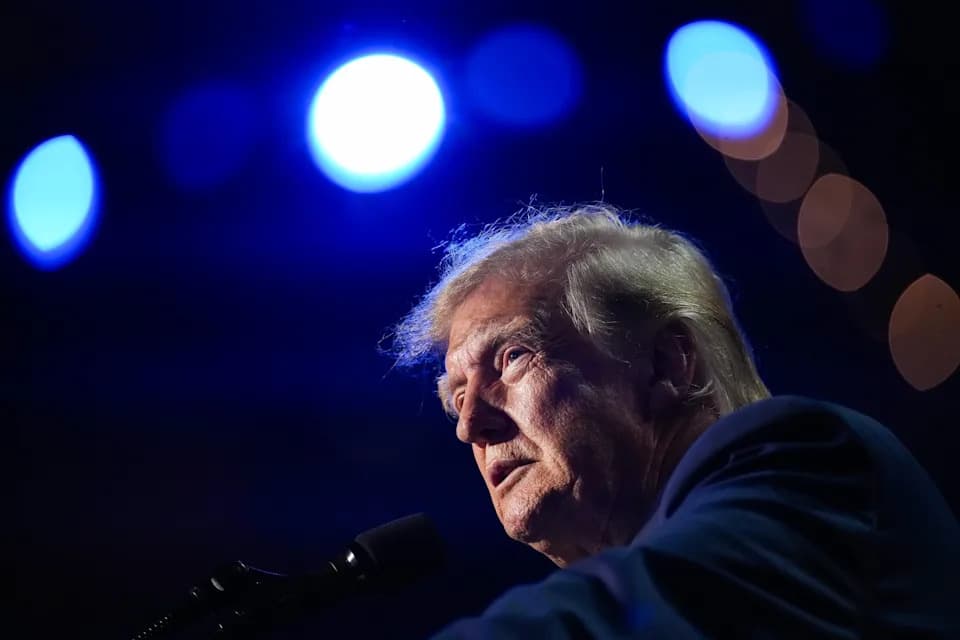
President Trump urged Republicans to adopt tougher voting rules — including strict national voter ID and a ban on mail ballots — calling the measures essential to "guarantee the midterms." House GOP leaders, however, emphasized tax relief, energy independence and cost-of-living measures as their top priorities. The split underscores an election-year tension as Republicans defend a narrow House majority and weigh the political risks of focusing on election rules versus pocketbook issues.
Trump Demands Tough Voting Rules as House Republicans Push Pocketbook Agenda Ahead of Midterms
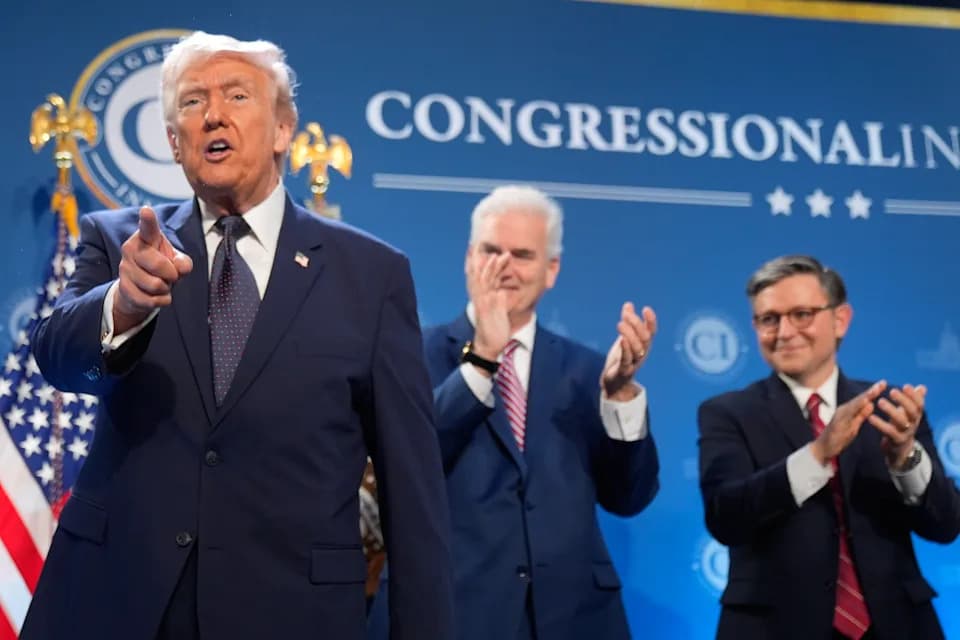
President Donald Trump gestures as Rep. Tom Emmer, R-Minn., and House Speaker Mike Johnson of La., applaud at the Republican Members Issues Conference, Monday, March 9, 2026, at Trump National Doral Miami in Doral, Fla. (AP Photo/Mark Schiefelbein)(ASSOCIATED PRESS)
President Donald Trump told Republicans gathered at his Doral, Florida, golf club that his plan to shore up the party’s chances in the midterm elections is straightforward: expand a strict national voter ID framework, ban mail-in ballots and tighten rules on transgender participation. He said the measures would "guarantee the midterms."
Trump’s Push
Speaking Monday in the ballroom at his course outside Miami, Trump pressed a rebranded version of the voting measure — renamed the SAVE America Act — as central to the GOP’s strategy. He warned lawmakers that failure to adopt his proposals would spell electoral trouble.
"It'll guarantee the midterms. If you don't get it, big trouble," Trump said.
House GOP Focuses on Economy
Less than a day later, leading House Republicans emphasized a different set of priorities. Conference Chair Rep. Lisa McClain highlighted tax relief for families, energy independence and proposed newborn savings accounts. House Majority Leader Steve Scalise framed the agenda as efforts to "make life more affordable for working families," and Rep. Tom Emmer pointed to recent GOP legislative wins intended to leave more money in voters' pockets.
Why the Split Matters
The divergence highlights an election-year tension: senior Republicans worry about defending a slim House majority and want to emphasize pocketbook issues, while Trump remains focused on election rules and culture-war topics. The conflict is occurring amid broader challenges — including rising gasoline prices tied in part to the war with Iran — that complicate the GOP’s affordability message.
Legislative Stakes and Strategy
Trump has said he will not sign other legislation until the voting bill is passed, raising the prospect of congressional gridlock just as lawmakers ask voters for another term. Passing a version that satisfies Trump will be difficult: the House already approved an earlier version, any new changes would require fresh action, and the Senate faces steep hurdles without Democratic support.
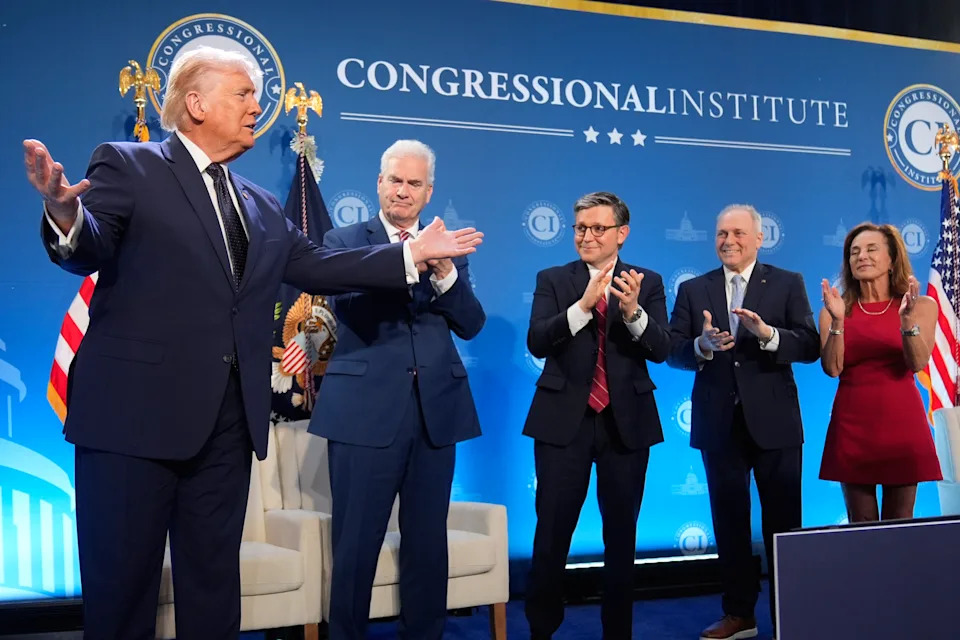
President Donald Trump gestures as Rep. Tom Emmer, R-Minn., House Speaker Mike Johnson of La., Rep. Steve Scalise, R-La., and Rep. Lisa McClain, R-Mich., applaud at the Republican Members Issues Conference, Monday, March 9, 2026, at Trump National Doral Miami in Doral, Fla. (AP Photo/Mark Schiefelbein)(ASSOCIATED PRESS)
Speaker Mike Johnson, who joined Trump onstage and defended party unity, argued colleagues remain "on the same page" and suggested lawmakers could use constitutional timing rules to keep some measures moving even if the president withholds his signature.
Political Context
Polls suggest many voters are more concerned with inflation and personal finances than with election-law changes: an AP-NORC poll from December found roughly one-third of Americans listed inflation or personal finances among top priorities, while few cited voting laws or election security.
With the House majority narrow, Republican leaders are trying to balance Trump's demands with a focus on tangible economic proposals they hope will appeal to swing voters.
What’s next: Congress must still address urgent business, including reopening the Department of Homeland Security and confirming its next leader, while navigating the possible impasse over the voting bill.
Associated Press reporting. Linley Sanders in Washington contributed to this report.
Help us improve.