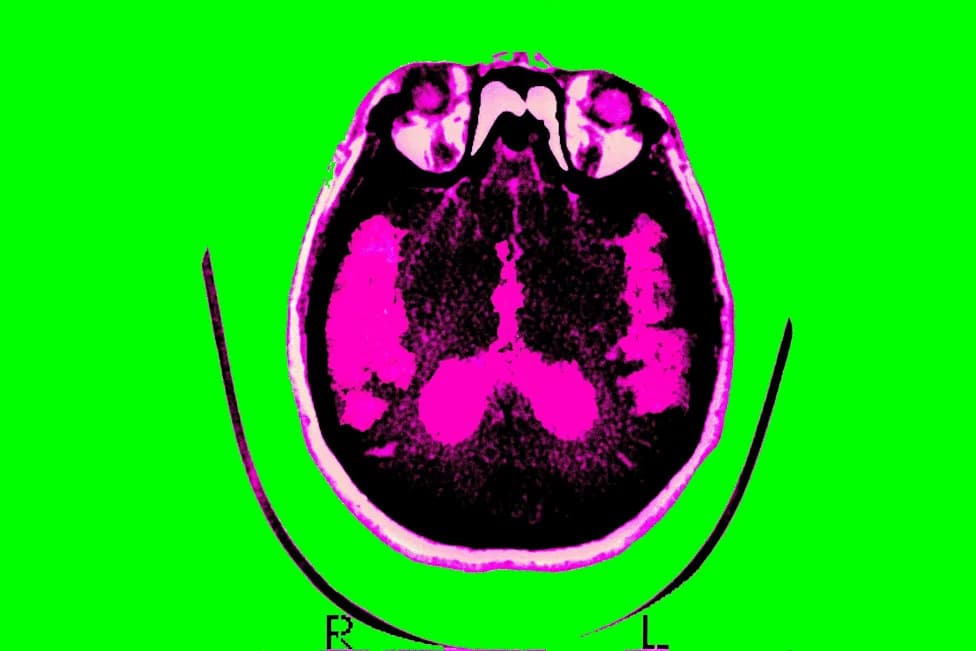
FDA approved generic leucovorin for an ultrarare genetic disorder that prevents folate from reaching the brain. Agency reviewers limited the drug’s recommended use to patients with the specific folate-transport mutation and said evidence does not support broad use for autism. Prescriptions for children surged after a late-September White House news conference, and the agency is allowing imports to ease shortages.
FDA Approves Generic Leucovorin for Ultra-Rare Brain Disorder; Evidence Limited for Autism

FILE - President Donald Trump listens as Dr. Marty Makary, commissioner of the Food and Drug Administration, speaks in the Roosevelt Room of the White House, Monday, Sept. 22, 2025, in Washington. (AP Photo/Mark Schiefelbein, file)(ASSOCIATED PRESS)
WASHINGTON — The Food and Drug Administration on Tuesday approved a generic form of leucovorin for children and adults with an ultrarare genetic disorder that impairs delivery of folate (a form of vitamin B) to the brain.
FDA officials said the condition targeted by the approval affects fewer than one in a million people in the United States and emphasized that their review focused on the strongest available evidence. The agency concluded the data support use of leucovorin only for patients with the specific mutation that blocks folate transport into the brain.
Retreat From Earlier White House Statements
The decision marks a pullback from comments made during a late-September White House news conference, where President Donald Trump and FDA Commissioner Marty Makary suggested the drug might offer broader benefits to people with autism. At that event, Makary said the treatment could help “20, 40, 50% of kids with autism.” Senior FDA officials later told reporters that most of the evidence cited publicly did not meet the agency’s standards for a broad autism indication and noted that at least one study once used to support the treatment has been retracted.
What Leucovorin Is And Who It Helps
Leucovorin is a synthetic metabolite of folate, an essential nutrient recommended for women before conception and during pregnancy. Outside this new indication, leucovorin is already approved to reduce side effects from certain chemotherapy agents and to treat a rare blood disorder.
Patients with the folate-transport mutation can experience movement disorders, seizures and other neurological symptoms that may resemble autism. However, major medical groups caution that evidence showing benefit for people with autism more broadly is weak and mostly limited to small studies.
Medical Guidance, Prescriptions And Supply
The American Academy of Pediatrics does not recommend routine use of leucovorin in children with autism, including those diagnosed with cerebral folate deficiency. While a few small trials in that subgroup suggest possible benefit, they are limited by size and design.
Despite uncertainty, prescriptions for leucovorin rose sharply after the White House briefing. A paper published in The Lancet reported a 71% increase in prescriptions for children aged 5–17 in the three months after the conference, and some families have struggled to fill prescriptions amid supply strain. To ease shortages, FDA officials said the agency is allowing imports from foreign manufacturers. GlaxoSmithKline, the original maker of the branded product, does not plan to relaunch its version.
Origin Of The Review And Scientific Context
Officials said the review was prompted after discussions with an Arizona-based neurologist who prescribes leucovorin for some autism patients and runs an online education business advocating the experimental treatment. The proposed mechanism is that certain antibodies may block folate from entering the brain in some people with autism. Critics and advocacy groups such as the Autism Science Foundation note that these antibodies are often found in non-autistic relatives as well, weakening claims that they are a direct cause of autism.
Researchers say there is no single cause of autism; most evidence points to a complex mix of genetic and environmental factors.
The Associated Press Health and Science Department receives support from the Howard Hughes Medical Institute’s Science and Educational Media Group and the Robert Wood Johnson Foundation. The AP is solely responsible for all content.
Help us improve.