About 20% of U.S. flights were canceled on Feb. 23 as a powerful blizzard struck the East Coast, with FlightAware reporting 5,718 affected flights and CNBC citing nearly 5,000 canceled departures. Major hubs — including LaGuardia, JFK, Newark and Boston — saw cancellation rates exceed 90% at the storm’s peak. Regional carriers and major airlines such as Republic Airways and JetBlue were heavily impacted, and disruptions persisted into Feb. 24 as airports worked to recover.
Historic East Coast Blizzard Grounds One-In-Five U.S. Flights, Major Hubs Nearly Shut Down
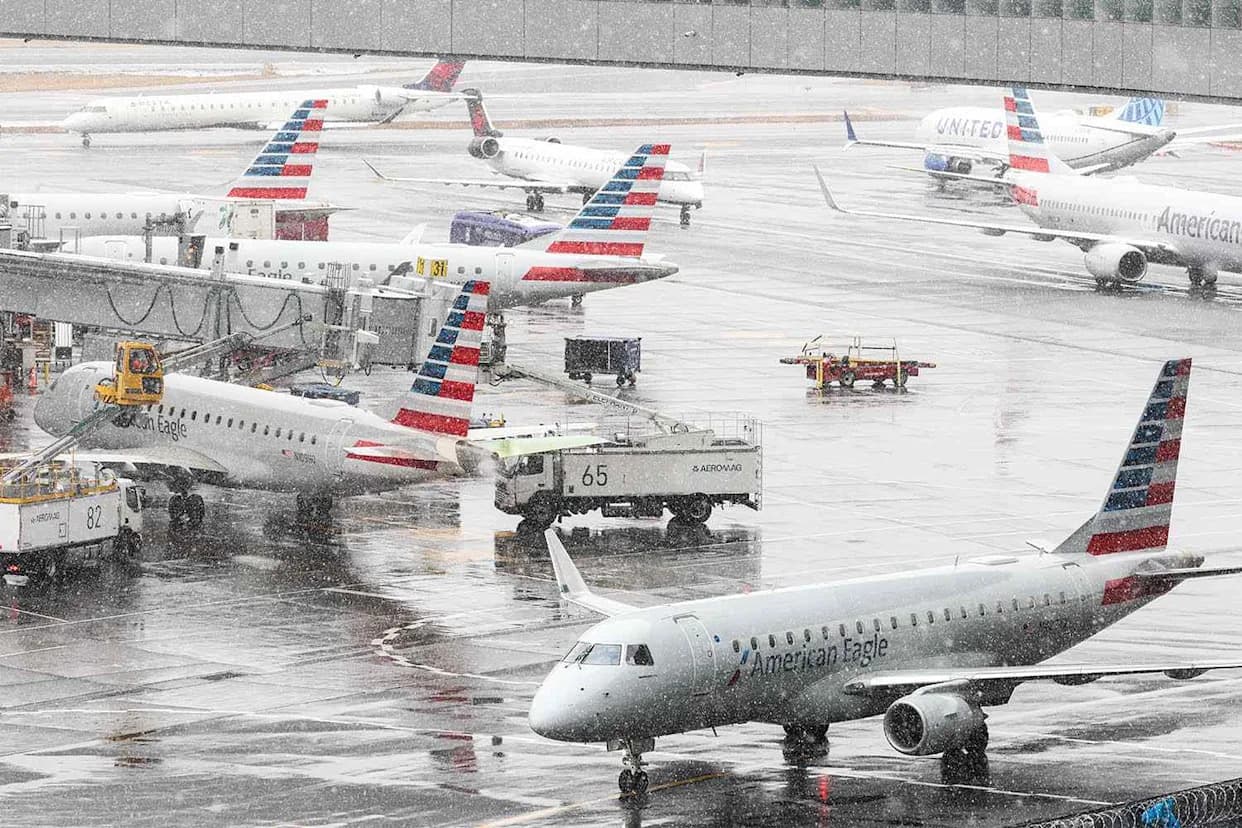
Grounded flights at LaGuardia Airport on Feb. 22.CHARLY TRIBALLEAU / AFP via Getty
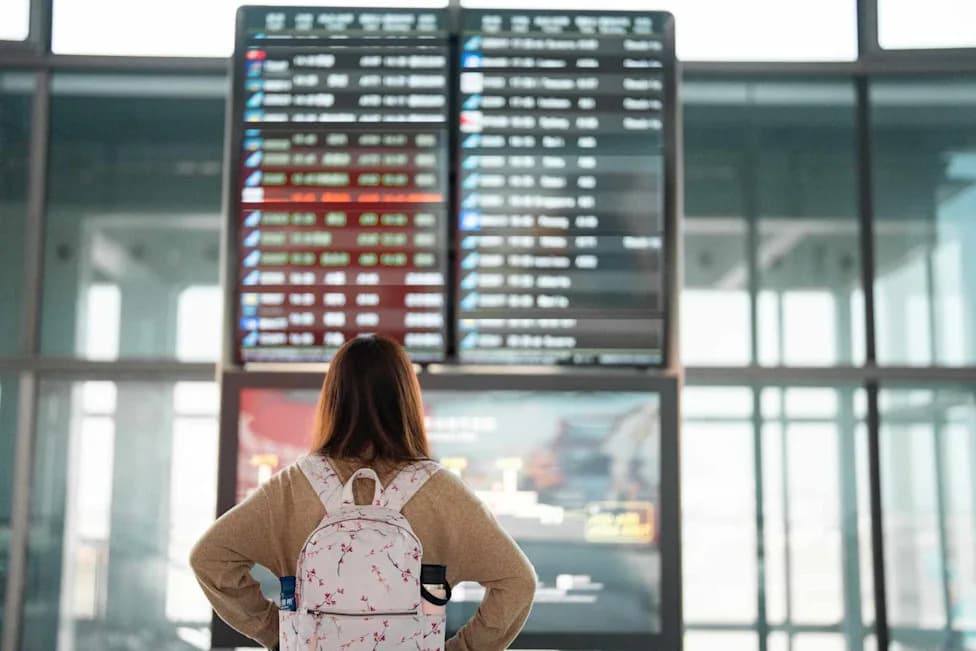
About one in five scheduled U.S. flights were grounded on Feb. 23 after a powerful blizzard swept the East Coast, producing widespread travel chaos at major airports and disrupting airline schedules nationwide.
Widespread Cancellations and Data
Aviation trackers and news outlets reported significant disruption: FlightAware recorded 5,718 canceled flights that either originated in or were destined for the United States, while CNBC reported nearly 5,000 U.S. departures canceled that day. For context, FlightAware said the U.S. averaged roughly 340 cancellations per day in 2024 — about 1% of daily flights — making Monday’s disruptions exceptional.
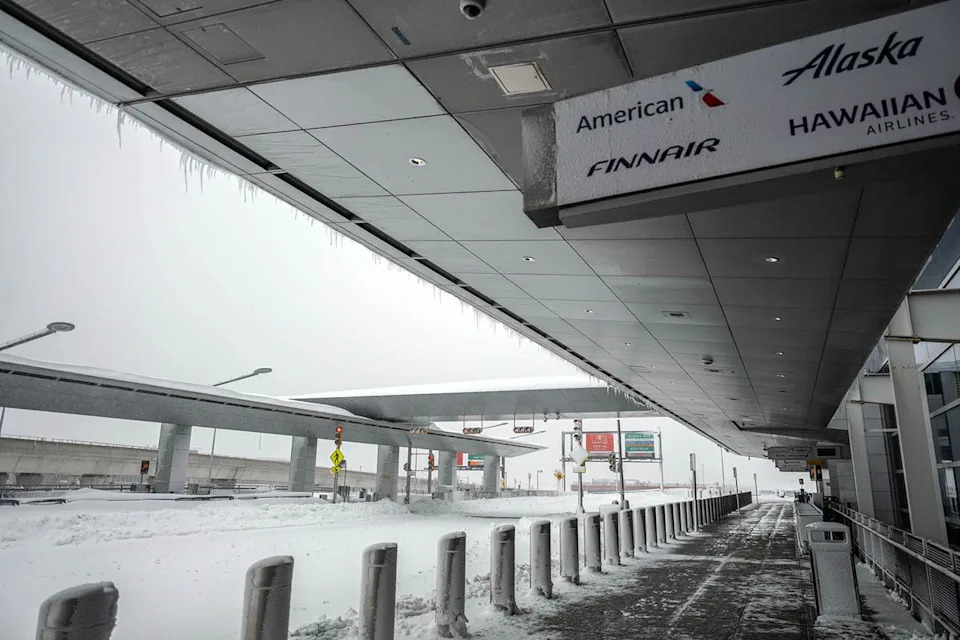
Snow-covered terminal at JFK International Airport.Victor J. Blue/Bloomberg via Getty
"More than 5,700 flights with a U.S. origin or destination were canceled on Feb. 23," FlightAware reported, underscoring the storm's wide impact.
Airports Hit Hardest
Major Northeast hubs were among the hardest hit. New York’s LaGuardia and JFK airports saw approximately 98% and 91% of scheduled flights canceled, respectively, amounting to a combined 1,082 grounded departures. Newark Liberty and Boston Logan each reported about 92% of departures canceled (roughly 498 and 494 flights). Philadelphia International canceled 324 departures, or roughly 79% of its schedule.
Other large airports across the country also recorded hundreds of cancellations on Monday, including Ronald Reagan Washington National, Chicago O'Hare and Orlando International — many of which operate frequent flights into New England and helped propagate disruption across regions.
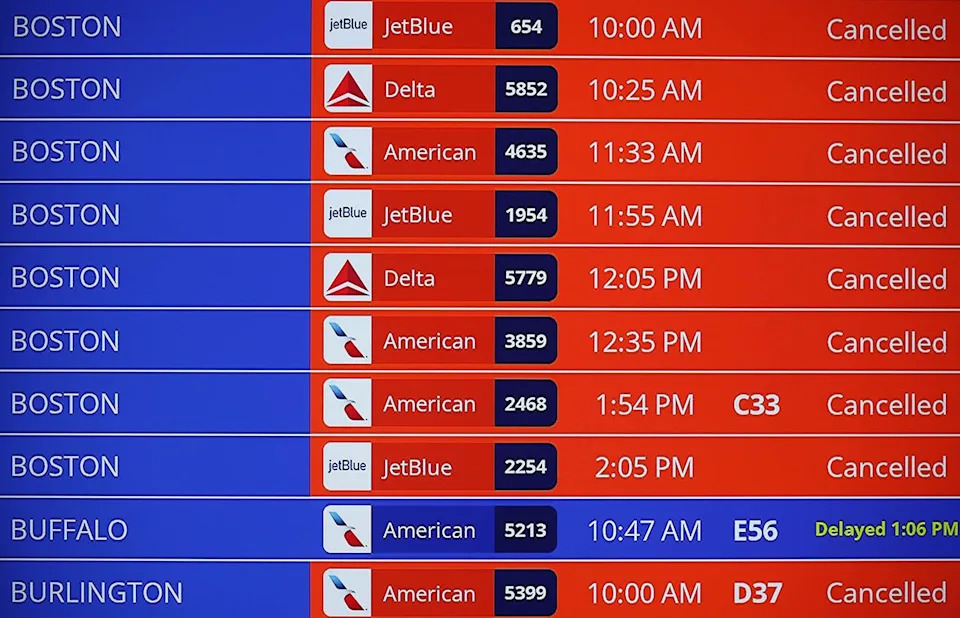
List of flight cancellations at Ronald Reagan Washington National Airport.Alex Wong/Getty
Airlines and Operational Impact
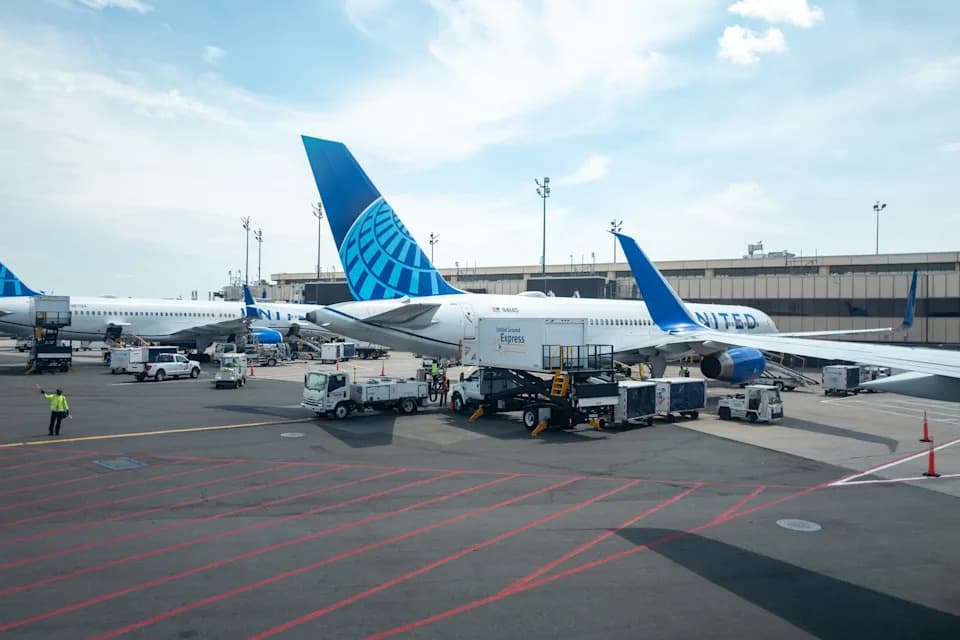
Some carriers were especially affected. Regional carrier Republic Airways had 873 flights grounded (about 76% of its planned departures), while JetBlue reported 779 canceled flights (roughly 80% of its schedule), according to FlightAware data. The cascading effect of canceled inbound flights, crew availability and snow removal challenges amplified delays and cancellations into the following days.
Human and Regional Impact
The storm prompted a blizzard warning that at one point covered more than 40 million people, according to The New York Times. In New York City, Mayor Zohran Mamdani declared a local state of emergency, restricted vehicle traffic and closed public schools for a traditional snow day as the city coped with the storm.
Recovery and Ongoing Disruption
Although the main storm system largely moved out of the Northeast by Feb. 24, cancellations and delays persisted. By midmorning on Feb. 24, many major northeastern airports were still reporting roughly half of departures canceled as airlines and airports worked through operational backlogs, de-icing needs and crew repositioning.
Why it matters: The scale of these cancellations illustrates how a single intense weather event can ripple through national air travel, affecting both large carrier schedules and the regional connections that feed major hubs.
Help us improve.