
After U.S. strikes in Caracas on Jan. 3 prompted the FAA to close airspace to U.S. carriers, roughly 50,000 passengers were stranded at San Juan’s Luis Muñoz Marín Airport. The incident highlighted Puerto Rico’s renewed role as a U.S. staging ground in the Caribbean, with military assets staged at former bases including Aguadilla and Roosevelt Roads. Reactions on the island were split — from protests to praise by Gov. Jenniffer González Colón — and locals deduced Maduro’s U.S. arrival likely routed through Aguadilla after a photo showed him holding a locally sold Nikini water bottle.
How Puerto Rico Became a Staging Ground: From Stranded Travelers to Maduro's Arrival via Aguadilla
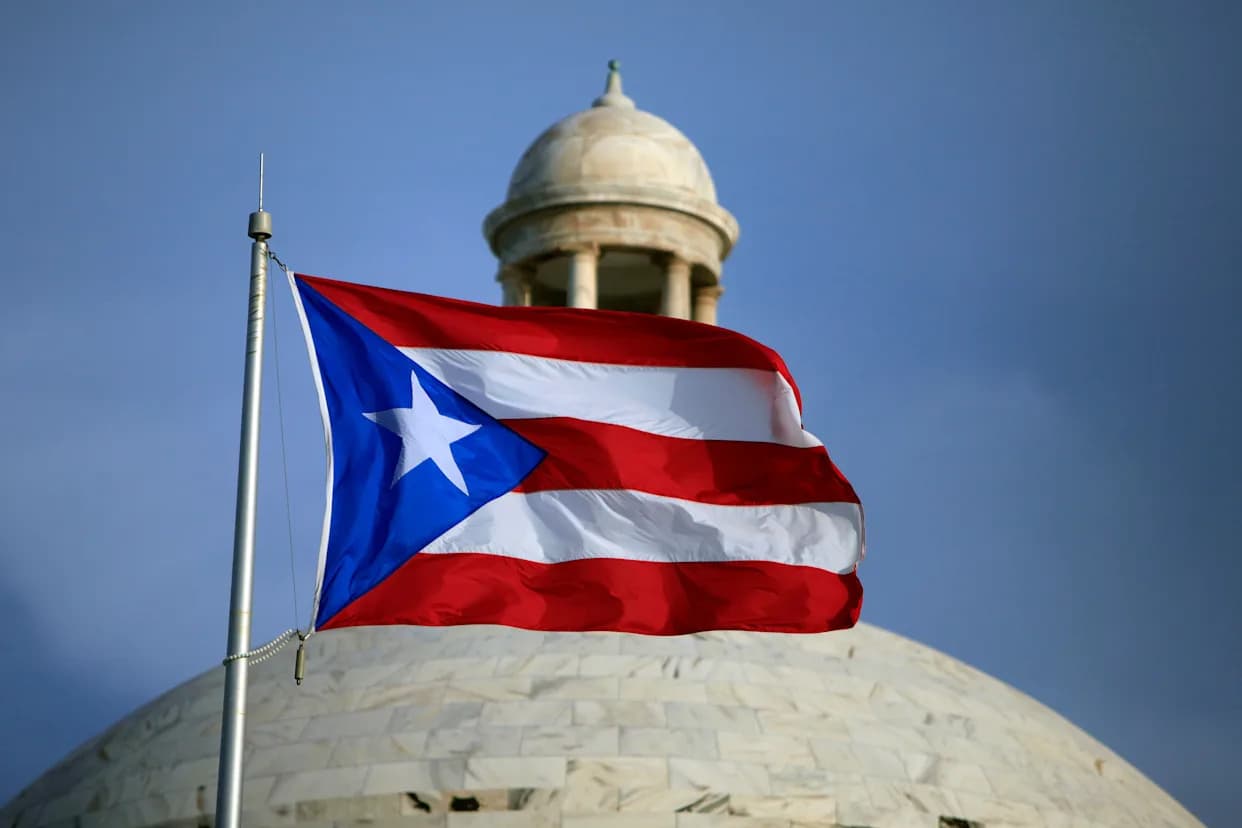
Aguadilla, Puerto Rico — On Jan. 3 my family and I found ourselves caught up in an unexpected fallout from a U.S. military operation in Venezuela: the Federal Aviation Administration had closed U.S. airspace to carriers, stranding tens of thousands of travelers at Luis Muñoz Marín International Airport (SJU) in San Juan.
We had spent two weeks visiting family over Christmas and woke in the middle of the night to catch a scheduled flight back to Washington. Reports of bombings in Venezuela had circulated, but we did not expect them to stop commercial flights. Upon arrival at SJU, the airport quickly filled with canceled flights, anxious passengers and mounting confusion as travelers scrolled through news clips on their phones.
Puerto Rico's Renewed Strategic Role
Puerto Rico, roughly 500 miles north of Venezuela, has long been strategically important to the United States. Once a major U.S. naval hub during World War II, its military footprint shrank after the Cold War. But in recent months, as the Trump administration intensified pressure on Nicolás Maduro, the island has seen a new influx of fighter jets, drones and other military hardware — much of it staged at former bases such as Aguadilla and in sites near Ponce and the reactivated Roosevelt Roads naval complex.
That buildup turned the island into an unexpected staging ground for operations in the Caribbean, and it helped explain why the FAA moved to suspend flights: U.S. aircraft struck targets in Caracas and special forces conducted a covert operation that culminated in the capture and extraction of Maduro and his wife.
On the Ground: Stranded, Then Rerouted
The early Saturday action disrupted holiday travel at SJU for nearly 50,000 passengers, according to airline estimates; some carriers warned it could take days to return everyone home. In the terminal, reactions were mixed: some passengers derided the president's showmanship, while others cheered Maduro's removal. A TV crew eventually arrived to cover the chaos — as a former TV reporter I admit I wondered why coverage was delayed.
After our San Juan flight was canceled, an Uber driver heading back to our lodging predicted weeks of instability. We spent hours searching and eventually found a late-night flight out of Aguadilla. We rented a car, drove through the night and boarded a roughly 4 a.m. departure to Newark, then continued to our home outside Washington.
Local Politics and Reactions
The renewed military presence has reignited debates in Puerto Rico about its relationship with the mainland. Views are divided: some residents protested the increased U.S. activity; others came to watch military exercises. Left-leaning leaders such as Juan Dalmau criticized the U.S. operation. By contrast, Gov. Jenniffer González Colón — a pro-statehood Republican and prominent Trump ally who previously served as the island's Resident Commissioner in Congress — publicly praised the intervention.
"As Governor of Puerto Rico, I am proud that Venezuela will finally have peace without the narco-dictatorship of Nicolás Maduro and his cronies," González Colón said, adding that the U.S. Armed Forces may continue to rely on Puerto Rico as a strategic partner in promoting stability across the hemisphere.
Debate over Puerto Rico's status — annexed by the United States in 1898, with residents granted U.S. citizenship in 1917 — colored many conversations. Memories of Hurricane Maria and the federal response remain vivid; Trump's widely criticized paper-towel moment and disputes over aid are still part of local political memory. Meanwhile, national figures have different views on statehood, and even talk of trading or selling the island has surfaced in past reporting about the president.
The Aguadilla Clue
Locals suspected the former Air Force base at Aguadilla might have been Maduro's first stop on U.S. soil after he was taken in the early hours of that day. The giveaway, many noted, was a photo President Trump shared on social media showing a blindfolded, handcuffed Maduro holding a bottle of Nikini-brand water — a label commonly sold in Puerto Rico. According to multiple accounts, U.S. special forces ultimately flew Maduro to New York, where he awaited trial on narco-terrorism and drug-trafficking charges.
On our late-night flight out of Aguadilla, I thought I glimpsed what might have been a drone in the darkness as the plane prepared to take off. Whether or not that was the piece of hardware my father had described, the episode underscored how Puerto Rico — long a strategic waypoint in the hemisphere — has once again become central to U.S. operations in Latin America, and how those operations reverberate through the lives of ordinary travelers and island residents.
Help us improve.





















