
The US Special Forces operation that seized Venezuelan President Nicolás Maduro has left Cuba alarmed and exposed. Havana reported 32 Cuban nationals killed in the operation and declared two days of mourning. Maduro's capture threatens the decades-long oil-for-services partnership that helped sustain Cuba, while prolonged blackouts and food shortages worsen the island's vulnerabilities. Analysts say the raid could embolden US policymakers to increase pressure on Cuba.
US Raid in Venezuela and Capture of Maduro Leaves Cuba Vulnerable

Cubans attend a rally Saturday in Havana in solidarity with Venezuela after the United States captured Venezuelan President Nicolás Maduro and flew him out of the country. - Ramon Espinosa/AP
As US Special Forces carried out a months-in-the-making operation in Venezuela that resulted in the seizure of President Nicolás Maduro, many Cubans were left asking a stark question: "Are we next?" The operation — which struck Venezuelan military targets and culminated in Maduro's capture — has intensified fears in Havana that the island could face renewed US pressure or even direct intervention.
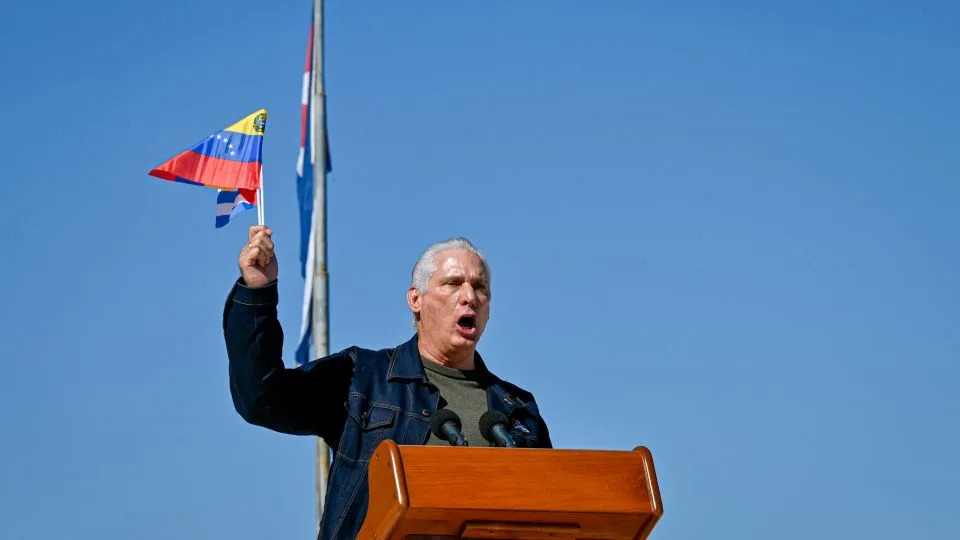
Cuban President Miguel Diaz-Canel delivers a speech Saturday in Havana as he flutters a Venezuelan national flag in support of Maduro. - Adalberto Roque/AFP/Getty Images
Casualties, Mourning and Immediate Fallout
The Cuban government reported that 32 Cuban nationals were killed during the operation, saying they died "in combat actions, performing missions on behalf of the Revolutionary Armed Forces and the Ministry of the Interior, at the request of counterparts of the South American country." Havana declared two days of national mourning. President Miguel Díaz-Canel publicly vowed to defend the Cuba–Venezuela alliance, saying the relationship would not be surrendered without a fight.
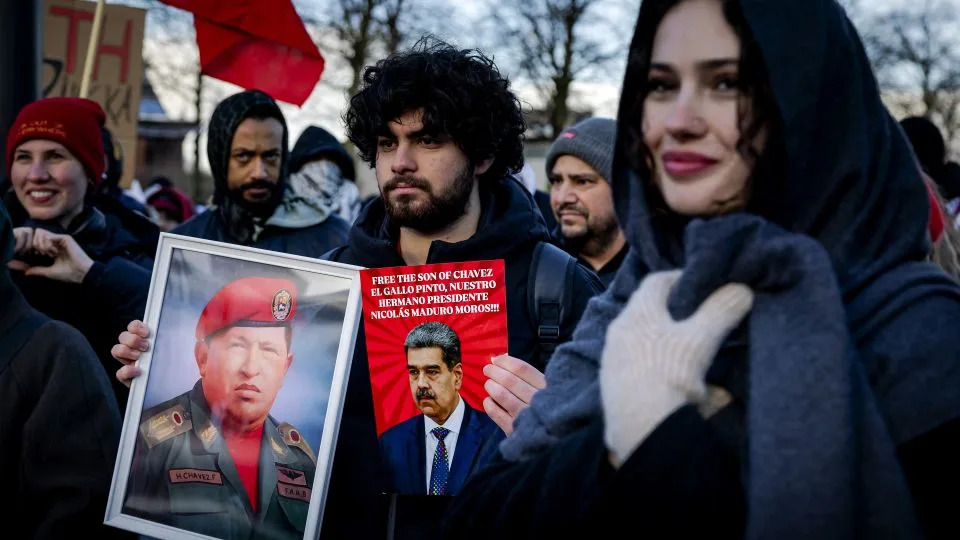
Protesters hold pictures of Venezuelan President Nicolás Maduro (right) and former Venezuelan President Hugo Chavez (left) as they take part in a demonstration against the US operation in Venezuela, in front of the US Consulate in Amsterdam on Sunday. - Robin van Lonkhuijsen/AFP/ANP/AGetty Images
"For Venezuela, of course for Cuba, we are willing to give even our own life, but at a heavy cost," Díaz-Canel said at a rally outside the US Embassy in Havana.
Strains On A Decades-Long Partnership
Maduro's capture threatens the oil-for-services partnership that sustained Cuba after the Soviet Union's collapse. For years, Venezuela supplied Cuba with billions of dollars' worth of oil in exchange for Cuban intelligence personnel, economic advisers and thousands of medical professionals and technicians. With Maduro detained, that lifeline is at risk — a development that could deepen Cuba's economic isolation.
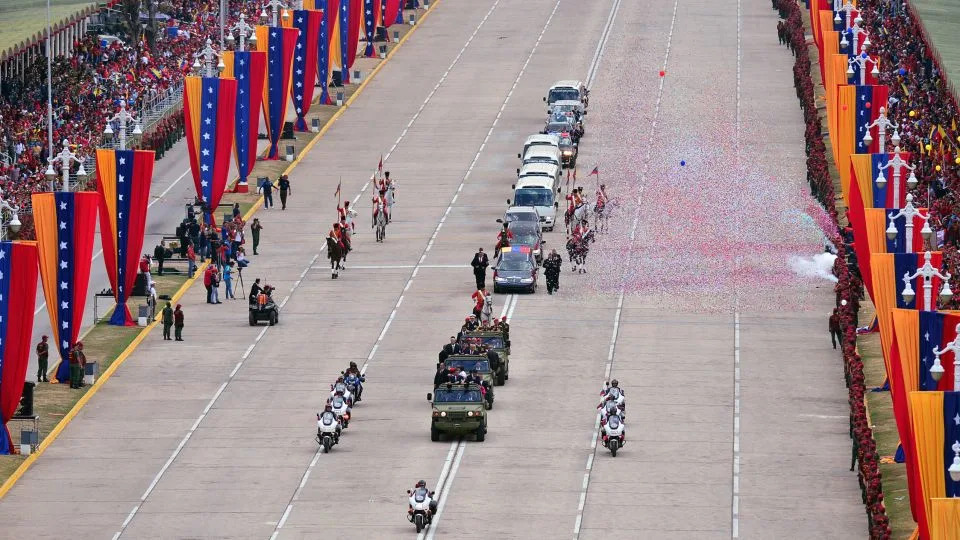
The coffin with the remains of late Venezuelan President Hugo Chavez is taken from the Military Academy to former 4 de Febrero barracks in Caracas on March 15, 2013. - Juan Barreto/AFP/Getty Images
On-The-Ground Observations
Foreign diplomats and journalists have long noted a significant Cuban presence within Maduro's inner circle. Many reports indicated that members of Maduro's security detail spoke Spanish with Cuban accents and that he relied heavily on Cuban advisers. Cubans I spoke with were surprised by how quickly and smoothly US forces executed the operation, noting that Venezuela's military had previously been well-funded while Cuba's defenses have eroded over decades.
Domestic Vulnerabilities
Cuba already faces chronic economic and infrastructure pressures: prolonged blackouts due to fuel shortages and aging power plants, persistent food shortages that strain the rationing system, and increasing difficulty maintaining public services. State media has periodically urged austerity measures; in December a commentator even suggested Cubans should give up eating rice, a remark that provoked public anger.
Regional Implications
Analysts warn that the success of the US operation in Venezuela could embolden hardliners in Washington to press other governments in the hemisphere, with Cuba potentially in the crosshairs. Some in the island's leadership speak of a perpetual threat of invasion — a fear that the operation has now sharpened.
Whether diplomatic pressure or threats will compel Havana to release political prisoners or hold multiparty elections is uncertain. What is clear is that the capture of Maduro has unsettled a fragile regional balance and deepened Cuba's strategic and economic vulnerability.
Help us improve.


