
President Trump announced that U.S. forces captured Venezuelan President Nicolás Maduro, drawing sharply divided reactions. Investment advisers say Maduro's removal could open Venezuela to major foreign investment in oil, tourism, and construction, with investor delegations already being planned. Analysts and legal experts warn the operation risks escalating geopolitical tensions and raises constitutional and international-law questions, while prominent figures like Elon Musk publicly praised the raid.
Experts Split Over Trump's Claim U.S. Captured Venezuela's Nicolás Maduro — Economic Opportunity vs. Geopolitical Risk

Bill Ackman has expressed support for Alpha School's unique model.PATRICK T. FALLON/AFP via Getty Images
President Donald Trump announced on Saturday that U.S. forces had captured Venezuelan President Nicolás Maduro. The operation immediately prompted intense and divided reactions from business leaders, investor groups, foreign-policy analysts, legal scholars, and public figures as the international fallout began to unfold.
Business And Investment Outlook
David Myers, chairman of political-risk consultancy Signum Global Advisors and a former head of investment advisory firm Evercore, told Business Insider that foreign investment in oil, tourism, and construction is likely to be the "centerpiece" of Venezuela's financial recovery. Myers said he expects Venezuela's economy to grow "faster over the next two years than people anticipate because of the extent or scale of foreign investment." He is organizing a March trip for 15–20 investors to scout opportunities; Signum has run similar delegations to Syria and Ukraine.
Geopolitical And Strategic Warnings
Ian Bremmer, founder of Eurasia Group, warned on LinkedIn that the United States appears to be sending a strong message to future Venezuelan leaders with an implied "or else." Bremmer illustrated his post with an image of a horse: the hindquarters rendered in detailed style labeled "SOF operation to capture Maduro," while the head was a rudimentary sketch labeled "plans for future of Venezuela." He added, "I wouldn't exactly call it a plan," and cautioned that "the law of the jungle is dangerous. What applies to your enemies one day can apply to you the next."
A billionaire hedge fund manager posted on X that removing Maduro should reduce oil prices—"good for America and very bad for Russia," the post argued—and suggested a weaker Russian economy could increase the likelihood of a sooner, more favorable end to the war in Ukraine.
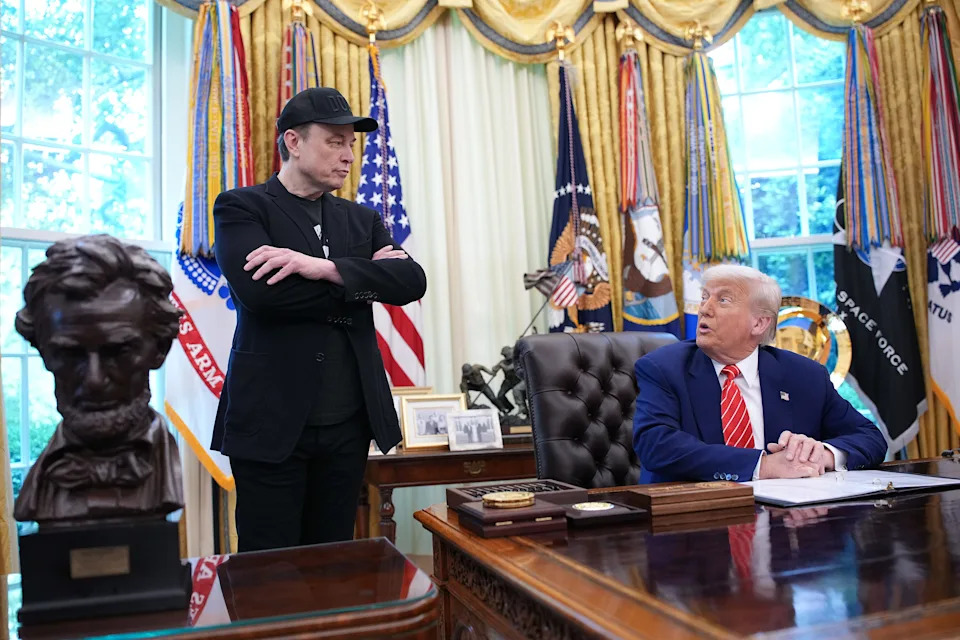
Elon Musk and Donald Trump in the Oval Office.Kevin Dietsch/Getty Images
Legal And International-Law Perspectives
Gao, a senior fellow at the Center for International Governance Innovation and a law professor at Singapore Management University, wrote on X that the Caracas raid ushered in what he called "the brave new world of international law." Gao said Maduro's capture has prompted widespread online legal debate—comparing Venezuela to other contentious cases like Taiwan—but cautioned that Beijing has long treated Taiwan as an internal matter and that U.S. operations in Venezuela do not provide China with any new legal justification to act.
Senator Elizabeth Warren (D-Mass.), a former Harvard Law professor, posted on X that seizing Maduro—"no matter how terrible a dictator he is"—is unconstitutional and risks dragging the United States into wider regional conflicts. Warren asked what it would mean for the U.S. to "run" Venezuela and warned voters wanted lower costs at home rather than what she described as "dangerous military adventurism overseas."
Public Figures And Reaction
Elon Musk, CEO of Tesla and SpaceX, praised the administration and the operation on social media, calling it "heartwarming to see so many Venezuelans celebrating their country freed from a brutal tyrant." He retweeted a White House image showing Maduro aboard the USS Iwo Jima after his apprehension with the caption, "Congratulations, President Trump! This is a win for the world and a clear message to evil dictators everywhere." Musk and Trump have had a long, uneven public relationship, alternating between alignment and sharp criticism.
What Comes Next
Analysts emphasize major uncertainties: whether foreign investment will flow quickly and at scale, how regional governments and global powers will respond, and what legal and constitutional implications the operation may carry. As reactions continue to unfold, the balance between potential economic opportunity and heightened geopolitical risk remains the central tension.
Help us improve.


