
Republican plans to flip five Texas U.S. House seats are under pressure as Latino voter sentiment weakens for Trump in some areas and Democrats substantially outperformed 2024 margins in five special elections. If Democrats replicate that over-performance next year, analysts say three of the five targeted Texas seats could flip. Polling shows Texas Latinos expressing increased regret about their 2024 vote, and affordability has emerged as the top voter concern that could influence turnout.
Texas Redistricting May Yield Fewer GOP Gains As Latino Voters And Special Elections Shift The Math

The Texas Capitol in Austin is lit on August 22, during a session in the State Senate, regarding a bill to redraw the state's congressional districts. - Sergio Flores/Reuters/File
Republican hopes of flipping five Democratic-held U.S. House seats in Texas now look less certain. A combination of stronger-than-expected Democratic showings in special elections and shifting Latino voter sentiment has narrowed the cushion the state GOP built into its new congressional map.
What Changed
The Texas GOP drew districts that, based on 2024 results, would have been carried by Republicans by at least 10 points. But Democrats outperformed former President Donald Trump’s 2024 margins by at least 13 points in five U.S. House special elections this year — averaging a 17-point improvement overall. If Democrats repeat that level of over-performance next year, analysts say three of the five newly drawn Texas seats could flip back to Democrats.

People hand out sample ballots as voters arrive to a polling site in La Rosita, Texas, on November 5, 2024. - Eric Gay/AP
Local Signals And Polling
Democratic Rep. Vicente Gonzalez, whose South Texas seat was a target for Republicans, said he senses growing discontent on the ground. "I really anticipate us taking the majority back next cycle and winning back South Texas and places that had been traditional Democratic districts," Gonzalez told CNN.
National and state polling underscores the shifting landscape: exit polls showed Trump increased his national share of the Latino vote to about 46% in 2024 (up from roughly 32% in 2020). Yet his standing with Latino voters has weakened since the start of his second term. In Texas specifically, the University of Texas/Texas Politics Project reported Trump’s approval among Latinos fell from 44% in February to 32% in October. The 2025 UH-TSU Texas Trends Survey found Texas Latinos expressing more regret about their 2024 vote; when asked how they would vote again today, Texan Latinos favored Democrat Kamala Harris by 11 points — a 19-point swing from their reported 2024 tilt toward Trump.

Texas state Sen. Pete Flores, a Republican from Pleasanton, looks over a redrawn congressional map for Texas, at the Texas Capitol in Austin on August 22. - Eric Gay/AP
Why It Matters For Specific Districts
Four of the five Democratic-held seats targeted by the state GOP are majority Latino under the new maps. The 28th Congressional District — represented by longtime Democrat Henry Cuellar — is now more than 90% Latino. A swing among Texas Latinos could also put the GOP-held 15th District, currently represented by Republican Monica De La Cruz, in play: under 2026 lines Trump would have carried it by 18 points in 2024, but his 2020 margin there was only 2 points and Democrats have been competitive historically.
Competing Interpretations
Republican pollster Patrick Ruffini has argued that Trump’s 2024 gains with Latino voters could indicate a longer-term realignment around working-class issues. Democratic strategist Chuck Rocha countered that disillusionment with Trump-era policies may push Latino voters back toward Democrats by five to 20 points in some places.
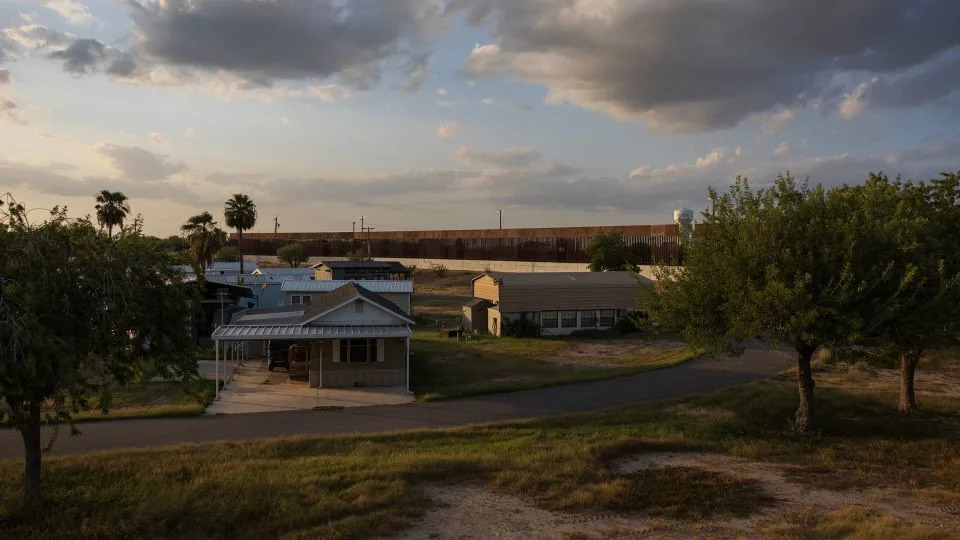
The border wall is seen near a community along the Rio Grande in Mission, Texas, on August 9. - Tom Brenner for The Washington Post/Getty Images/File
"Affordability is really front and center right now," Ruffini told CNN. "That’s the primary concern."
Special Elections And Turnout
Special elections typically draw lower turnout and more motivated partisan voters, but results this year produced notable swings. Democrats beat 2024 presidential margins by at least 13 points in five House special elections, averaging +17 points. In Tennessee’s 7th District special election, turnout was roughly comparable to the 2022 midterms; Democrat Aftyn Behn lost by 9 points, narrowing a previous Trump advantage by 13 points.
Nationally, a recent CNN poll showed registered voters preferred Democratic over Republican candidates in their House district by 5 points — about a 7-point improvement over 2024 — suggesting Democrats may enjoy an edge in voter motivation heading into the next cycle.
Bottom Line
While Republicans still expect redistricting gains in battleground states such as Texas, North Carolina, Missouri and Ohio, shifting Latino sentiment and unexpectedly strong Democratic special-election showings complicate projections. Affordability and economic concerns are emerging as top issues that could shape turnout and swing close races in 2026.


