
Tens of thousands of shoppers flock to Amapola Market's three Los Angeles-area locations during the holidays to buy freshly made masa, the essential dough for Christmas tamales. Customers often arrive before dawn — some camp overnight — to secure prized batches that families swear by for flavor and consistency. CEO Rolando Pozos calls the rush a "masa pilgrimage" and emphasizes quality after a 2016 lapse; employees start production as early as 3 a.m. to keep up. Shoppers buy large quantities, inspect bags for consistency, and carry on multi-generational tamale-making traditions.
Families Line Up Before Dawn at Amapola Market for Beloved Christmas Masa

Alex Diaz, left, reaches for a bag of masa, a dough used to make tamales, as shoppers wait in line at Amapola Market in Downey, Calif., Tuesday, Dec. 23, 2025. (AP Photo/Jae C. Hong)(ASSOCIATED PRESS)
Christina Chavarria had already made nearly 200 tamales, yet she returned to Amapola Market in Southern California early Tuesday to buy more masa — the ground-corn dough essential to the holiday staple. The queue wrapped around the parking lot, but for Chavarria the wait was worth it.
"It's always seasoned perfect, ready to go," Chavarria said.
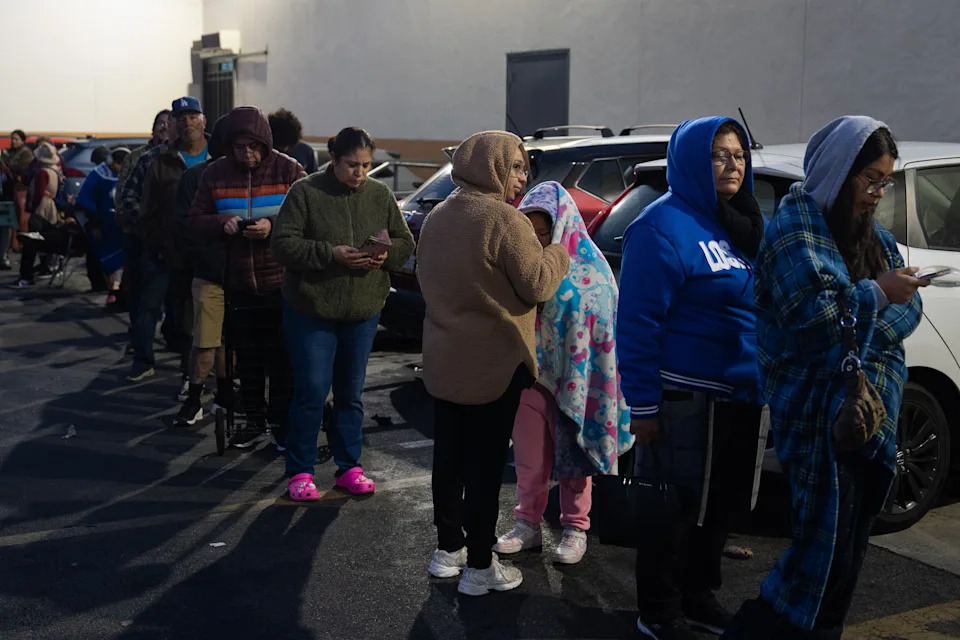 People wait in line to buy masa, a dough used to make tamales, outside Amapola Market in Downey, Calif., early Tuesday morning, Dec. 23, 2025. (AP Photo/Jae C. Hong)(ASSOCIATED PRESS)
Generations Gather To Make Tamales
Throughout the holiday season, tens of thousands of shoppers visit one of Amapola Market's three Los Angeles-area locations to buy freshly made masa. Families from many Latin American backgrounds turn tamale-making into an assembly-line ritual, spreading masa on dried corn husks and filling them with savory and sweet fillings. For many, the outing is a multi-generational tradition: daughters, mothers and aunts pass down recipes and the responsibility of preparing holiday meals.
Chavarria said she looks forward to making tamales this year with her mother and her 26-year-old daughter, who she joked is "at that age where she doesn't always want to do stuff with me." Her mother will bring roasted chiles from El Paso, Texas, adding a touch of their family's roots in Chihuahua, Mexico.
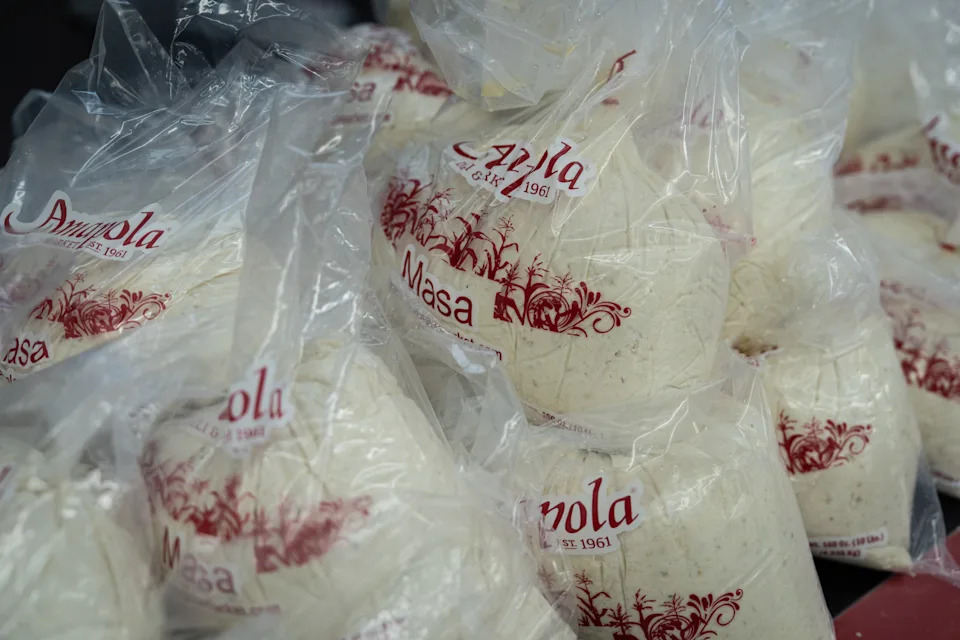
Bags of masa, a dough used to make tamales, are stacked on a counter at Amapola Market in Downey, Calif., Tuesday, Dec. 23, 2025. (AP Photo/Jae C. Hong)(ASSOCIATED PRESS)
"Masa Pilgrimage" and A Commitment to Quality
Amapola Market calls the seasonal rush the annual "masa pilgrimage." CEO Rolando Pozos said the store treats the demand as a responsibility as much as a business task.
"We want them to have a good Christmas," Pozos said. "It kind of becomes more of a responsibility than a job."
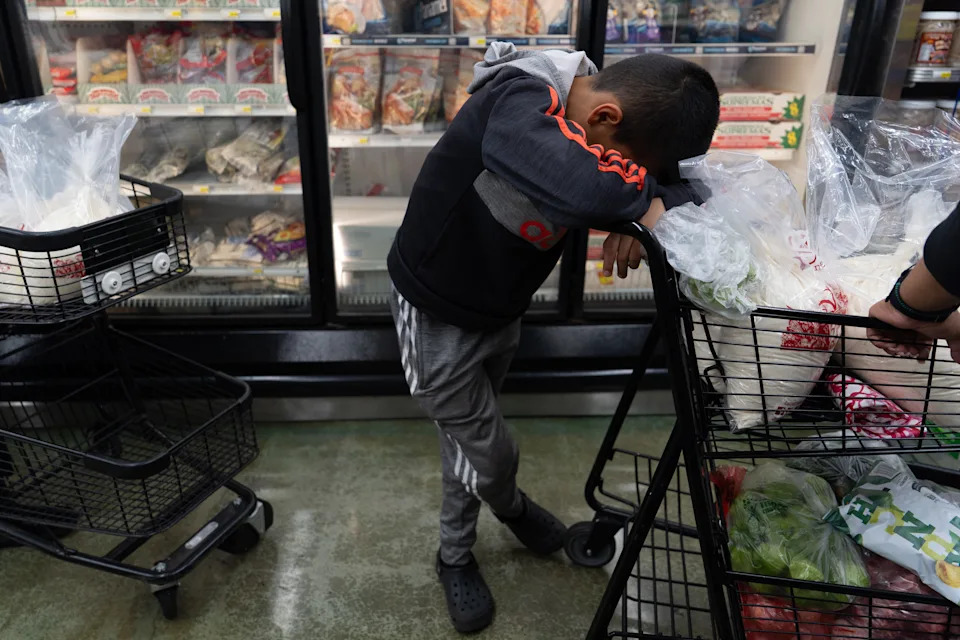 Antonio Alvarez, 11, rests his head on a shopping cart as he and his mother wait in line to buy masa, a dough used to make tamales, at Amapola Market in Downey, Calif., early Tuesday morning, Dec. 23, 2025. (AP Photo/Jae C. Hong)(ASSOCIATED PRESS)
Customers travel from across Southern California — and beyond, from places like Bakersfield and Las Vegas — sometimes arriving before dawn or even camping overnight to secure a spot. One group drove about 60 miles from Hesperia and camped out to be at the Downey location early Tuesday.
Pozos, known to regulars for his warm greetings and TV demonstrations of tamale-making, took charge of the company five years ago. He said he is proud to have kept prices stable for a third consecutive year as families feel the effects of inflation.
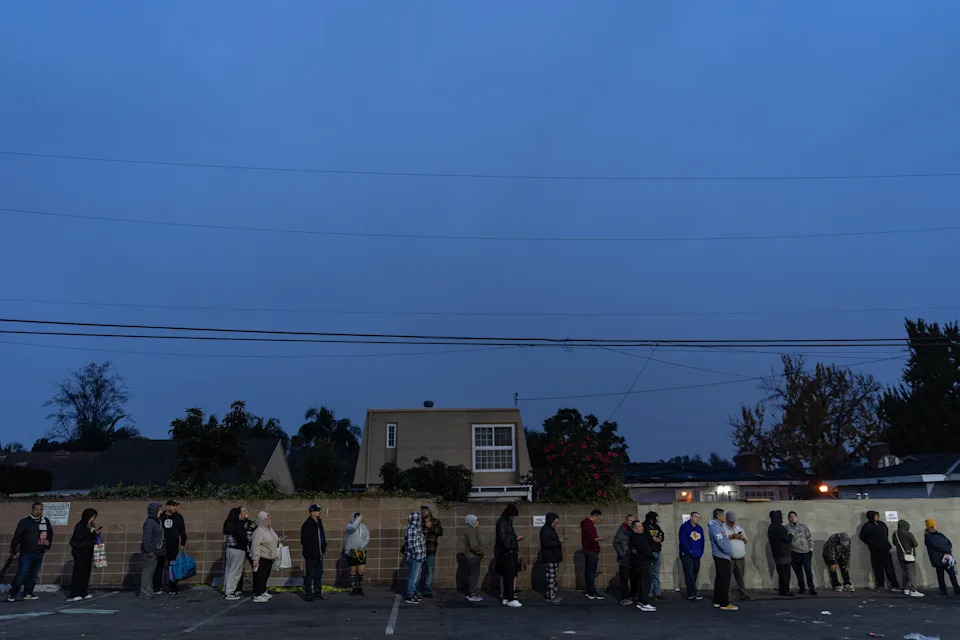
People wait in line to buy masa, a dough used to make tamales, outside Amapola Market in Downey, Calif., early Tuesday morning, Dec. 23, 2025. (AP Photo/Jae C. Hong)(ASSOCIATED PRESS)
The grocer faced a serious lapse in 2016 when some spoiled masa made customers ill; the company vowed to strengthen quality controls after that incident and now emphasizes consistency and safety during the busy season.
Early Starts and Industrial Production
During peak weeks employees begin producing masa as early as 3 a.m., working quickly to keep up with demand. In the store's back area, cooked corn is ground in massive vats, then mixed with salt, lard and other ingredients in industrial mixers. Large bowls of masa are hoisted about eight feet (2.4 meters) into the air and poured into a funnel that fills bags, which workers double-bag before customers take them home. Nearby, fresh tortillas roll onto conveyor belts by the hundreds.
The store sells masa varieties for savory tamales such as pork and chile as well as sweeter versions like pineapple and strawberry. Masa is also used for tortillas and champurrado, a thick Mexican hot chocolate.
Community, Quantity, And Close Attention To Quality
Some families buy enormous quantities — nearly 100 pounds (about 45 kilos) or more — to feed large gatherings. Customers inspect bags for consistency; watery masa can prevent tamales from cooking through properly. For many, the work is intense but beloved: "After Christmas we're done with tamales for the rest of the year," one shopper laughed, "because we make a lot and eat them for a week straight."
As the sun rose, lines moved steadily while new customers continued to arrive. Mark Monroy drove an hour and a half from Riverside to share the experience with his 9-year-old daughter Avery, passing the tradition along. "You can have a little bit of presents or maybe not even any presents for certain years," Monroy said, "but you'll always have a tamale to unwrap."


