
Sen. Rand Paul released his 11th annual Festivus Report, which tallies $1,639,135,969,608 in perceived federal waste — a figure that includes roughly $1.22 trillion in interest on the national debt. The report spotlights a range of programs Paul criticizes, from social-media COVID-19 influencer campaigns and controversial animal research to slow-moving EV-charger projects and disputed school-relief spending. Paul framed the document as a push for greater fiscal restraint as debt and interest costs rise.
Rand Paul's 11th 'Festivus Report' Flags $1.64 Trillion In Alleged Waste — From Cocaine Tests On Dogs To COVID Influencer Campaigns

Sen. Rand Paul, R-Ky., released his annual "Festivus Report" on Tuesday, which included nearly $1.6 trillion in government waste.
Sen. Rand Paul (R-Ky.) released his 11th annual "Festivus Report," cataloguing what he describes as misplaced federal spending that he says totals $1,639,135,969,608. The report combines interest on the national debt with a wide array of grants and programs Paul contends are emblematic of Washington priorities gone awry.
What the Report Claims
Paul, a long-standing critic of congressional spending, framed the report as another "Airing of (Spending) Grievances," calling attention to both long-term fiscal pressures and individual programs he views as wasteful. He noted the federal debt has climbed to nearly $40 trillion from about $36 trillion over the past year and cited Congressional Budget Office projections that he interpreted as showing rapid future borrowing.
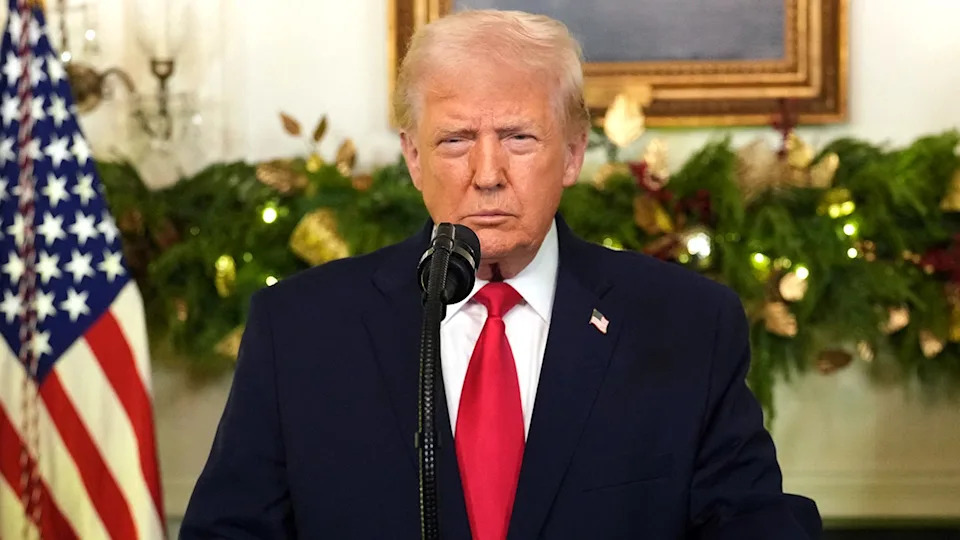
President Donald Trump addresses the nation from the Diplomatic Reception Room of the White House in Washington, Dec. 17, 2025.
Headline Numbers
Total flagged as waste: $1,639,135,969,608 (report includes roughly $1.22 trillion in interest payments on the debt).
National debt: Nearly $40 trillion, up from roughly $36 trillion the prior year, according to Paul’s statements.
Highlighted Programs and Examples
- COVID-19 outreach: More than $40 million allegedly paid to social-media influencers to promote vaccination among racial and ethnic minority groups.
- Animal research: Just over $5 million cited for administering cocaine to dogs, roughly $13 million for additional beagle experiments, and other controversial animal studies highlighted.
- Unusual research grants: More than $14 million for research that taught monkeys to play a game inspired by "The Price Is Right," and items the report describes as funding teenage ferrets to binge-drink.
- Electric vehicle infrastructure: More than $7 billion allocated for EV charging stations nationwide — the report says only 68 stations have been completed so far.
- School COVID relief spending: Paul criticized how nearly $200 billion in school relief funds were spent, citing examples such as hotel room bookings, MLB stadium rentals and ice cream truck purchases.
- Other examples: Grants for toddler screen-time studies and obesity interventions, celebrity anti-drug influencer campaigns targeting Latinx communities, and over $2 million for saliva-collection research at electronic dance-music festivals.
Context and Caveats
The Festivus Report is an advocacy document produced by Sen. Paul’s office and reflects his selection and interpretation of federal spending items. Some program descriptions in the report are brief and can sound sensational when isolated from their research or program context; agency justifications, broader program goals, or additional details are not fully represented in the summary. Readers should treat the report as a critique intended to highlight examples rather than as an exhaustive accounting of program outcomes.
"No matter how much taxpayer money Washington burns through, politicians can’t help but demand more," Paul said, framing the report as a call for greater fiscal restraint.
Why It Matters
Paul uses the Festivus Report to press for spending restraint at a time when interest payments on the debt are growing and long-term fiscal projections command more of the federal budget. Whether one agrees with his selections or characterization, the report raises questions about how federal funds are prioritized and the transparency around some grants and contracts.


