
Authorities found suspected shooter Claudio Manuel Neves-Valente, 48, dead in a storage unit on Dec. 18 after a campus attack that killed two people and injured nine. Neves-Valente is also linked to the Dec. 16 killing of MIT professor Nuno Loureiro. Brown students reported mixed emotions — relief that the threat ended, anger that the suspect will not face trial, and concern about a 17-minute delay in the university's emergency alert. Friends and classmates urged the community to remember the victims, freshman Mukhammad Aziz Umurzokov and sophomore Ella Cook, as individuals rather than statistics.
Relief and Anger After Suspected Brown Shooter Found Dead; Students Mourn, Criticize Alert Delays

Investigators collect evidence around the location where Brown University shooter Claudio Manuel Neves-Valente was found dead in Salem, N.H., Thursday, December 19, 2025.
Students at Brown University and residents of Providence experienced a complicated mix of relief and anger after authorities found the suspected shooter who killed two people and wounded nine on campus. The suspect's body was recovered in a storage unit on Thursday, Dec. 18, ending a tense multi-day manhunt.
Suspect Identified — The Providence Police Department identified the man as Claudio Manuel Neves-Valente, a 48-year-old Portuguese national. Investigators say Neves-Valente has also been linked to the Dec. 16 killing of Massachusetts Institute of Technology professor Nuno Loureiro in Brookline.
Brown University President Christina Paxson told reporters that Neves-Valente had been enrolled as a graduate student at Brown from fall 2000 through spring 2001, later taking a leave of absence and formally withdrawing in 2003.
"It felt like a weight lifted off our chest," said graduate student Jack DiPrimio, a friend of one of the victims. "But then, it dawned on us that it really wasn’t that satisfying."
Many students described conflicting emotions: relief that the immediate threat had ended, but frustration and anger that the suspect would not face trial and answer to victims' families.
Concerns About Emergency Response
Students also criticized the university's emergency notifications. According to Brown's website, the first alert was sent at 4:22 p.m. on Saturday — 17 minutes after the first 911 call. That delay left some students feeling unprotected and uncertain about the campus response.
Despite its role as Brown University’s highest governing authority with direct power over presidential oversight and long-term strategy, the board of trustees has declined to comment in the wake of the murders that exposed serious lapses in campus security.
"I’m so confused," said junior Alp Gures, who was a block from Barus and Holley when the shooting occurred. "I thought the emergency notification system was trustworthy. Just the fact that it took so long to respond ... is really worrying."
Personal Loss and Campus Shock
In the days after the attack, the normally lively campus felt shockingly quiet. Students described frantic messages on SideChat and other channels as people sought information and safety. Some briefly detained people of interest were later released as investigations continued.
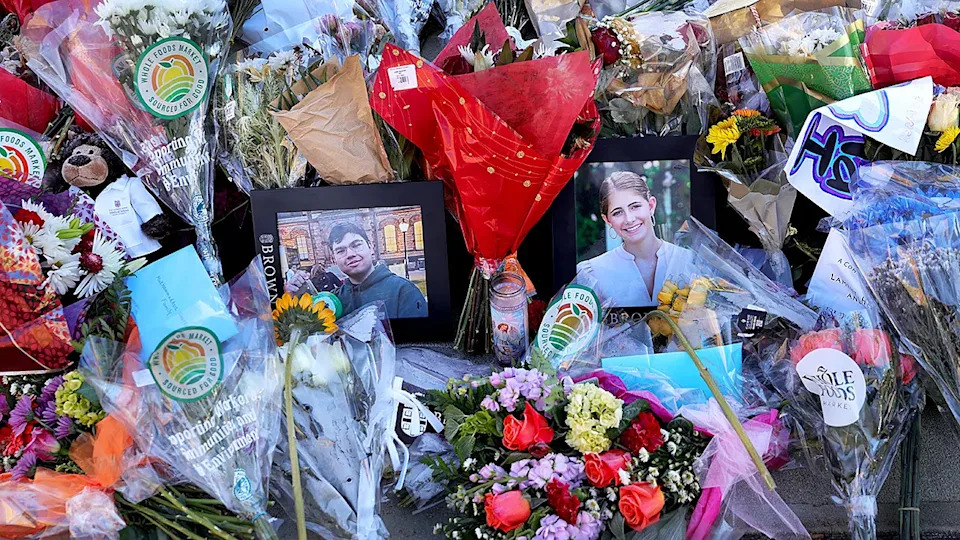
DiPrimio learned on Sunday that his friend Mukhammad Aziz Umurzokov, a freshman who aspired to become a neurosurgeon, had died of his injuries. The second person killed was identified as Ella Cook, a sophomore and vice president of Brown’s College Republicans. Several other students sustained injuries and are recovering.
DiPrimio described a painful mix of grief and anger, saying he feared the victims' memories might be used for political gain. In the days after the shooting he traveled to New York to leave flowers and a note for the victims at Rockefeller Center and posted a tribute online.
Calls To Remember The Victims
Students urged the community to preserve the identities of Umurzokov and Cook beyond headlines and statistics. "Remember them not as victims, but as people," DiPrimio said. Many echoed a broader call for meaningful reflection on prevention, emergency preparedness, and the aftermath of campus violence.
The investigation remains ongoing as local and federal authorities continue to review evidence and circumstances surrounding both the Brown campus shooting and the related killing of the MIT professor.


