
Open The Books reports that federal spending per person has risen from $208.36 in 1916 (adjusted) to $20,474.19 today — an increase of roughly 9,800%. Total federal outlays reached a record $7.035 trillion in FY2025 (CBO). The watchdog notes that mandatory programs such as Medicare ($912B) and Social Security ($1.5T) now dominate spending and calls for greater transparency to curb waste.
Report: Federal Spending Per Person Has Climbed Nearly 9,800% Since 1916
10:49 AM, 12/10/2025

New report reveals federal spending per person has ballooned by nearly 10,000% since 1916
A new analysis from conservative fiscal watchdog Open The Books finds federal spending per capita in the United States has increased dramatically since 1916, contributing to concerns about affordability even as government outlays reach record levels.
Key Findings
Adjusted to today's dollars, Open The Books reports that federal spending per person was about $208.36 in 1916 and has risen to $20,474.19 — an increase of roughly 9,800% (on the order of a multiple of nearly 98 times). Nonpartisan estimates from the Congressional Budget Office (CBO) show total federal outlays reached a record $7.035 trillion in Fiscal Year 2025.
The group's calculation translates to roughly $82,000 in federal spending for a family of four, an amount nearly equal to the 2024 median household income of $83,730.
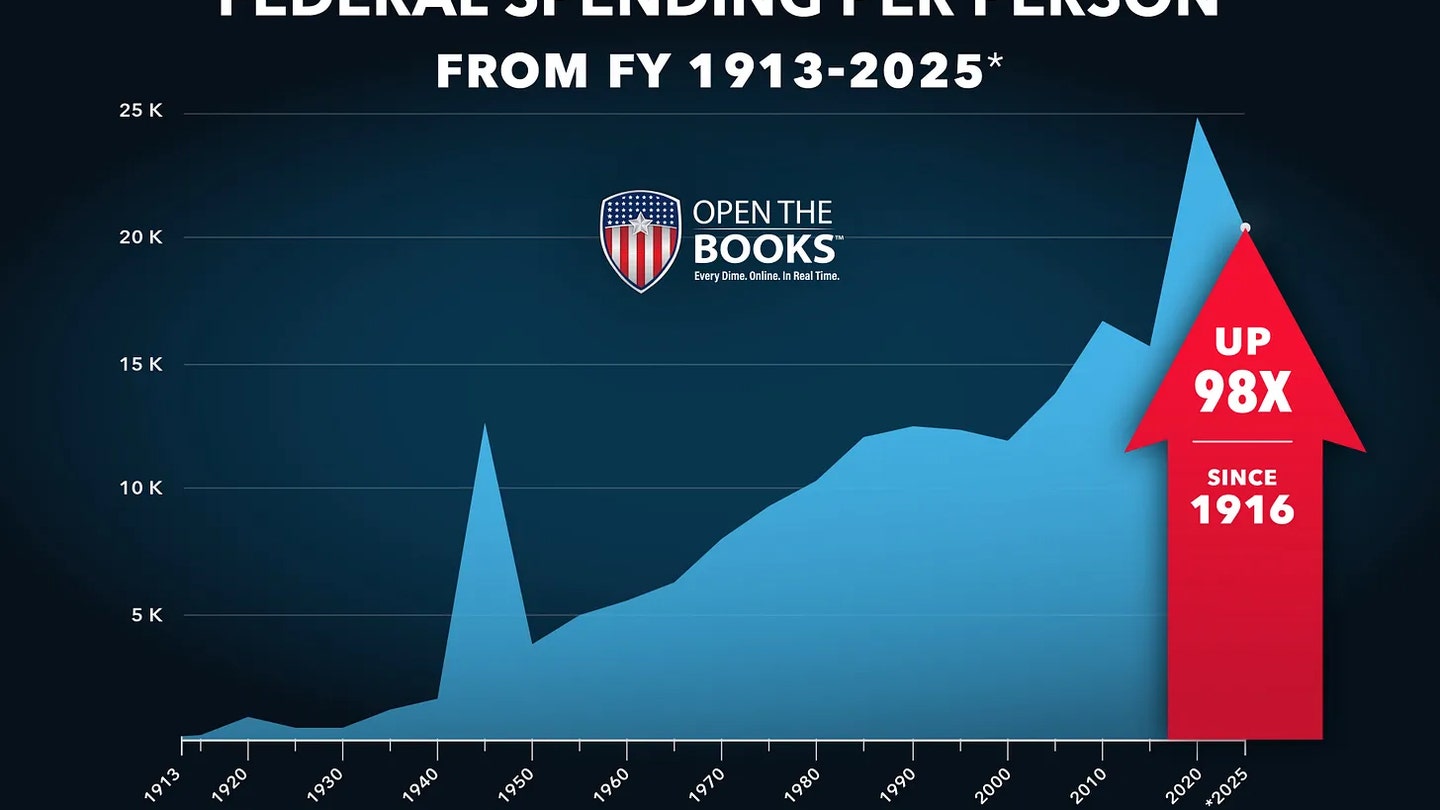
How much federal per capita spending has increased since 1916. (Open The Books)
Spending Drivers And Context
Open The Books highlights that mandatory programs now dominate federal spending. According to the report, Medicare spending in 2024 totaled about $912 billion and Social Security received roughly $1.5 trillion — figures that dwarf one-time discretionary reductions.
The watchdog also notes past efforts to trim discretionary spending. It cites an initiative described as the Department of Government Efficiency (DOGE) during the early part of former President Donald Trump's first term, which Open The Books says contributed to about $150 billion in discretionary savings; a July congressional rescission package added roughly $9 billion in reductions. Even so, these savings are small relative to mandatory program commitments.
Open The Books further points to cases where agency budgets have grown faster than staffing: for example, the Department of Education's spending has reportedly risen by 749% since 2000 while staffing levels declined.
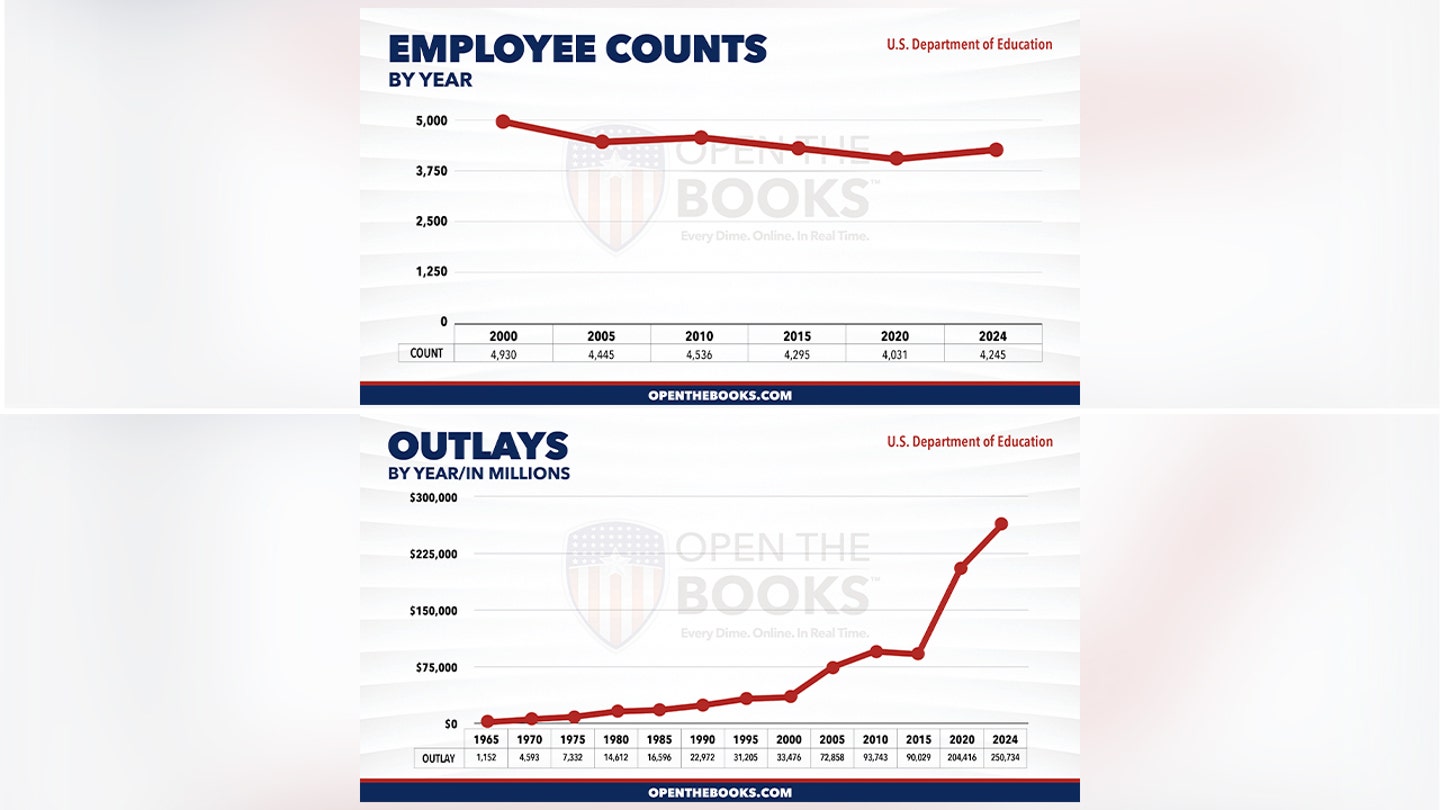
At the Department of Education, since 2000, the number of staff has gone down but the agency's spending has increased nearly 8 times. (Open The Books)
John Hart, CEO of Open The Books: "While American families and businesses find a way to do more with less, government does less with more. The best affordability and stimulus program imaginable is to reduce waste, fraud and central planning in government. Every dollar saved in Washington is a dream realized somewhere in America."
The report calls for closer scrutiny and greater transparency of federal spending so taxpayers can better evaluate value and reduce waste, fraud and abuse.
Why This Matters
Because federal per-capita spending now approaches the median household income level and exceeds typical household grocery and mortgage costs in many cases, the watchdog argues policymakers and citizens should debate whether higher spending has delivered commensurate improvements in quality of life, affordability, or innovation.
Sources: Open The Books analysis; Congressional Budget Office; Department of Agriculture recommendations; Rocket Mortgage mortgage averages.
Similar Articles

White House Hails ‘Big Progress on Prices’ — Shoppers and Retailers Say Otherwise
Overview: The White House says prices have made “big progress” as headline inflation eases toward about 3% in 202...

Report: Federal Troop Deployments to U.S. Cities Have Cost Taxpayers Nearly $473M
New analysis: The National Priorities Project, as reported by The Intercept , estimates roughly $473 million has been spent d...

Survey Finds U.S. Food Insecurity Rising Amid Persistently High Grocery Prices
Purdue University reports that about 14% of U.S. households experienced food insecurity on average from January to October, u...

America Is Aging — How Seniors’ Rising Political Clout Is Shaping Policy (And Hurting the Young)
America is getting older, and politics is following. The share of Americans aged 65+ rose from about 9% in 1960 to 18% in 202...

Report: Four Largest Public-Sector Unions Spent $915M on 2024 Politics — Report Says 86% Came From Member Dues
Report Summary: The Commonwealth Foundation says the NEA, AFT, SEIU and AFSCME spent $915 million on federal and state politi...

Thanksgiving Dinner for 10 Falls to $55.18 — Lowest Since 2021 as Turkey Deals Drive Savings
The Farm Bureau's supermarket check finds a classic Thanksgiving dinner for 10 now costs $55.18, down 5% from 2024 and the lo...

They've Paid for It: Why Undocumented Immigrants Deserve Medicaid
Undocumented immigrants pay billions in taxes but are largely excluded from federal benefits, including Medicaid. In 2022 the...

Health Care Is Becoming Less Affordable: How Trump Policies Could Drive Millions Off Coverage
The article explains how proposed Trump-era policies — deep Medicaid cuts and the possible end of ACA tax-credit subsidies — ...

Grocery Prices Keep Food Insecurity Rising: Purdue Survey Shows About 14% of U.S. Households Affected
Purdue University reports that about 14% of U.S. households were food insecure on average between January and October, up fro...

Trump’s Biggest Test on the Economy and Health Care: Confronting the Affordability Crisis
President Trump faces pressure to address rising costs for health care, groceries and housing as Congress considers whether t...

Incomes Lag Behind Rising Prices, Pushing Nearly 1 in 4 U.S. Households to Live Paycheck to Paycheck
Key points: Economists say incomes are increasingly failing to keep pace with the cost of living. Bank of America Institute a...

Watch Live: Underserved & Overwhelmed — Solutions for the Financial Crisis Facing Family Caregivers
One in four Americans is a family caregiver, and unpaid caregivers spend more than $7,200 annually out of pocket — roughly 26...

DHS Criticizes Newsom as California Seeks to Raise Ambulance Reimbursements by ~382% Amid Medi‑Cal Debate
Key Takeaway: California data show average taxpayer‑funded ambulance reimbursements rising from $339 (2022) to $1,168 (2024),...

Poll: Most Americans Say Trump Has Raised Prices — Tariffs and Policy Choices Drive Frustration
New YouGov poll: 49% of Americans say President Trump has raised prices since January, while 24% say he has lowered them. Eco...

How Much Did NASA's Apollo Program Really Cost the United States?
The Apollo program cost roughly $20.6 billion for spacecraft, launchers and mission operations (1960–1973), rising to $25.8 b...