
The FBI has charged postdoctoral researcher Youhuang Xiang, who was working in the U.S. on a visa, with allegedly smuggling E. coli into the country and making false statements to officials. Director Kash Patel warned universities to ensure researchers follow legal import/export procedures for biological materials and praised investigators from the FBI and CBP. The announcement follows related cases involving alleged smuggling of roundworm material by three scholars in November and a February detention of a Harvard researcher over frog embryos. Authorities say the investigation into Xiang is ongoing.
FBI: Postdoctoral Researcher Youhuang Xiang Charged With Allegedly Smuggling E. coli Into U.S.; Director Urges University Vigilance

FBI Director Kash Patel conducts a news conference at the Department of Justice on Thursday, Dec. 4, 2025, announcing the arrest of Brian Cole Jr., who allegedly placed pipe bombs near the Republican and Democratic National Committee offices on Jan. 6, 2021.
FBI Director Kash Patel announced Friday that federal authorities have charged a postdoctoral researcher working in the United States on a visa, Youhuang Xiang, with allegedly smuggling Escherichia coli (E. coli) into the country and making false statements to officials. The university where Xiang was based has not been disclosed.
In a post on X, Patel described the case as "another example of a researcher from China, given the privilege to work at a U.S. university, who then allegedly chose to take part in a scheme to circumvent U.S. laws and receive biological materials hidden in a package originating from China." He warned that mishandled biological agents "could inflict devastating disease to U.S. crops and cause significant financial loss to the U.S. economy."
Agencies and Investigations: Patel praised the FBI's Indianapolis and Chicago field offices and thanked U.S. Customs and Border Protection (CBP) for their roles in the investigation. Federal authorities say the case remains under active investigation and additional details may be released as inquiries continue.
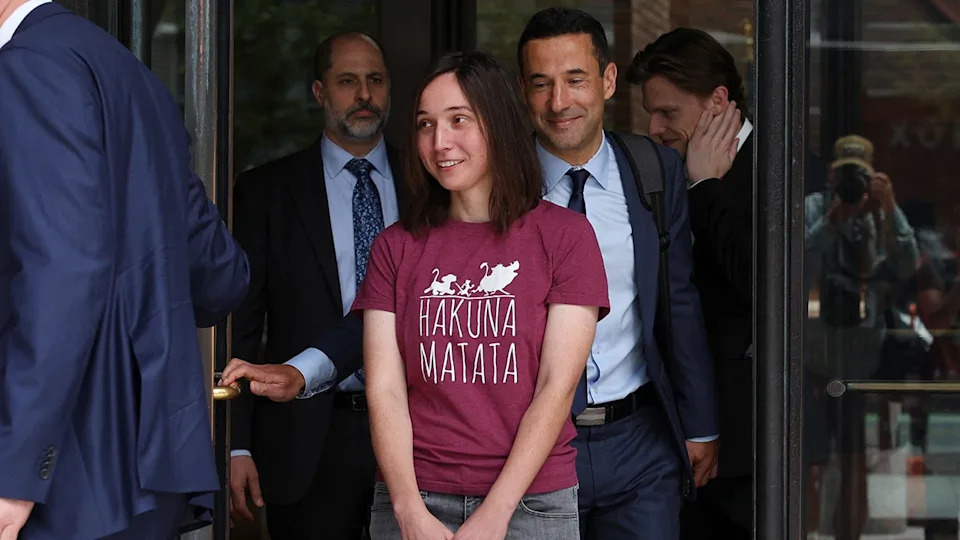
Kseniia Petrova, a Russian-born scientist and research associate at Harvard University, leaves the John Joseph Moakley United States Courthouse after she was released from U.S. federal custody, while awaiting trial in a criminal case in Boston, Mass., June 12, 2025.
Context and Related Cases
This incident follows several recent enforcement actions involving foreign scholars and biological materials. In November, the Justice Department charged three Chinese nationals—identified as Xu Bai, Fengfan Zhang, and Zhiyong Zhang—who allegedly conspired to smuggle biological material related to roundworms into the U.S. while participating in academic exchange programs. Authorities say those shipments originated from Wuhan and were concealed in multiple packages; the investigation also implicated a previously convicted individual, Chengxuan Han.
In February, Russian-born Harvard researcher Kseniia Petrova was detained at Boston Logan International Airport after federal officers say she lied about carrying biological samples; a K9 inspection reportedly uncovered undeclared petri dishes and vials containing embryonic frog cells. Petrova was later released from federal custody.
Patel's Advice to Universities: "Ensure your researchers know that there is a correct and legal way to obtain a license to import/export approved biological materials, and it must be followed without exception," the FBI director wrote.
Attorney General Pam Bondi also commented that allegedly attempting to smuggle biological materials under the guise of research "is a serious crime that threatens America’s national and agricultural security."
What’s Next: The FBI and CBP continue to investigate the Xiang case. Because the accusations are still under review in federal proceedings, the charges are described as alleged, and the defendant is entitled to due process. This is a developing story; authorities may provide further information as the investigation proceeds.


