
Bruna Damiana Heinsfeld warns that rapid, unexamined AI adoption risks turning universities into extensions of Silicon Valley, where corporate logic defines knowledge. She cites multimillion-dollar vendor contracts and branded campus events as signs that technology companies are shaping academic values. Experts call for redesigned assessments and mandatory "epistemic checkpoints" so students must demonstrate how they reason, verify sources, and critique AI outputs.
Are Universities Ceding Truth to Big Tech? Professor Warns Rapid AI Adoption Risks Campus Autonomy

A professor says AI didn't cause the crisis in education — it exposed it.ATTA KENARE/AFP via Getty Images
Bruna Damiana Heinsfeld, an assistant professor of learning technologies at the University of Minnesota, warns that universities risk surrendering intellectual autonomy to Big Tech if they adopt artificial intelligence uncritically. In an essay for the Civics of Technology Project, she argues that widely deployed AI tools can embed corporate priorities into classroom practice and institutional decision-making, reshaping what counts as knowledge and truth.
How Corporate Logic Becomes Academic Practice
Heinsfeld says modern AI systems tend to valorize efficiency, scale and quantitative data as primary measures of validity. When universities accept vendor platforms, multimillion-dollar contracts, and branded learning environments without scrutiny, she argues, students may begin to treat the assumptions behind those systems as neutral or inevitable rather than contested.
Concrete Examples
Heinsfeld points to California State University’s recent deals as illustrative. The system signed a $16.9 million contract in February to deploy ChatGPT Edu across 23 campuses, making the tool available to more than 460,000 students and 63,000 faculty and staff through mid-2026. She also notes an AWS-powered summer “AI camp” that featured prominent Amazon branding — from slogans to AWS-branded notebooks and promotional swag — which, she argues, framed the learning environment in corporate terms.
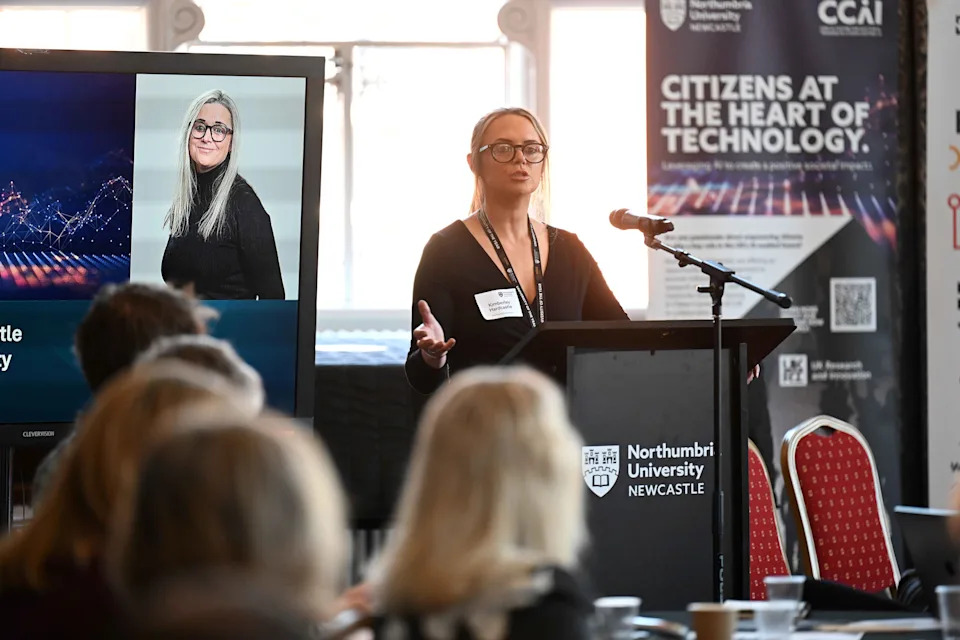
Kimberley Hardcastle said generative AI is quietly shifting knowledge and critical thinking from humans to Big Tech's algorithms.Courtesy of Kimberley Hardcastle
Pedagogical Concerns and Proposed Fixes
Kimberley Hardcastle, a business and marketing professor at Northumbria University, emphasizes the classroom-level consequences. She says students’ “epistemic mediators”—the tools they use to make sense of information—have shifted, and assessment design must follow. Hardcastle recommends that assignments require students to:
- Show their reasoning process and cite sources beyond AI outputs;
- Verify claims against primary evidence;
- Complete built-in "epistemic checkpoints" where they explicitly evaluate whether a tool is enhancing or replacing their thinking.
“Education should remain the space where we confront the architectures of our tools,” Heinsfeld writes, warning that without critical scrutiny, universities risk becoming “the laboratory of the very systems they should critique.”
Why This Matters
Both scholars stress that the stakes are institutional and pedagogical. Institutionally, technology partnerships and branding can shape curricular priorities and standards of evidence. Pedagogically, routine reliance on AI without instruction in verification and reasoning may weaken students’ capacity to judge truth independently. Their combined message: universities must teach students how to question and analyze the tools they use, not simply how to operate them.
What leaders can do: subject vendor agreements to public, scholarly review; require transparency about algorithms and data sources; redesign assessments to include epistemic checkpoints; and cultivate curricula that interrogate the values embedded in technological systems.


