
The weekend ambush in Syria that killed two U.S. soldiers and a civilian interpreter has raised unresolved questions about the attacker’s ties to ISIS and to Syrian security forces. Syrian officials say the shooter served in Internal Security, while U.S. sources describe those links as unclear and under investigation. The incident underscores the challenge of extremist elements within Syria’s newly formed forces and echoes “green-on-blue” attacks in Afghanistan, complicating U.S.-Syrian cooperation.
Two U.S. Soldiers Killed In Syria; Shooter’s Links To ISIS And Syrian Security Remain Unclear

President Donald Trump boards Marine One on the South Lawn of the White House on December 13, 2025. Trump said there will be "serious retaliation" after two US soldiers and an interpreter were killed in Syria. - Samuel Corum/Sipa/Bloomberg/Getty Images
When an attacker shot and killed two U.S. service members and a civilian interpreter in Syria over the weekend, President Donald Trump vowed “very serious” retaliation. Initial statements from U.S. officials described the assailant as a lone gunman with alleged ties to ISIS, but subsequent reporting and Syrian statements have complicated that account.
A spokesman for Syria’s Ministry of Interior Affairs said the attacker had at some point served in the country’s Internal Security service. Days after the ambush, ISIS had not claimed responsibility, and multiple U.S. and Syrian sources told CNN that the shooter’s connection to the terror group is murkier than early public statements suggested.
Investigation and Mixed Claims
U.S. investigators are still piecing together the attacker’s background and whether any affiliation with Syrian security forces was current or historical. Syrian authorities say the attacker had been flagged for a security review and that they passed preliminary warnings to the U.S.-led coalition, though Syrian officials say coalition forces did not act on that notice.
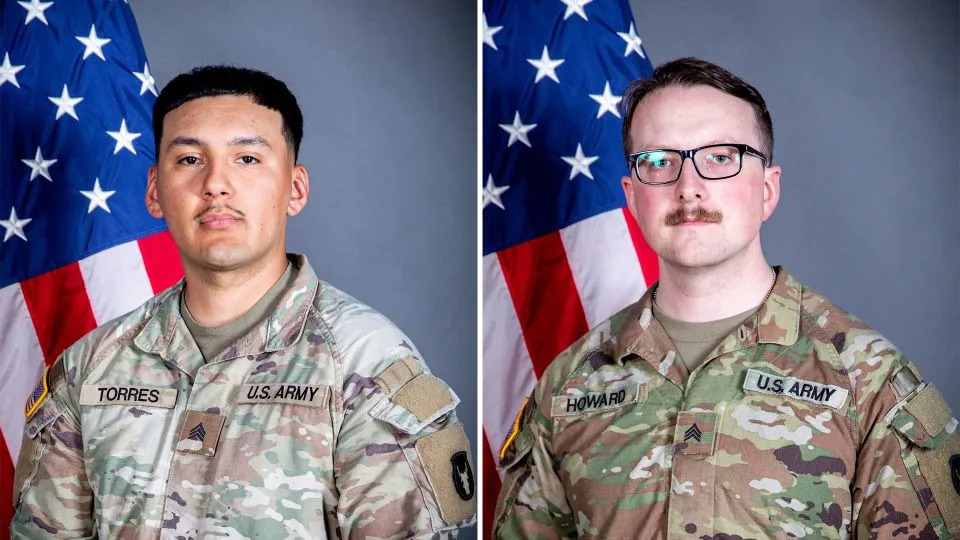
Sgt. Edgar Brian Torres-Tovar, left, and Sgt. William Nathaniel Howard. - Iowa National Guard
Nour Eddin al-Baba, a Syrian Ministry of Interior Affairs spokesman, said Syrian officials had alerted coalition partners about a possible breach or anticipated ISIS activity.
U.S. officials cautioned that while initial indicators suggested past ties to Syrian security services, definitive conclusions about extremist affiliations remain under investigation.
Broader Implications
The attack highlights persistent security challenges inside Syria’s newly formed forces. Sources say the Syrian army now includes fighters from a range of backgrounds — including foreign fighters and individuals with extremist histories — as the country attempts a rapid security-sector transition. Observers have drawn parallels to the “green-on-blue” attacks in Afghanistan, where local security personnel sometimes turned on NATO forces during training and partnership operations.
Hundreds of American troops remain in Syria as part of ongoing operations to eliminate ISIS. The two U.S. soldiers killed were Sgt. Edgar Brian Torres Tovar, 25, of Des Moines, Iowa, and Sgt. William Nathaniel Howard, 29, of Marshalltown, Iowa, both deployed from a rotation of the Iowa National Guard. A civilian interpreter also died in the attack.
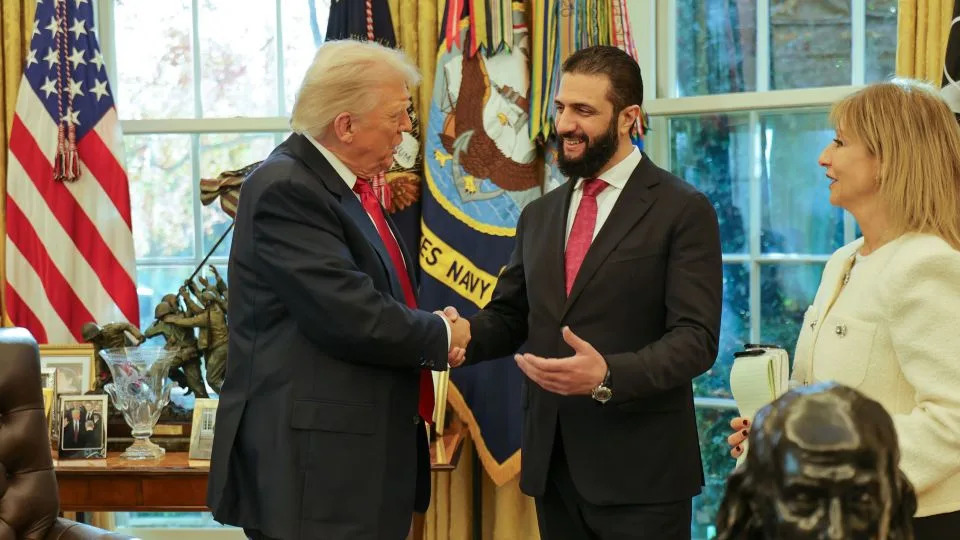
This handout picture from the Syrian Presidency shows US President Donald Trump and Syrian President Ahmed al-Sharaa during a bilateral meeting at the White House on Monday, November 10, 2025. - Syrian Presidency
White House press secretary Karoline Leavitt said President Trump planned to meet the families at Dover Air Force Base when the remains are returned.
U.S.-Syrian Partnership And Political Risks
The mission that brought U.S. personnel into partnership with Syria’s new ruling authority follows a major policy shift by Washington. The Trump administration has publicly backed Syria’s new president, Ahmed al-Sharaa, who previously led a U.S.-designated terrorist group and until recently carried a $10 million U.S. bounty. U.S. officials have framed his past ties as behind him while emphasizing cooperation against ISIS.
Analysts warn that integrating foreign fighters and disparate armed groups into formal units creates ongoing security risks. A recent Middle East Institute report noted that between 2,000 and 3,000 non-Syrian fighters have been integrated into a dedicated defense ministry unit, creating concerns for both domestic stability and international partners.
What Comes Next
Syria’s Interior Ministry said five suspects were arrested in connection with the ambush. U.S. and Syrian officials appear to be balancing the need to maintain cooperation against ISIS with the political and security costs of acknowledging that threats to U.S. forces may extend beyond ISIS alone. Investigators continue to examine the attacker’s history, motive and any organizational ties.


