
The reed leafhopper (Pentastiridius leporinus) now threatens sugar beet and other European crops by carrying bacterial pathogens rather than by direct feeding. Researchers used sequencing and FISH to identify at least seven bacterial species inside the insect, including two pathogens that cause SBR and stolbur. Nutritional symbionts likely enabled rapid host expansion, and teams are testing dsRNA-based sprays as a targeted, eco-friendly control option.
Tiny Bacteria Turn Reed Leafhopper Into Major Threat to Europe’s Crops

A Green Leaf-hopper, Cicadella viridis, resting on a plant stem. (photo credit: STOCK PHOTO)
A tiny insect is inflicting heavy losses on Europe’s sugar beet sector and other crops—not by chewing leaves, but by carrying bacteria that strip plants of value. Recent research from the Max Planck Institute for Chemical Ecology (MPG) and the Fraunhofer Institute for Molecular Biology and Applied Ecology (Fraunhofer IME) shows that the reed leafhopper (Pentastiridius leporinus) now hosts a complex microbiome that both sustains the insect and spreads serious plant diseases.
Key Findings
The team identified at least seven bacterial species inside the reed leafhopper. Two of these bacteria are linked to destructive plant diseases: Candidatus Arsenophonus phytopathogenicus, the agent of Syndrome Basses Richesses (SBR), and Candidatus Phytoplasma solani, which causes stolbur. SBR reduces sugar content in sugar beet, threatening yields and the value of an important industrial crop, while stolbur produces variable symptoms across hosts and generally lowers yields.
How The Study Was Done
Using advanced DNA sequencing and fluorescence in situ hybridization (FISH), researchers mapped which microbes occupy which insect tissues. Tissue-level localization allowed them to distinguish obligate nutritional symbionts—bacteria the leafhopper depends on for survival—from plant pathogens transmitted to crops.
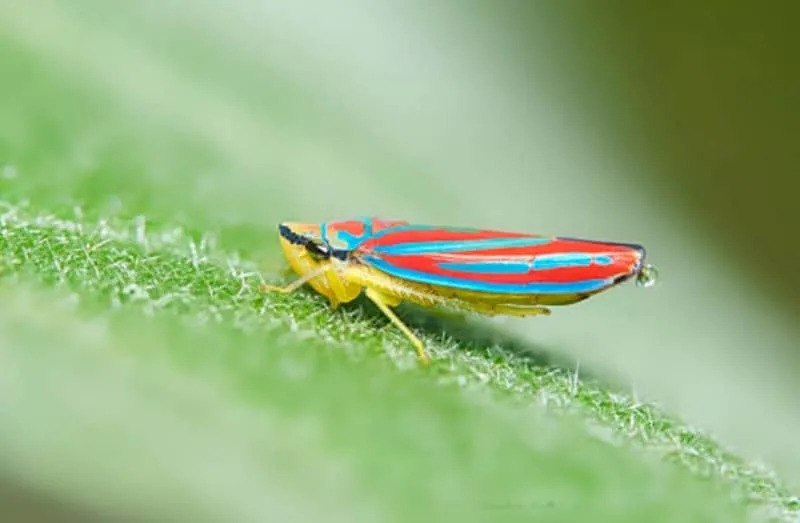
Close-up of a colorful leafhopper insect on a green leaf with a water droplet. (credit: STOCK PHOTO)
Symbionts and Host Expansion
Three members of the microbiome (from genera Purcelliella, Vidania, and Sulcia) act as nutritional symbionts, synthesizing essential amino acids and B vitamins that let the leafhopper survive on nutrient-poor plant sap. Researchers propose that this expanded nutritional toolkit helped the insect move from a single reed-grass host to several major crops (sugar beet, potato, carrot, onion) in under a decade. The microbes may also assist the insect in tolerating plant chemical defenses.
Open Questions And Control Strategies
Despite the advances, it remains unclear how the leafhopper circumvents plant defense mechanisms; the study suggests both mutualistic symbionts and disease-causing bacteria may play roles. The research team is continuing to probe bacterial interactions inside the insect and to test interventions: one proposed approach is to inhibit production of specific insect or bacterial proteins to disrupt key symbioses.
"We showed that the reed leafhopper hosts at least seven species of bacteria. The leafhopper appears to be completely dependent on three of these species. Two other bacteria cause the plant diseases Syndrome Basses Richesses (SBR) and stolbur," said Heiko Vogel (MPG).
Fraunhofer IME researcher Andreas Vilcinskas adds: "We are currently developing dsRNA-based sprays in Giessen for the environmentally friendly and targeted control of reed leafhoppers and other pests." If successful, these RNA-based treatments could offer farmers a focused alternative to broad-spectrum chemical pesticides.
Implications
Understanding how microbes shape insect nutrition, host range and pathogen transmission is essential for forecasting outbreaks and designing targeted pest-management strategies that reduce crop losses while limiting environmental harm.


