
The Philippines reels after revelations that billions allocated to a national flood-control program were allegedly stolen, even as Typhoon Kalmaegi unleashed rains that contributed to more than 230 deaths. Audits found many projects were substandard or "ghost" works, prompting arrests, asset freezes and large youth-led protests demanding accountability. President Marcos Jr. has pledged prosecutions and infrastructure repairs, but public trust has plunged and analysts say conclusive proof of top-level involvement could shift the political landscape.
Billions Meant for Flood Defenses Looted as Typhoon Kills Hundreds in Philippines

A man takes a bath amid the remains of a community destroyed by floods brought on by Typhoon Kalmaegi in Talisay, Cebu, Philippines on November 6, 2025. - Eloisa Lopez/Reuters
Ace Aguirre was two spoonfuls into his oatmeal on the morning of November 4 when he noticed mud seeping across the floor of his bungalow in Cotcot, a village in Cebu province. Within minutes his living room furniture was floating; water rose to chest level; his son prayed; and his daughter—who cannot swim—perched on a pillar as cars and debris swept by. He and his family survived, but a neighbor, a mother of two, drowned after becoming trapped in her kitchen.
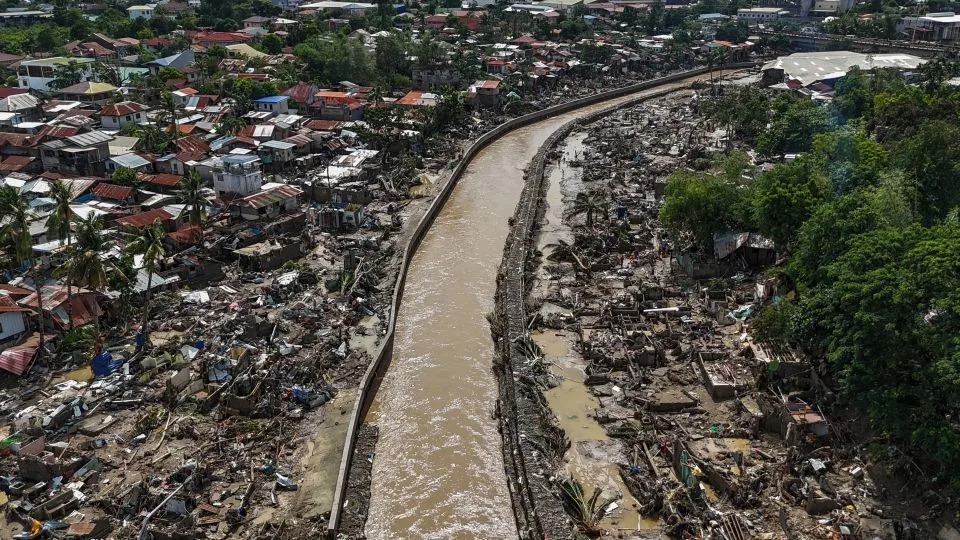
This aerial photo shows damaged houses in the aftermath of Typhoon Kalmaegi in Talisay, in Cebu province on November 5, 2025. - Jam Sta Rosa/AFP/Getty Images
A Deadly Storm and a Wider Scandal
That morning Typhoon Kalmaegi dumped more than a month’s worth of rain, swelling rivers and triggering flash floods that contributed to a nationwide death toll of more than 230 people. The tragedy landed amid explosive revelations that politicians, officials and contractors allegedly siphoned off billions intended for a national flood-control program.
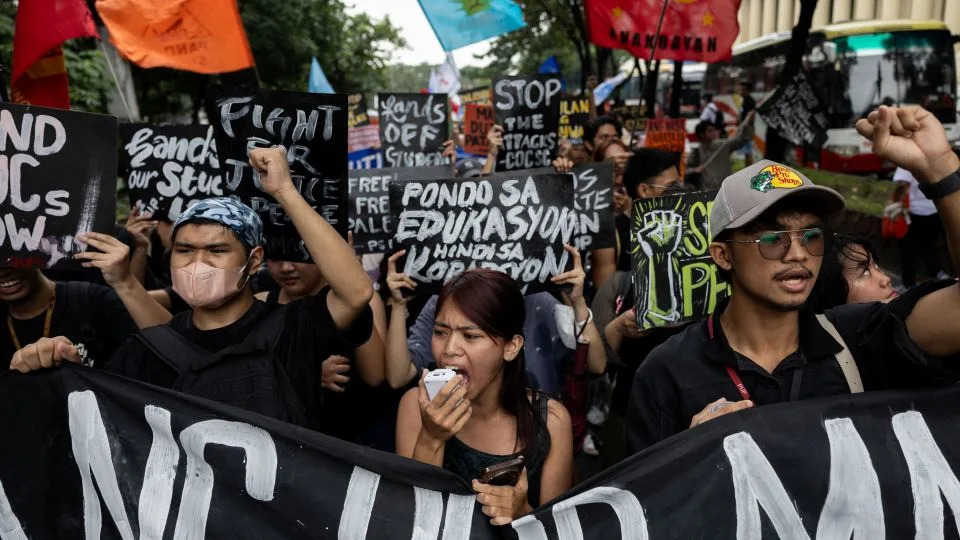
Filipino activists protest near the presidential palace on Human Rights Day in Manila, Philippines on December 10, 2025. - Eloisa Lopez/Reuters
In July President Ferdinand Marcos Jr. acknowledged an internal audit finding systemic problems in a program worth more than 545 billion pesos (about $9.2 billion). Officials said many of roughly 10,000 projects overseen since 2022 were either built with substandard materials or were never constructed—so-called "ghost projects." Local citizens in Cebu had already called for audits of flood-control work along the Cotcot River before the November deluge.

Philippines' President Ferdinand Marcos Jr speaks during a press conference at Malacanang Palace in Manila on November 13, 2025. - Jam Sta Rosa/AFP/Getty Images
Investigations, Arrests and Political Fallout
Testimony in congressional hearings has described what critics call an "entire system of plunder" facilitated by agencies responsible for budgeting, planning and oversight. In September, Finance Secretary Raph Recto warned that up to 118.5 billion pesos (about $2 billion) in flood-control funding may have been lost to corruption over two years. The government says it has frozen roughly 12 billion pesos (about $204 million) in assets and jailed seven people so far; President Marcos Jr. vowed prosecutions of dozens more.
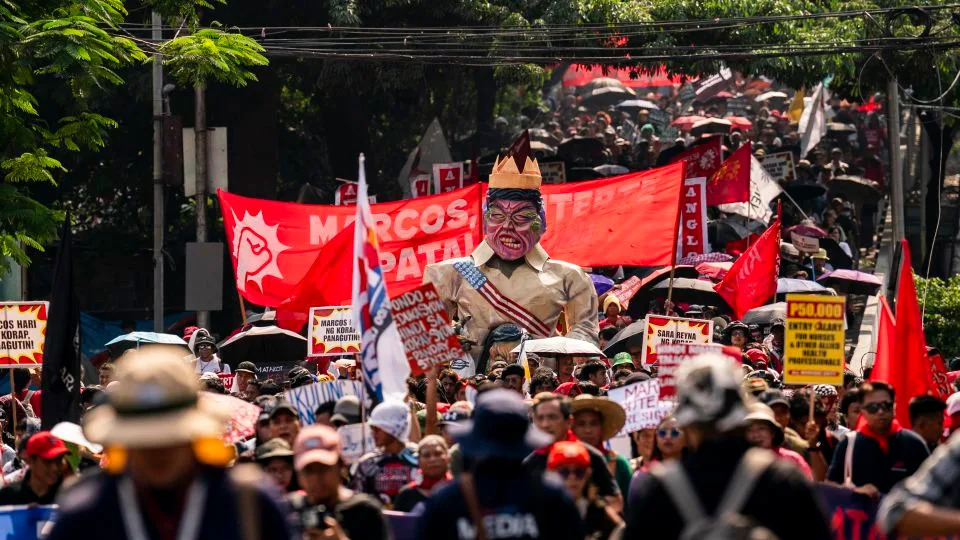
Filipinos march alongside an effigy depicting Philippine President Ferdinand Marcos Jr during a protest against corruption in Manila, Philippines on November 30, 2025. - Lisa Marie David/Getty Images
"All of a sudden you become a direct victim," Aguirre said, reflecting how the scandal moved from national politics to his neighborhood. "It hits different."
Key figures in the controversy include Zaldy Co, a former House appropriations chair who has fled and posted incendiary accusations from abroad, and Ferdinand Martin Romualdez, a cousin of the president who resigned as House Speaker but denies wrongdoing. The revelations have reignited long-standing public anger about elite impunity and corruption linked in many minds to the Marcos family legacy.
Youth Protests and Public Outrage
The scandal has galvanized mass, youth-led protests demanding accountability. Activists say this episode is not only about failed projects but about how power and budgets are allocated and shielded from scrutiny. Viral social media clips showing children of politicians and contractors living lavishly while flood victims suffer have intensified public resentment.
Where Things Stand
Marcos Jr. has framed himself as a corruption crusader, ordered audits and promised to repair waterways ahead of the next rainy season. Polling shows his satisfaction rating plunged to about 21% in November, a sharp decline from earlier in the year. Analysts say the administration may hold unless definitive evidence emerges that the president personally profited.
Survivors like Aguirre are left to rebuild amid anger and skepticism that the broader tide of public outrage will produce lasting reform. "With our resilience, we can still move forward," he said, "but the quality of life will still be the same."
Note: CNN has sought comment from the Philippine government.


