
A new pumpkin‑toadlet, Bracycephalus lulai, has been described from the mountains of southern Brazil in PLOS One. Measuring just over 1 cm (0.39 in), the bright orange frog is distinguished by a unique advertisement call with four pulses per note and was confirmed as a new species using CT scans and DNA analysis. Found in remote, well‑preserved leaf‑litter habitats, it is currently not considered threatened, though researchers urge conservation to protect this and related amphibians.
Pencil‑Tip Orange Toadlet Discovered in Southern Brazil: Bracycephalus lulai

‘Brachycephalus lulai’ is a tiny pumpkin toadlet measuring less than 14 millimeters in length. It is sitting on a pencil tip for scale.
Researchers have identified a previously unknown species of tiny pumpkin‑toadlet in the mountains of southern Brazil. Named Bracycephalus lulai, the frog measures just over one centimetre (about 0.39 inches) long — roughly the size of a pencil tip — and is described in a study published this week in the journal PLOS One.
“This new species is unique due to a combination of many characteristics,”says Marcos R. Bornschein, a co‑author of the study and a biologist at Universidade Estadual Paulista (UNESP) in São Paulo. He highlights the frog’s vivid orange colouration and an unusual advertisement call that contains four pulses per note.
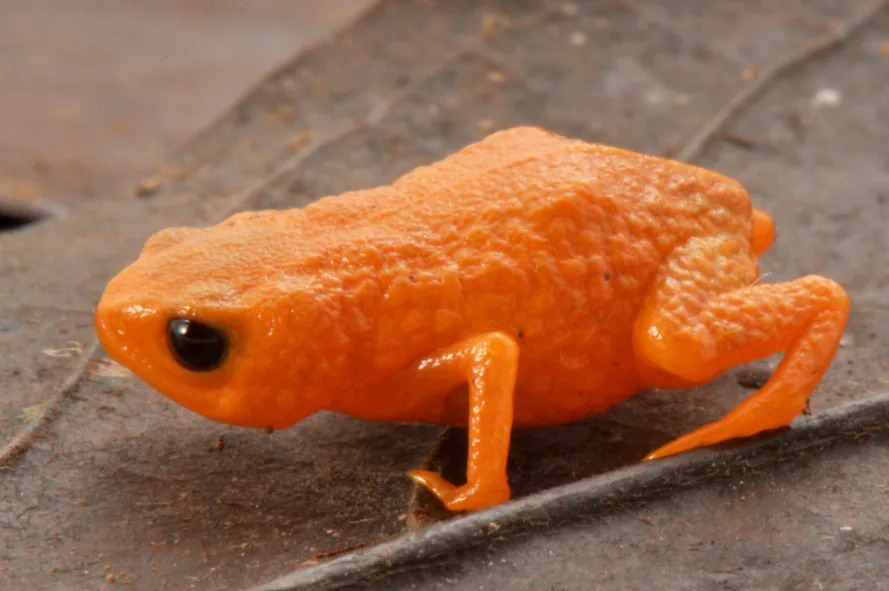
The newly described pumpkin toadlet Brachycephalus lulai, discovered in the mountain forests of Serra do Quiriri, southern Brazil, and named in honor of Brazil’s President Luiz Inácio Lula da Silva. Photo: Luiz Fernando Ribeiro.Image: Luiz Fernando Ribeiro.
The research team first noticed the animal by its distinctive call — the short vocal signals males use to attract mates or announce their presence. To confirm it was a new species, scientists combined field recordings with detailed anatomical and genetic analyses, including CT scans and DNA sequencing, which distinguished Bracycephalus lulai from its close relatives within the genus Bracycephalus.
Size and appearance: Individuals display a bright orange body with green and brown freckles. Measured males in the study were 8.9 mm and 11.3 mm long, while females ranged from 11.7 to 13.4 mm — placing them among the smallest four‑legged vertebrates known.
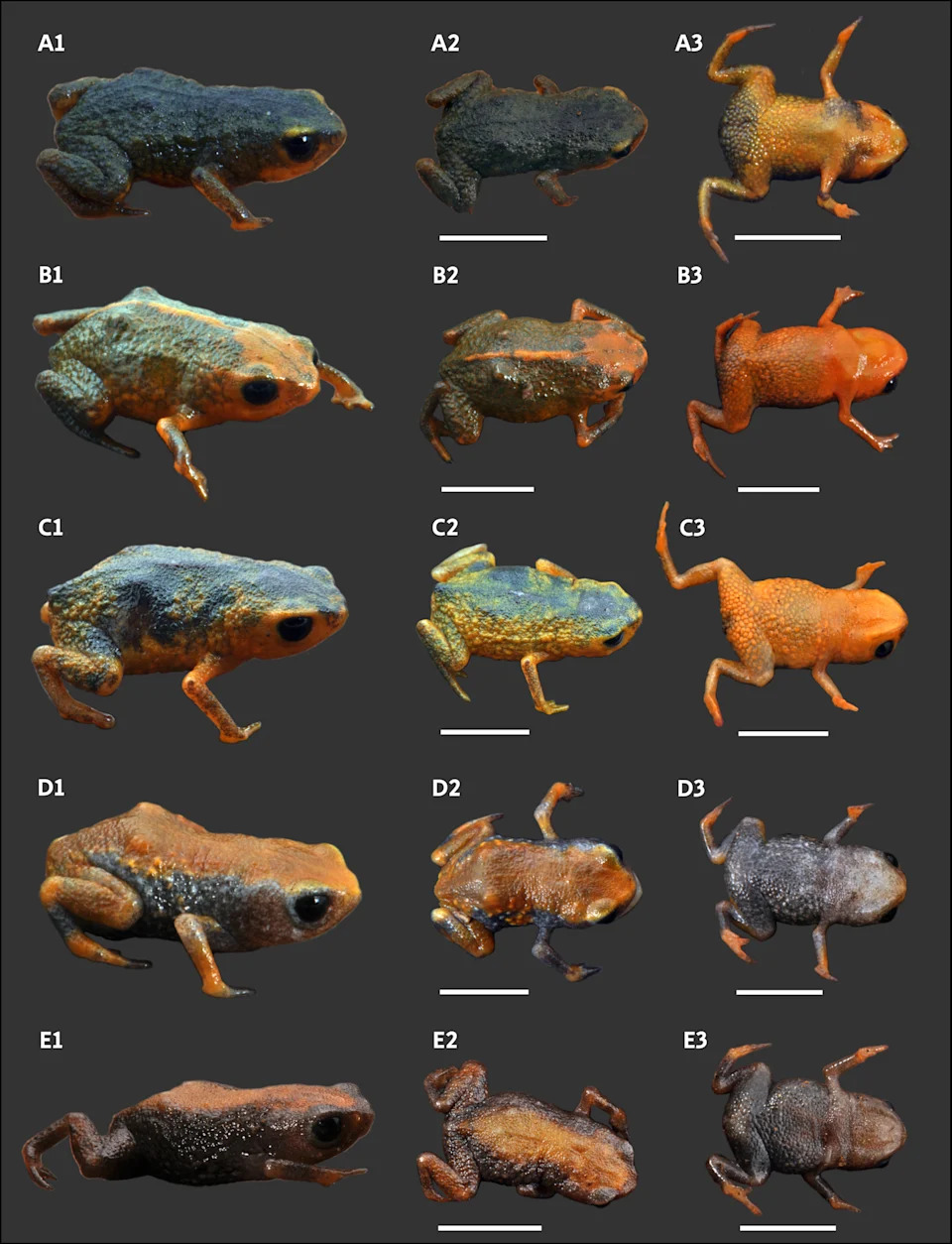
Divergent color variation ofBrachycephalusspecies.Image: Bornschein et al., 2025,PLOS One.
Habitat and conservation: The frogs inhabit well‑preserved forest fragments and live among leaf litter in remote, hard‑to‑access locations such as the Serra do Quiriri mountain range. These factors suggest the species is not immediately threatened; the authors report that B. lulai is one of the few Bracycephalus species currently classified as not threatened. Nevertheless, the team urges prompt conservation measures because amphibians worldwide remain highly vulnerable to habitat loss and climate change.
Name and significance: The species name lulai honors Brazil’s president, Luiz Inácio Lula da Silva. Bornschein — who discovered the first Bracycephalus species as a student in 1988 — notes that 22 species in the genus have now been identified in southern Brazil. He estimates that another eight to ten species of these tiny toadlets may still be described from the region over the next 10–15 years, underscoring the Atlantic Forest’s rich but still incompletely documented biodiversity.
The discovery highlights how careful fieldwork paired with modern imaging and genetic tools can reveal new species even in well‑studied regions, and it reinforces calls to protect the specialized habitats that support them.


