
The bribe used to obtain a presidential pardon would be criminal, but that does not automatically invalidate the pardon. The Supreme Court’s recent presidential immunity ruling — highlighted in Justice Sotomayor’s dissent — could make it harder to prosecute or to probe a president’s motive. Historical scholarship (Albert Alschuler, 2021) finds no clear precedent for voiding pardons bought with cash, so the ultimate answer remains unsettled and would likely be decided by future litigation or political remedies such as impeachment.
Ask Jordan: Can A Presidential Pardon Be Voided If It Was Bought With A Bribe?

Reader Don asks whether a presidential pardon is illegal if the recipient paid a bribe to obtain it. Short answer: not necessarily. The bribery scheme itself would be unlawful, but that does not automatically nullify the pardon.
Bribery Versus The Pardon’s Validity
The private person who paid a bribe and any co‑conspirators could be prosecuted under federal criminal law. Whether a court can set aside the pardon is a distinct and unresolved legal question. Historically, courts that voided fraudulent pardons did so where authorities had been deceived — not where an official and a pardon recipient colluded. A 2021 law review article by Albert Alschuler surveyed the historical record and found no clear precedent addressing whether a pardon can free someone who paid cash to secure it.
Presidential Immunity Complicates Prosecutions
The Supreme Court’s recent decision on presidential immunity has made practical enforcement more difficult. In a dissent in Trump v. United States, Justice Sonia Sotomayor warned that the ruling could shield a president from prosecution even if he accepted bribes in exchange for pardons. That contention remains untested and would have to be resolved in future litigation. Critically, any immunity the Court recognizes applies to the president alone and does not protect private citizens who paid bribes.
How A Legal Test Could Play Out
Even if prosecutors can bring charges against the briber or other participants, the underlying pardon might still survive. One likely way the issue would reach the courts is if a later Justice Department charged the briber for the conduct that had been pardoned. The defendant would move to dismiss, arguing the pardon bars prosecution, and the courts would then decide whether the pardon stands or should be invalidated.
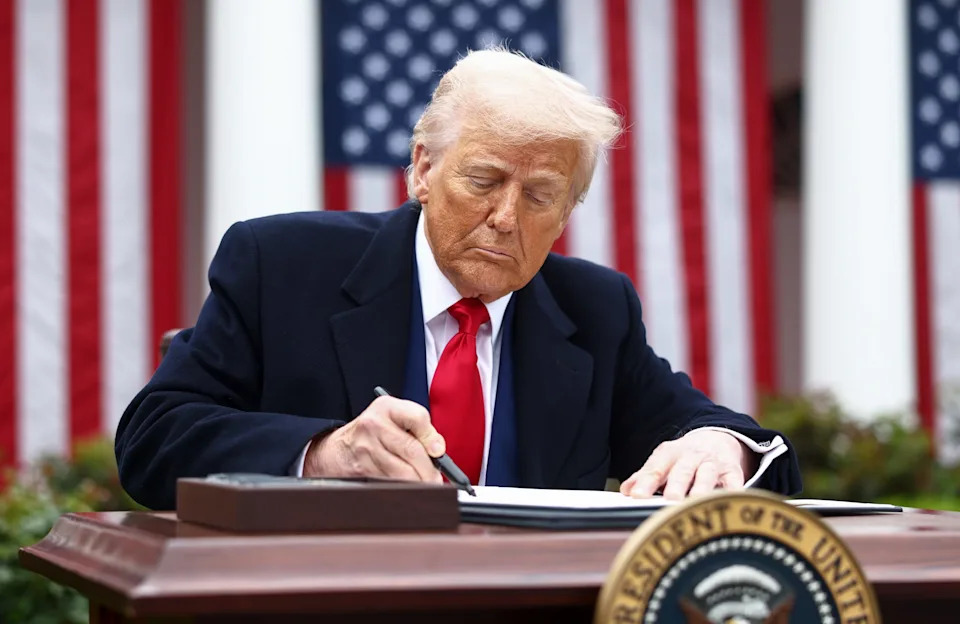
President Donald Trump signs an executive order on April 2, 2025, in the Rose Garden of the White House.(Bloomberg via Getty Images)
A president determined to shield participants could also try to pardon the briber — and might attempt a self‑pardon as well — though the legality of self‑pardons raises separate, unresolved questions.
Political Checks And Public Accountability
Perceptions of corruption can arise even when bribery statutes are not clearly violated. Impeachment is a constitutional remedy for abuse of the pardon power, but it requires action by Congress rather than a courtroom outcome. In practice, preventing corrupt use of the pardon power may depend more on political accountability — elections, congressional oversight, and public pressure — than on criminal law alone.
Want to submit an Ask Jordan question? Use the form for a chance to be featured in a future edition of the Deadline: Legal newsletter.
Originally published on MS NOW.


