
Donald Trump’s pardon of former Honduran President Juan Orlando Hernández — convicted of leading a major drug‑trafficking conspiracy and sentenced to 45 years — has drawn fierce criticism. The president offered inconsistent explanations, at times saying he reviewed the facts and called the case a “set‑up,” and at other times claiming he knew very little about Hernández. The prosecution was partly led by Emil Bove, a former member of Trump’s legal team who is now a Trump‑appointed federal judge. Honduras has asked Interpol to act on a late‑2023 arrest warrant for fraud and money laundering, and international fallout appears likely.
Trump’s Pardon of Convicted Ex‑Honduran President Exposes a Stark Contradiction
11:00 PM, 12/10/2025

Donald Trump’s decision to pardon former Honduran President Juan Orlando Hernández — a man convicted last year of leading a large drug‑trafficking conspiracy and sentenced to 45 years in prison — has provoked intense criticism and raised questions about the White House clemency process.
The New York Times reported that prosecutors concluded Hernández “orchestrated a vast trafficking conspiracy” that benefited drug cartels while Honduras suffered increased poverty, violence and corruption. Prosecutors also say Hernández boasted he would “stuff the drugs up the gringos’ noses” and accepted a $1 million bribe to permit cocaine shipments to transit Honduras.
Contradictory Explanations From the President
In a lengthy White House interview with Politico’s Dasha Burns, President Trump offered conflicting accounts of why he signed the pardon. At one point he said,
“Well, I don’t know him. I know very little about him other than people said it was like an Obama/Biden‑type set‑up, where he was set up.”
On Nov. 30, however, the president had said he had examined the facts and agreed with claims the conviction was a Biden‑administration “set‑up.” Eight days later he again insisted he knew “very little” about Hernández. Those statements cannot both be true: either the president reviewed the case himself and reached a conclusion, or he signed the pardon with only limited information and at the urging of unnamed advisers.
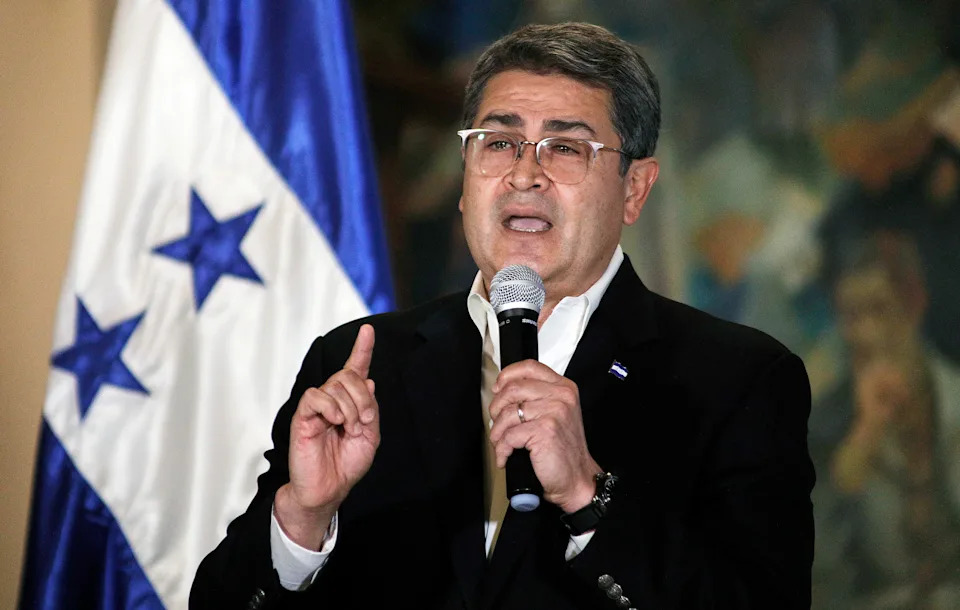
Juan Orlando Hernández speaks during a press conference on March 24, 2021, in Tegucigalpa, Honduras.(AP)
Key Legal Context
It is also important to note that Hernández’s prosecution was not a mere political fabrication. The case was partly led by Emil Bove, a former member of Trump’s legal team who now serves as a Trump‑appointed federal judge. That connection undercuts the argument that the case was an obvious partisan “set‑up.”
Shortly after Hernández was released from a high‑security U.S. prison thanks to the pardon, Honduras’s attorney general asked Interpol to execute an arrest warrant issued in late 2023 on charges of fraud and money laundering. That request signals ongoing international legal exposure for Hernández and potential diplomatic friction.
Why It Matters
Beyond the immediate legal consequences for Hernández, the episode raises broader concerns about how clemency decisions are made and communicated. A president who repeatedly emphasizes a "tough on crime" posture faces scrutiny when granting clemency to a convicted narco‑trafficker — especially when public explanations are inconsistent. The case may also have implications for U.S. credibility in anti‑corruption and counternarcotics efforts in Latin America.
The full political and legal fallout is likely to continue unfolding as Interpol and Honduran authorities pursue their actions and as critics press for more transparency about the basis for the pardon.
Similar Articles

Ex-Honduran President Thanks God — and Trump — After US Drug-Trafficking Pardon
Former Honduran president Juan Orlando Hernández publicly thanked God and Donald Trump after receiving a US presidential pard...

Trump Signals Pardon for Convicted Honduran Ex‑President Juan Orlando Hernández, Sparking Outcry
President Donald Trump has signaled he intends to pardon Juan Orlando Hernández, the former Honduran president convicted in t...

Ex‑Honduran President Thanks Trump After Controversial U.S. Pardon
Former Honduran president Juan Orlando Hernández thanked Donald Trump after receiving a pardon for a U.S. drug‑trafficking co...

Trump Pardons Juan Orlando Hernández — Why the Move Matters
Former Honduran president Juan Orlando Hernández—convicted in New York of enabling shipments of more than 400 tons of cocaine...

Trump Grants Full Pardon to Former Honduran President Juan Orlando Hernández, Erasing 45‑Year Conviction
President Trump has granted a full pardon to former Honduran president Juan Orlando Hernández, erasing a 45‑year U.S. prison ...

Trump’s Tough-On-Drugs Claim Undermined by Pardons and Deadly Naval Strikes
Summary: President Trump’s recent pardons and commutations — nearly 100 drug-related clemencies in total — include high-profi...

US Strikes, A Presidential Pardon, and Nearly Two Centuries of Alleged Drug Ties
Summary: The US has intensified strikes on Venezuelan vessels while President Trump pardoned former Honduran president Juan O...

Hondurans Vote in Tight Race After Trump’s Surprise Endorsement and Pardon Announcement
Hondurans voted in a tightly contested presidential election that saw a late, unexpected intervention from U.S. President Don...

More Than 1,800 Trump Clemencies — Dozens Later Arrested, Raising Rule‑of‑Law Concerns
Legal experts warn that dozens of people pardoned or granted commutations by Donald Trump were later arrested on unrelated ch...

Trump’s Endorsement Narrows Honduran Race as Conservatives Hold Tight Early Lead
U.S. President Donald Trump’s endorsement of Nasry Asfura helped tighten Honduras’ presidential race, influencing undecided v...

Honduran Vote Dispute Escalates: Castro Alleges Tampering and U.S. Interference as Count Continues
Honduran President Xiomara Castro alleged tampering in the Nov. 30 general election and accused former U.S. President Donald ...

US Asks Supreme Court To Drop Appeal In High-Profile FIFA Bribery Case
The US Department of Justice has asked the Supreme Court to drop its appeal seeking to preserve convictions in the FIFA bribe...

Cuellar Says Biden DOJ Indicted Him Over 'Open Border' Criticism After Trump Pardon
Rep. Henry Cuellar, pardoned by Donald Trump, says the Biden DOJ indicted him because he criticized the administration's 'ope...

How a Round of Golf Preceded One of Trump’s Most Controversial Pardons
President Trump pardoned developer Timothy Leiweke, who had been charged in an alleged scheme to rig bidding for a $375 milli...

Nearly Half Of Americans Oppose U.S. Strikes On Suspected Drug Boats Near Venezuela, Poll Finds
The Reuters/Ipsos poll finds 48% of Americans oppose recent U.S. military strikes on boats near Venezuela carried out without...