
The article contrasts President Trump’s repeated claims that tariffs brought in “trillions” with actual customs receipts, which fell from $31.35 billion in October to $30.75 billion in November. November was the first month-over-month decline since the tariff program began in April. The shortfall is politically significant because the administration has pledged to spend those proceeds on debt reduction, rebates, farm bailouts and nationwide child care — promises that depend on revenue that has not materialized.
Reality Check: Falling Tariff Receipts Undercut Trump’s ‘Trillions’ Claims

When President Donald Trump addressed U.S. generals and admirals in September, he repeatedly boasted that his trade tariffs had generated “trillions of dollars,” proclaiming, “We’ve taken in trillions of dollars. We’re rich again.” In subsequent weeks he doubled down, at one point predicting tariff revenue would be “in excess of $2 Trillion Dollars” and, a day later, suggesting it would exceed $3 trillion — figures the White House never explained or substantiated.
What The Data Shows
Independent reporting, including an NBC News analysis, shows a very different picture. For the first time since the administration launched its broad global tariff program in April, month-over-month customs receipts fell in November. The U.S. government collected $30.75 billion in import duties in November, down from $31.35 billion in October. Although customs collections rose in some prior months, November marked the first decline since the program began.
Gap Between Rhetoric And Reality
Tariffs do generate revenue — they function as taxes on imports — but the gap between the president’s rhetoric and the actual receipts is striking. Claims that the program already produced “in excess of $3 trillion” are implausible given monthly collections in the tens of billions of dollars.
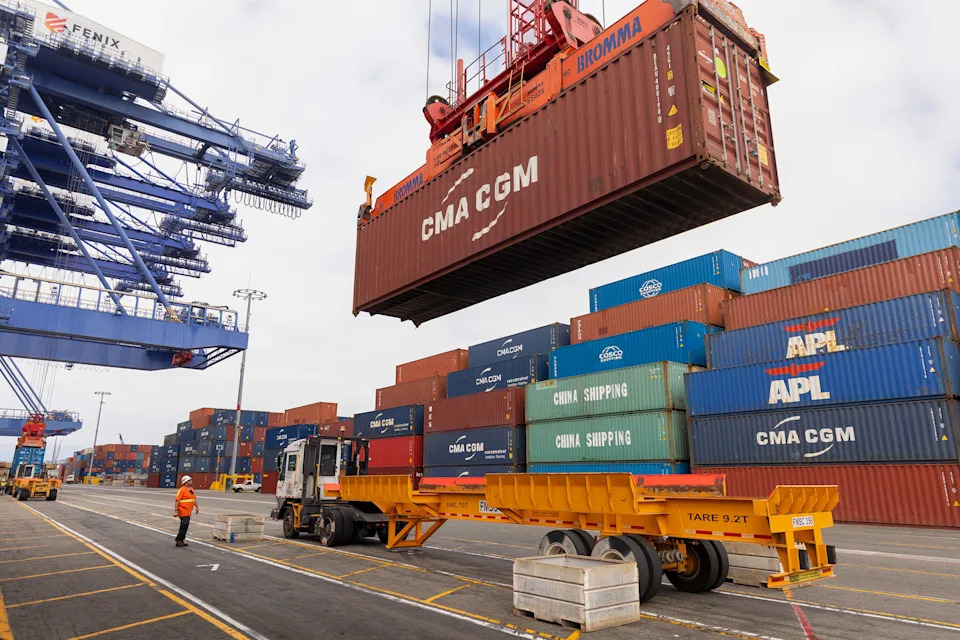
Cranes unload shipping containers from the CMA CGM Laperouse container ship at the Fenix Marine Services terminal at the Port of Los Angeles in Los Angeles, California, US, on Friday, Aug. 15, 2025. Higher US tariffs have started to filter through to consumers in categories such as household furnishings and recreational goods. Photographer: Tim Rue/Bloomberg via Getty Images
Why This Matters Politically
Declining tariff receipts create a concrete fiscal problem for the administration because the president has publicly promised to spend that revenue on a wide range of proposals. Mr. Trump has said tariff proceeds would be used to:
- Reduce the national debt
- Fund “dividend” rebate checks
- Bail out affected farmers
- Finance a nationwide system of free child care
- Potentially eliminate federal income taxes in the long run
There is an old accounting joke that “you can’t spend the same dollar twice.” In this case, the risk is attempting to spend dollars that haven’t materialized at all.
Bottom Line
November’s drop in customs receipts undercuts the narrative of a tariff windfall and raises questions about how the administration will finance its promised programs. The White House has not provided a clear accounting for the large, day-to-day swings in its revenue estimates, leaving a fiscal and political challenge should collections remain volatile or decline further.
Reporting note: Figures cited reflect month-to-month customs receipts reported by NBC News and referenced in related coverage by MS NOW.


