
U.N. Secretary-General António Guterres has recommended former Iraqi president Barham Salih as the next U.N. High Commissioner for Refugees. The signed recommendation, addressed to Ambassador Atsuyuki Oike, would make Salih the first Middle Eastern nominee for the role in roughly 50 years if confirmed. The nomination requires consultations with UNHCR's executive committee and final approval by the U.N. General Assembly. The move comes as UNHCR faces significant budget cuts after reduced funding from key Western donors.
Guterres Recommends Former Iraqi President Barham Salih To Lead UN Refugee Agency

FILE - Iraq's President Barham Salih speaks during an interview with The Associated Press in Baghdad, Iraq, Friday, March 29, 2019. (AP Photo/Khalid Mohammed, File )(ASSOCIATED PRESS)
U.N. Secretary-General António Guterres has recommended former Iraqi president Barham Salih to become the next U.N. High Commissioner for Refugees (UNHCR). The recommendation, conveyed in a signed letter, would make Salih the first person from the Middle East proposed for the post in roughly 50 years if confirmed.
Selection and Next Steps
The recommendation is contained in a letter dated Thursday addressed to Ambassador Atsuyuki Oike, Japan's top diplomat in Geneva and chair of UNHCR's executive committee. The letter circulated widely on social media and a copy was provided to The Associated Press. Diplomatic officials in Geneva, speaking on condition of anonymity because the appointment has not been finalized, told the AP the letter is authentic.
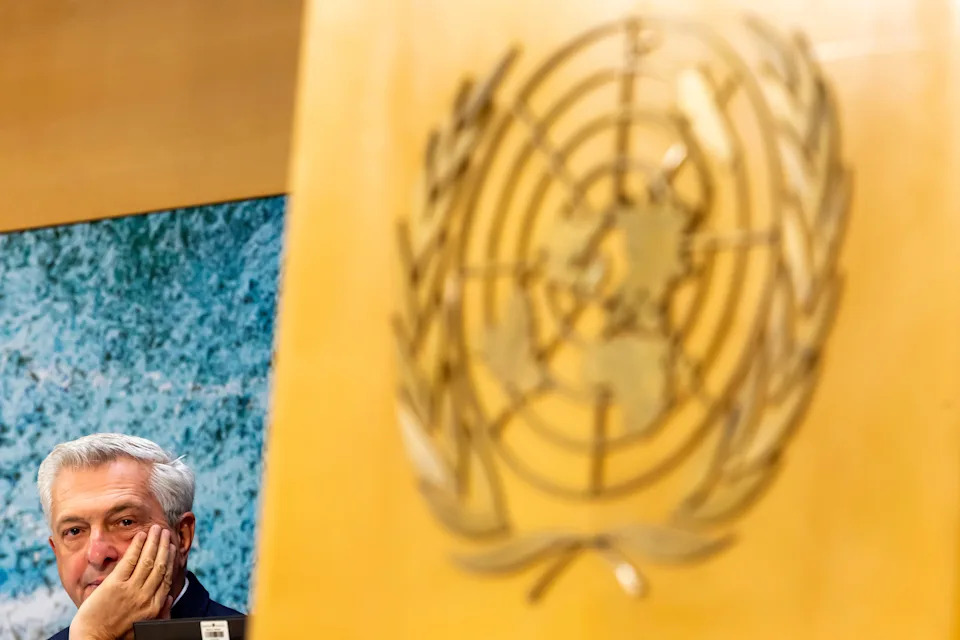
FILE - Filippo Grandi, UN High Commissioner for Refugees (UNHCR), attends UNHCR's 76th annual Executive Committee meeting at the European headquarters of the United Nations in Geneva, Switzerland, on Oct. 6, 2025. (Salvatore Di Nolfi/Keystone via AP, File)(ASSOCIATED PRESS)
Alessandra Vellucci, chief spokesperson for the U.N. office in Geneva, emphasized that the nomination must follow a formal process that includes consultations with UNHCR's executive committee and a final decision by the U.N. General Assembly in New York. She said the process is ongoing and that an official announcement will be made once it is complete.
Who Is Barham Salih?
Barham Salih, 65, from Iraq's Kurdistan region, served as Iraq's president from 2018 to 2022. If confirmed, he would succeed longtime UNHCR head Filippo Grandi, whose second five-year term—after first taking office on Jan. 1, 2016—is due to expire on Dec. 31. Salih would be the first non-Western head of the Geneva-based refugee agency since Prince Sadruddin Aga Khan of Iran led UNHCR from 1966 to 1977.
Context: Funding Pressures at UNHCR
The proposed leadership change comes amid a difficult period for many U.N. bodies, including UNHCR, which has implemented job cuts and spending reductions after a sharp decline in foreign aid contributions from several major Western donors, including the United States. The agency's budget pressures and program adjustments underscore the financial and operational challenges facing the next high commissioner.
Note: The recommendation is not yet final. It requires executive committee consultations and approval by the U.N. General Assembly.


