
A 2023 Dutch-led genetic study found that self-reported misophonia shares genetic risk factors with anxiety, depression, PTSD and tinnitus. Researchers analyzed data from the Psychiatric Genomics Consortium, UK Biobank and 23andMe and also linked misophonia to personality traits such as worry and neuroticism. A separate UK survey of 772 adults estimated a misophonia prevalence of 18.4% in the sample and reported intense reactions—anger, panic and feelings of entrapment—to trigger sounds. The authors caution that genetic samples were mainly European and that misophonia was self-reported, but the findings suggest new directions for research and potential treatment approaches.
Genes Link Misophonia With Anxiety, Depression And PTSD — Dutch Study Points To New Research And Treatment Directions

High resolution close-up image of a person's mouth, eating a segment of mandarin
Most people feel a twinge of discomfort at an irritating noise such as nails on a chalkboard. For people with misophonia, ordinary sounds — slurping, chewing, breathing, snoring or swallowing — can provoke intense emotional reactions that interfere with daily life.
YouTube Thumbnail
Genetic Analysis Finds Overlap With Psychiatric Disorders
A 2023 study led by researchers in the Netherlands found that self-reported misophonia shares genetic risk factors with several psychiatric conditions, including anxiety, depression, post-traumatic stress disorder (PTSD) and tinnitus. The team, led by University of Amsterdam psychiatrist Dirk Smit, analyzed large-scale genetic data from the Psychiatric Genomics Consortium, the UK Biobank and 23andMe to compare people who self-identified as having misophonia with the broader population.

Subscribe to ScienceAlert's free fact-checked newsletter
"There was also an overlap with PTSD genetics," Smit told Eric W. Dolan at PsyPost. "Genes that give a sensitivity to PTSD also increase the likelihood for misophonia, and that could point to a shared neurobiological system that affects both."
The authors emphasize that shared genetic risk does not necessarily mean the conditions have identical biological mechanisms — only that some genetic factors appear common across them. The analysis also identified an association between misophonia and genetic variants linked to tinnitus, a chronic ringing or buzzing in the ears that itself is associated with higher rates of anxiety and depression.
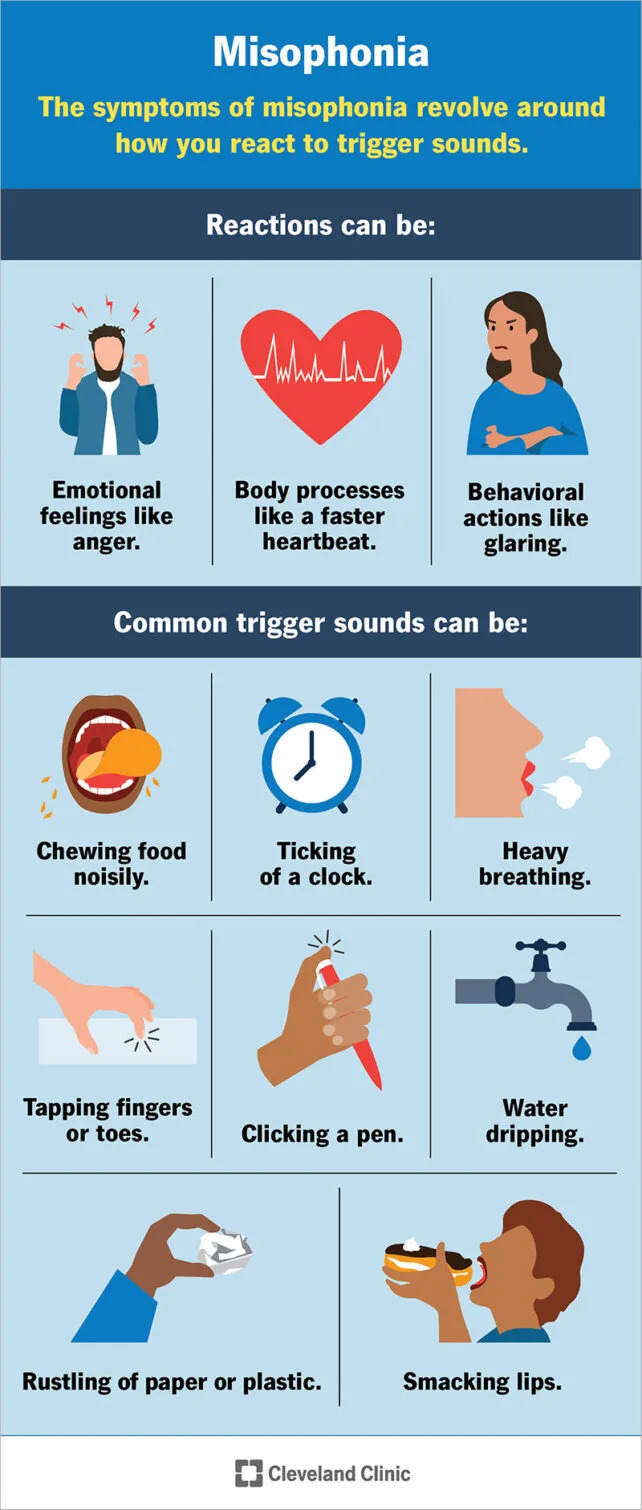
People with misophonia can have an intense reaction to triggering sounds. (Cleveland Clinic)
Personality Traits And Emotional Responses
Previous research and the new genetic findings point to a consistent psychological profile among many people with misophonia. The study reinforced links with personality traits such as worry, guilt, loneliness and neuroticism, and with a tendency to internalize distress rather than express it outwardly. Reported emotional reactions range from irritation and anger to panic and feelings of being trapped or helpless.

Responses to a triggering sound can range from irritation and anger to distress that interferes with everyday life. (Andrii Iemelyanenko/Canva)
"It has been argued… that misophonia is based on the feelings of guilt about the evoked irritation and anger rather than behavioral expressions of anger itself that causes the distress," the researchers write, suggesting conditioned negative emotional responses may play a role.
Unexpected Findings Around Autism Spectrum Disorder
Surprisingly, the genetic analysis showed a lower overlap between misophonia and autism spectrum disorder (ASD) than expected, despite sensory hypersensitivity being common in many people with ASD. The authors propose that misophonia and ASD may be genomically distinct and that different subtypes of misophonia might exist — for example, forms driven primarily by conditioned anger or negative emotionality moderated by personality.
Population Survey: Prevalence And Symptoms
Separately, a 2023 UK survey of 772 adults used an algorithm to match participants to UK census distributions for sex (including non-binary), age and ethnicity. Using a questionnaire covering five domains of misophonia (emotional threat, internal and external appraisals, outbursts and overall impact), the study estimated a misophonia prevalence of 18.4% in this UK sample and described intense reactions: greater incidence of anger and panic, feelings of entrapment, and disturbance from sounds such as normal breathing and swallowing that do not provoke most people.
"Our survey captured the complexity of the condition," said University of Oxford clinical psychologist Jane Gregory. "Misophonia is more than just being annoyed by certain sounds."
Limitations And Next Steps
The authors note important limitations: most genetic samples were of European ancestry, so findings may not generalize to other populations, and misophonia in the genetic datasets was self-reported rather than clinically diagnosed, which could introduce bias. Nonetheless, the study points toward biological pathways and psychological profiles that merit further research and could inform treatment approaches — including whether therapies effective for PTSD or anxiety might benefit some people with misophonia.
The genetic study was published in Frontiers in Neuroscience. An earlier version of this article appeared in October 2024.


