
Several U.S. churches have altered outdoor nativity displays in Illinois and Massachusetts to protest recent federal immigration enforcement, portraying the Holy Family as refugees and using stark imagery — zip ties, gas masks and “ICE”-marked vests — to evoke fear of separation and deportation. Supporters say the displays are meant to provoke empathy and reflect sustained refugee outreach; critics call them sacrilegious and politically divisive. The Boston Archdiocese ordered one manger restored, while parish leaders defend their pastoral motives amid broader local tensions and increased arrests cited as context.
Churches Recast Nativity Scenes With Zip Ties, Gas Masks and “ICE” to Protest Immigration Raids

A doll representing the baby Jesus is zip-tied in the Nativity scene outside of Lake Street Church of Evanston, Wednesday, Dec. 10, 2025, in Evanston, Ill. (AP Photo/Erin Hooley)(ASSOCIATED PRESS)
Churches in Illinois and Massachusetts have transformed traditional outdoor nativity displays into pointed statements about federal immigration enforcement, igniting praise, protest and an official church rebuke. In Evanston, Illinois, one infant Jesus lay in a snowy manger wrapped in a silver emergency blanket with his wrists bound by zip ties; nearby a Mary figure wore a plastic gas mask while figures posed as Roman soldiers wore tactical vests labeled “ICE.”
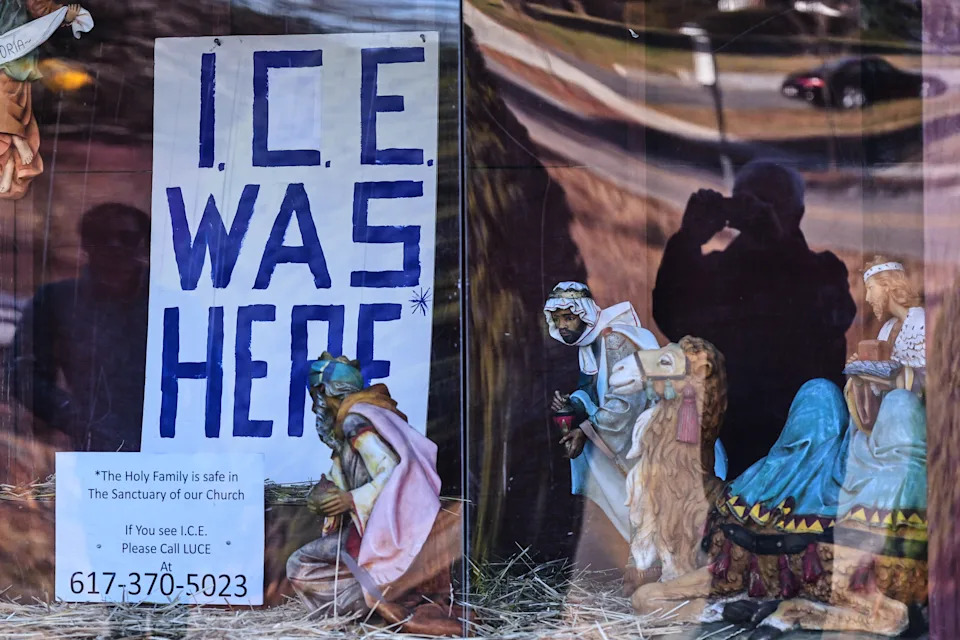
An "ICE WAS HERE" sign is posted in the spot for the baby Jesus at a nativity display at St. Susanna Church, Tuesday, Dec. 9, 2025, in Dedham, Mass. (AP Photo/Charles Krupa)(ASSOCIATED PRESS)
Not far away, Urban Village Church placed a sign by its manger reading, “Due to ICE activity in our community the Holy Family is in hiding,” positioned close to an Immigration and Customs Enforcement facility that has prompted local demonstrations. More than a thousand miles east in Dedham, Massachusetts, the Christ child was reportedly removed from a display at St. Susanna Parish and replaced with a hand-painted placard reading, “ICE was here.”
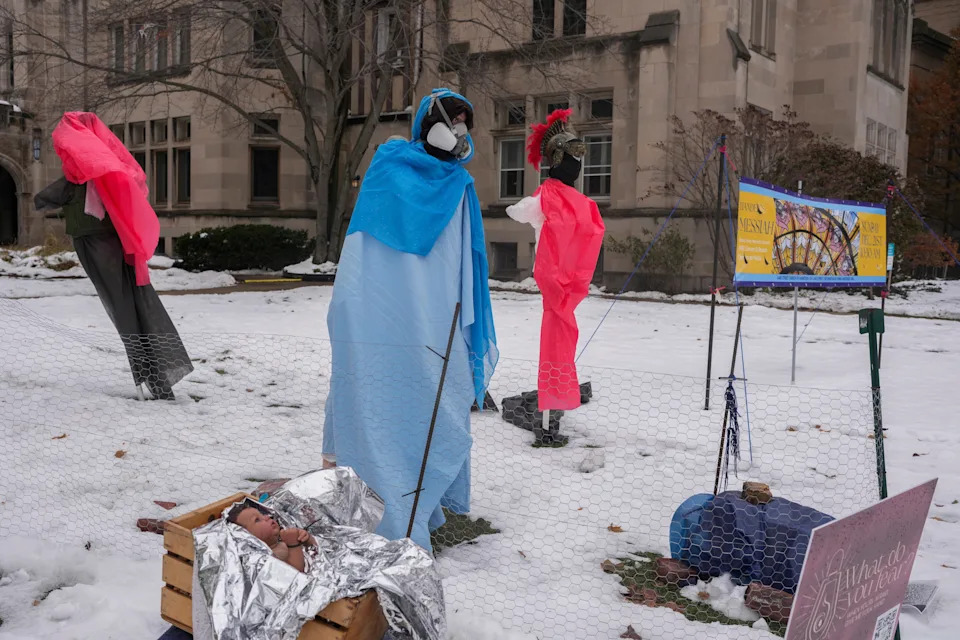
A mannequin representing the Mother Mary wears a mask in the Nativity scene outside of Lake Street Church of Evanston, Wednesday, Dec. 10, 2025, in Evanston, Ill. (AP Photo/Erin Hooley)(ASSOCIATED PRESS)
Supporters say the displays recast the Holy Family as refugees to draw attention to the fear of separation, deportation and family disruption that parishioners and neighbors are experiencing amid intensified enforcement. Father Steve Josoma and other clergy have described the installations as efforts to evoke empathy, spark conversation and place the ancient Gospel story in a contemporary context.
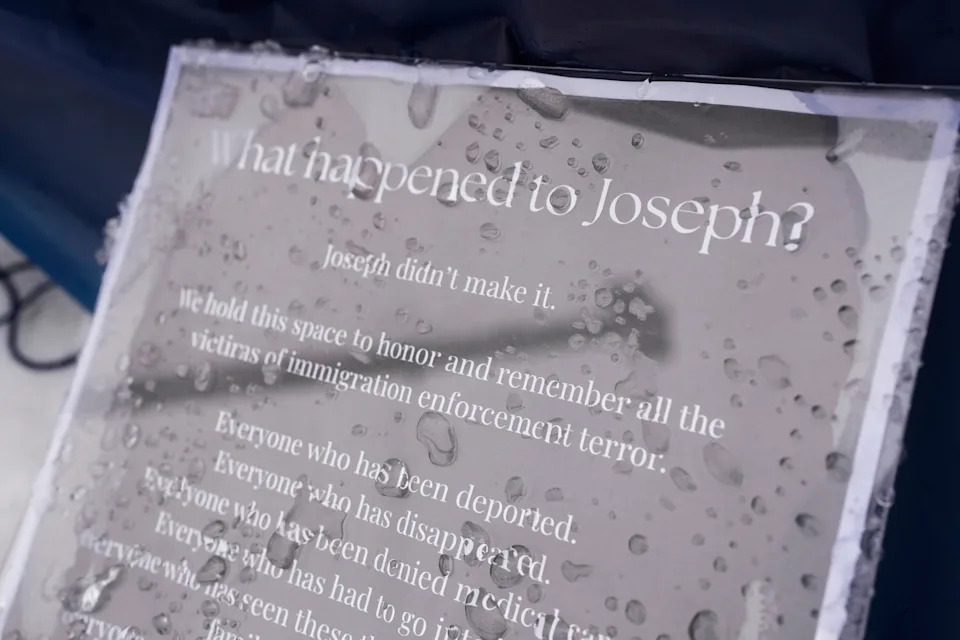
A sign of explanation is part of the Nativity scene outside of Lake Street Church of Evanston, Wednesday, Dec. 10, 2025, in Evanston, Ill. (AP Photo/Erin Hooley)(ASSOCIATED PRESS)
Critics call the scenes sacrilegious and politically divisive. The Boston Archdiocese ordered St. Susanna’s manger “restored to its proper sacred purpose,” and Archbishop Richard Henning moved to have the display removed; Father Josoma was seeking a meeting and had not complied as of Thursday. Some Catholic activists, including C.J. Doyle of the Catholic Action League of Massachusetts, urged stronger disciplinary action, saying the display is a “grave scandal for Catholics.”
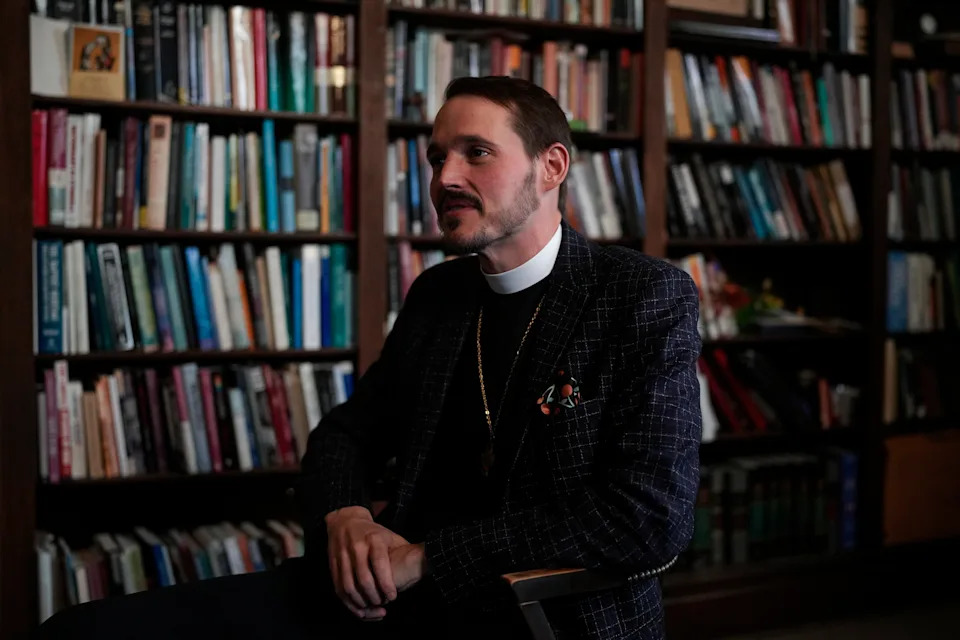
The Rev. Dr. Michael Woolf sits in his office at Lake Street Church of Evanston, Wednesday, Dec. 10, 2025, in Evanston, Ill. (AP Photo/Erin Hooley)(ASSOCIATED PRESS)
Parish leaders insist the displays are grounded in sustained community work. Phil Mandeville, a St. Susanna Parish Council member and coordinator of an interfaith refugee-support committee, said the parish has assisted roughly ten refugee families since 2019 with housing, schooling, English classes and employment — and that the visual protest is not a stunt but reflects lived ministry.
At Lake Street Church in Evanston, Rev. Michael Woolf said public holiday art offers congregations a chance to speak on urgent issues; the congregation has previously used nativity imagery to call for peace in Gaza. In Evanston, enforcement actions nearby reportedly exposed bystanders to chemical sprays and traumatized children who witnessed neighbors and teachers taken into custody. After a statue of Joseph blew down and was damaged, the church posted a sign reading, “Joseph didn't make it. We hold this space to honor and remember all the victims of immigration enforcement terror.”
Responses in affected communities were mixed and sometimes heated. Volunteers from a nearby synagogue stood outside services at one church to help worshipers feel safe. In Dedham, parishioners and visitors ranged from selfies of disapproval to attempts to confront locked church doors; supporters drove long distances to express solidarity. Advocates on both sides framed their positions as moral — either defending sacred tradition or defending vulnerable people.
Context: The debate unfolds as immigration enforcement has intensified in some states and cities that oppose the federal crackdown. Federal arrest figures released by immigration authorities show that in September alone, at least 2,000 people were arrested in Illinois and Massachusetts combined — a figure parish leaders cite to explain their concern and urgency.
“We work on a daily basis with refugees. I care more about individuals than I do a manger scene,” said Phil Mandeville, emphasizing that the parish’s outreach informs its public witness.
The controversy highlights tensions over how houses of worship should address public policy and social injustice, and whether sacred imagery may be used as a form of political or prophetic commentary. Church leaders, congregants and diocesan officials continue to debate whether the installations advance pastoral care or cross a line into divisive political messaging.


