
The Phoenix, Loyola University Chicago's student paper, and other campus outlets are verifying and mapping Border Patrol and ICE sightings to counter rumors and help residents assess local risk. Using a Google Map and trackers backed by photos, timestamped video or multiple witnesses, students log incidents across neighborhoods including Rogers Park. Local newsrooms and nonprofits are collaborating and sharing tools as DHS conducts Operation Midway Blitz, which officials say has led to more than 4,300 arrests.
Students Map ICE Sightings in Chicago, Turning Rumors Into Verified Alerts

A Loyola University student and a member of The Loyola Phoenix, the university's newspaper, stands on a chair while chatting with classmates during the paper's closing night in downtown Chicago, Illinois, U.S., November 11, 2025. REUTERS/Carlos Barria
The windowless newsroom of The Phoenix, Loyola University Chicago's student paper, hums quietly as a coffee pot steams and juniors Julia Pentasuglio and Ella Daugherty huddle over a laptop, updating a shared Google map. Each red pin denotes a verified sighting of federal immigration agents in and around campus.
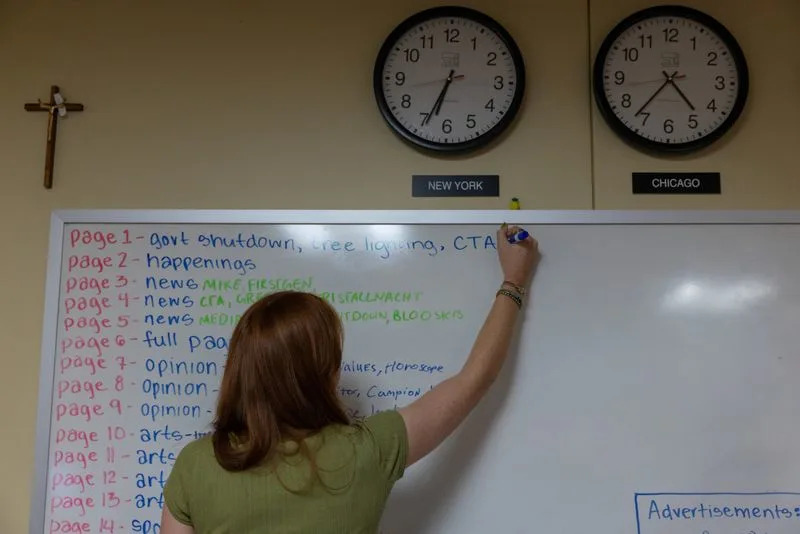
Lilli Malone, a student at Loyola University and editor in chief of The Loyola Phoenix newspaper, works on the layout for the next edition in the university newsroom in downtown Chicago, Illinois, U.S., November 11, 2025. REUTERS/Carlos Barria
Editor-in-chief Lilli Malone scrolls through incoming reports from Rogers Park, the diverse lakefront neighborhood where roughly 80 languages are spoken. That day the map gained seven new pins — accounts of vans racing down side streets, masked officers drawing weapons and students watching from dormitory windows as neighbors were taken into custody.
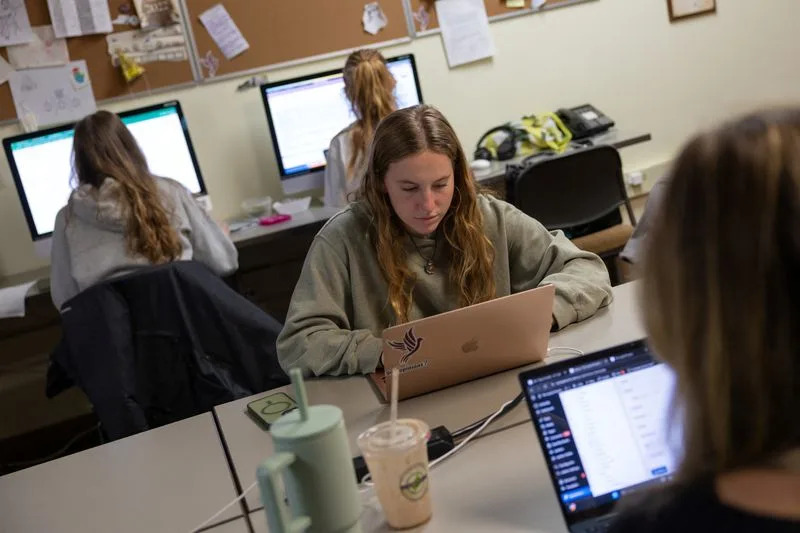
Julia Pentasuglio, a student at Loyola University and managing editor of The Loyola Phoenix newspaper, types on her laptop at the university newsroom in downtown Chicago, Illinois, U.S., November 11, 2025. REUTERS/Carlos Barria
From Campus Rumors To Confirmed Reports
Normally the student reporters cover dorm Thanksgiving recipes or holiday tree lightings. But under renewed federal immigration enforcement they have shifted roles: verifying and mapping sightings to provide neighbors with reliable information and to help counter fear and misinformation.
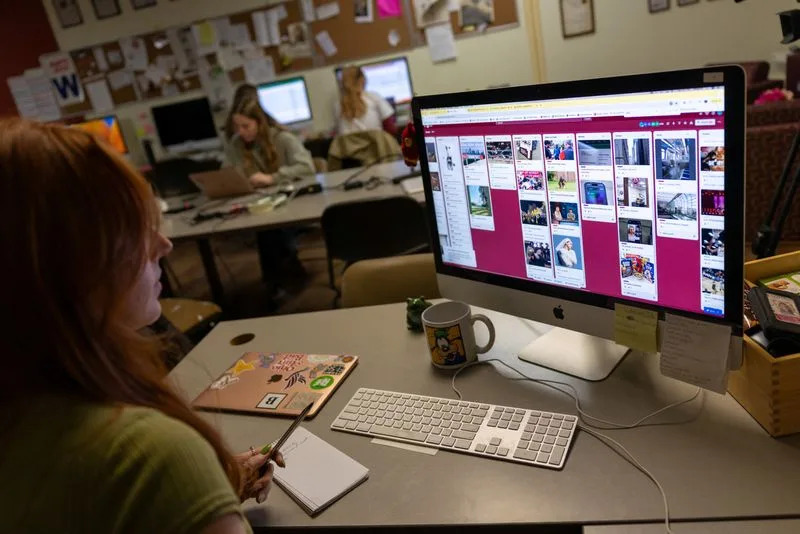
Lilli Malone, a student at Loyola University and editor in chief of The Loyola Phoenix newspaper, looks at a screen during closing night at the university newsroom in downtown Chicago, Illinois, U.S., November 11, 2025. REUTERS/Carlos Barria
In early October Malone and Pentasuglio opened a blank Google Map and began placing pins for each reported sighting — only after verification. Each marker, they say, is supported by photographic evidence, time-stamped video or corroboration from multiple witnesses. Notes attached to pins give dates, times and brief descriptions: for example, October 12 — several armed agents at the 1200 block of West North Shore Avenue midday; October 21 — an arrest reported at the North Lincoln Avenue Home Depot at 9:58 a.m. A DHS spokesperson confirmed to Reuters that U.S. Border Patrol conducted operations and made arrests at those locations on those dates.
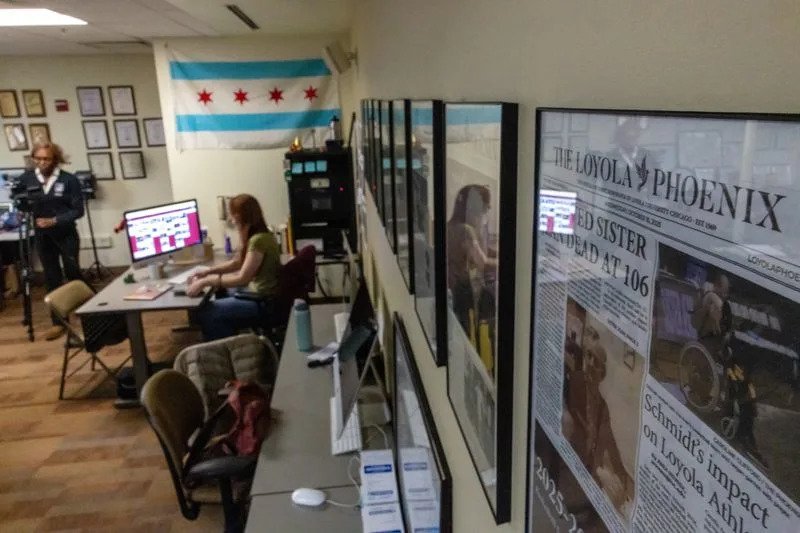
Press cutouts hang on a wall as Lilli Malone, a student at Loyola University and editor in chief of The Loyola Phoenix newspaper, looks at a screen during the closing night at the university newsroom in downtown Chicago, Illinois, U.S., November 11, 2025. REUTERS/Carlos Barria
Operation Midway Blitz And Local Response
Since early September, the Department of Homeland Security has conducted enforcement actions in Chicago under an operation officials have called Operation Midway Blitz, deploying U.S. Border Patrol agents. DHS says the operation has led to more than 4,300 arrests and that enforcement efforts in the city are ongoing. Illinois officials protested the operation; Governor J.B. Pritzker described the blitz as "unlawful and unwarranted," and the state passed a law that allows residents to sue federal immigration agents if they believe their civil rights were violated.
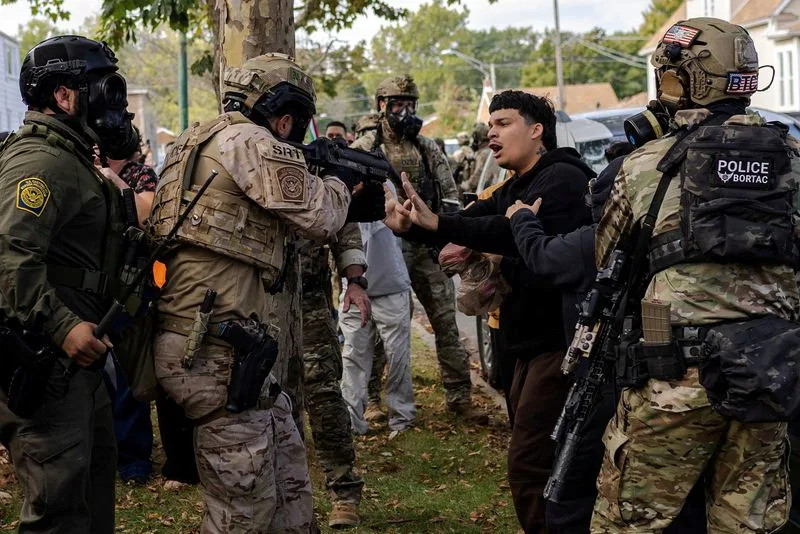
FILE PHOTO: A federal agent points a "less lethal" munitions launcher at community members as they detain a man after clashes on Chicago?s South Side, in Chicago, Illinois, U.S., October 14, 2025, after U.S. President Donald Trump ordered increased federal law enforcement presence to assist in crime prevention. REUTERS/Jim Vondruska/File Photo
"People were scared, and they needed someone to verify what was real," Malone said.
Loyola, a Jesuit university with a history of supporting students without legal status — including DACA recipients — felt the fear firsthand when isolated incidents and misidentified visitors (for example, a U.S. Census worker entering a dorm) sparked campus-wide rumors.
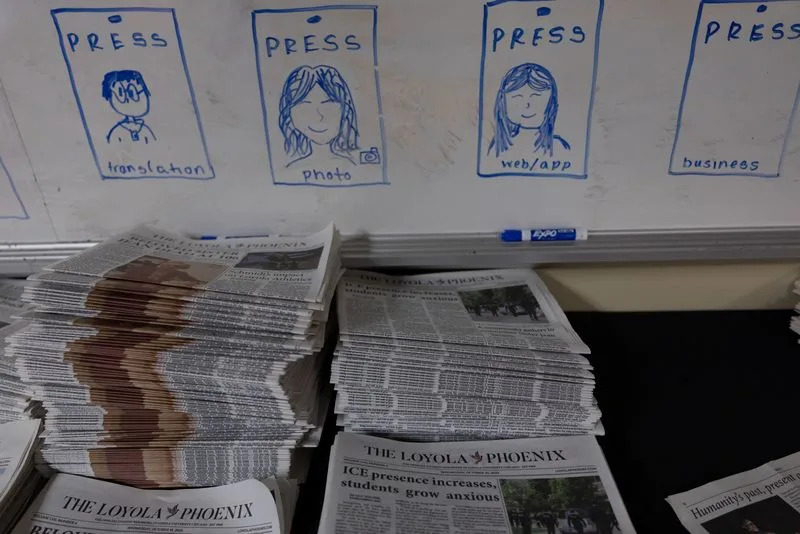
A stack of The Loyola Phoenix newspapers is displayed at the university newsroom in downtown Chicago, Illinois, U.S., November 11, 2025. REUTERS/Carlos Barria
Collaboration Across Student And Local Newsrooms
The Phoenix's map is part of a broader effort by student papers and local outlets across Chicago to document enforcement activity. At the University of Chicago, The Maroon built a Datawrapper tracker after social apps and anonymous forums lit up with reports. At DePaul, reporters scanned social media for tips, while interns and staff at Block Club Chicago helped set up an ICE WhatsApp channel that now reaches nearly 3,200 followers with sightings, stories and "Know Your Rights" resources.
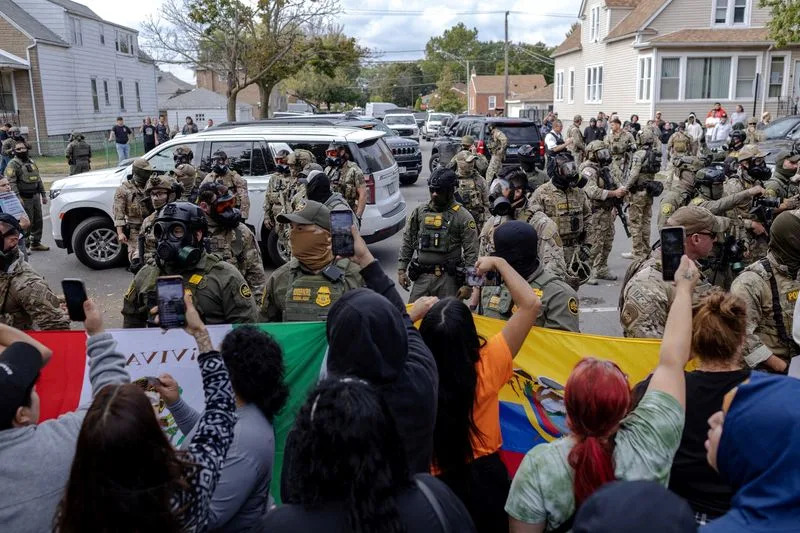
FILE PHOTO: Federal agents stand guard as community members gather near a car crash site where agents detained a man on Chicago?s South Side, in Chicago, Illinois, U.S., October 14, 2025, after U.S. President Donald Trump ordered increased federal law enforcement presence to assist in crime prevention. REUTERS/Jim Vondruska/File Photo
Reporters and independent news groups say the scope of reporting has pushed them to share leads, safety advice and sources across outlets and encrypted channels. Maira Khwaja of the Invisible Institute said the story is simply too large and that more reporters working together improves public safety and coverage.
When U.S. Border Patrol commander-at-large Gregory Bovino left Chicago for Charlotte on Nov. 13, reporters from The Charlotte Observer reached out to the Chicago Tribune. Tribune staff and other local reporters joined a video call to share practical tips — from safety equipment to tracking helicopter activity — and what to expect on the ground.
"It still feels good to be first," said Tribune senior editor Erika Slife. "Now I tell reporters it's more important to be right. We may not always be first, but we'll do it best."
As enforcement continues, student and local newsrooms say their maps, trackers and coordinated reporting provide communities with verified, timely information — turning rumors into documented evidence and helping people make safer decisions.
(Reporting by P.J. Huffstutter in Chicago; additional reporting by Ted Hesson in Washington, D.C.; editing by Deepa Babington.)


