
School communities nationwide have organized to protect students and families from immigration enforcement near campuses, turning online coordination into local safety networks. Parents, teachers and students have created walking escorts, alert systems and legal support, while some states pursue legal limits on enforcement. The operations have driven spikes in absences (Charlotte‑Mecklenburg reported 30,399) and left many students and families emotionally exhausted. Advocates warn the disruption will have lasting effects on children’s education and well‑being.
Schools Fight Back: How Communities Protect Students From ICE Enforcement
07:46 PM, 12/10/2025

Across the United States, school communities have mobilized to shield students and families from immigration arrests and deportations near campuses. What began as informal online coordination — group chats, shared spreadsheets and word‑of‑mouth meetings — has grown into organized local campaigns focused on safety, legal support and community resilience.
Local Organizing and Tactics
Educators, parents and students report a range of grassroots responses: “walking school buses” that escort children to and from campus, community alert networks that identify and verify federal agents, meal trains and ride‑share programs for affected families, and legal defense funds. Teachers in several districts patrol neighborhoods at drop‑off times to look for immigration agents and send out warnings. Students have organized walkouts and rallies to protest sweeps and to support impacted classmates.

Cristal Medina, 17, with her father, Yasser Ricardo Gomez Flores, and brother Yasser Izam Gomez Guillen Jr. (Cristal Medina)
Personal Stories and Community Impact
Marissa Bejarano, a middle and high school teacher in southeast Louisiana, attends private community meetings that participants are often asked not to publicize on social media. “For me, it feels like my nervous system is part of a collective,” she told reporters, describing the relief she felt after finding community support. She helped a mother who had gone into hiding by arranging groceries, discussing child‑care plans and providing a reliable local contact.
In Charlotte, 17‑year‑old Cristal Medina described how her father, Yasser Ricardo Gomez Flores, a Nicaraguan national, was detained on Oct. 21 after dropping her off at East Mecklenburg High School. He remains in detention in Georgia facing possible deportation. Hundreds of students in Charlotte walked out on Nov. 18 to protest the enforcement operations and support immigrant families.

Amiin Harun, a Minneapolis immigration attorney and charter school board chairman. (Amiin Harun)
Broader Reactions and Legal Pushback
Department of Homeland Security public‑affairs official Tricia McLaughlin disputed claims that schools were being targeted, saying enforcement actions are not aimed at campuses and expressing concern about threats to officers. Nevertheless, families and advocates report multiple detentions on or near school property since intensified operations began earlier in the year — operations sometimes known locally by names such as “Swamp Sweep” and “Charlotte’s Web.”
At the state level, Illinois Governor J.B. Pritzker signed legislation limiting immigration enforcement around state courthouses and making it easier to pursue civil‑rights claims against agents. Across cities, protesters have blocked raids, and local officials and community leaders have trained volunteers to spot and verify federal agents and to alert neighbors.
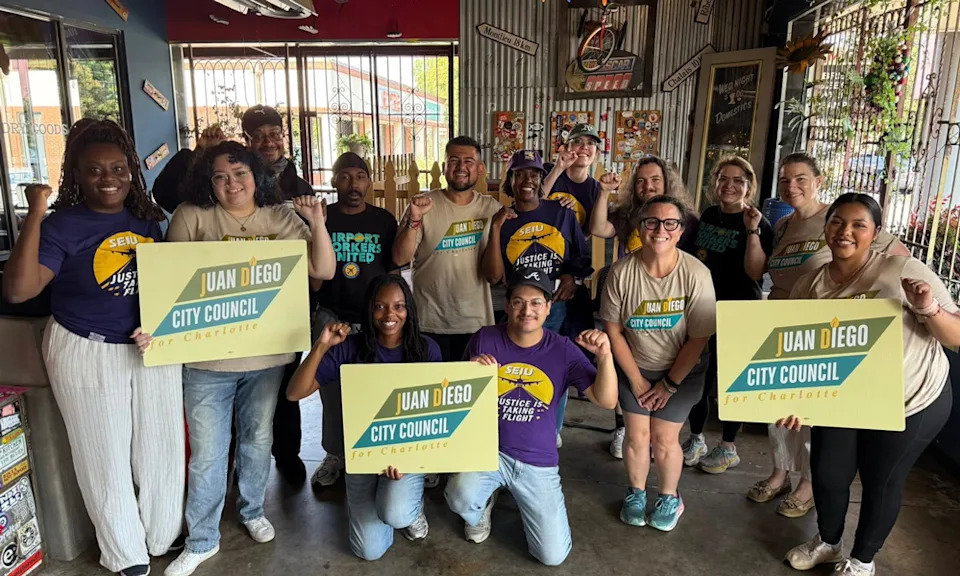
Juan Diego “J.D.” Mazuera Arias (center), who was sworn into office on the Charlotte City Council on Dec. 1, with his campaign supporters in September. (Facebook.com/juan.mazuera)
Community Strain and Student Well‑Being
School districts are seeing tangible effects: attendance and academic performance have suffered as families keep children home or avoid typical drop‑off times. The Charlotte‑Mecklenburg School District recorded 30,399 absences after enforcement operations began. Educators report widespread emotional exhaustion: students are distracted, parents live under fear of separation, and extracurricular participation has been disrupted.
“I know right now we are frustrated, mad, sad, worried, scared and confused,” said senior Zara Taty, a student organizer in Charlotte. “During these difficult times the most important thing to do is stick together, show empathy and show love.”
Coordination Across Communities
Immigration attorneys and community leaders describe growing cooperation across ethnic and faith communities. In Minneapolis, Somali and Hispanic neighbors are sharing protection strategies via mosques, churches, community centers and encrypted platforms. In Los Angeles, families walk in groups to school, organize food drives and prepare family contingency plans in case parents are detained.
Advocates warn that even after immediate operations subside, the social and emotional effects on children may endure, shaping memories and academic outcomes for years to come.
Similar Articles

Nearly 21,000 Students Missed School in Charlotte-Mecklenburg After ICE 'Operation Charlotte’s Web'
Nearly 21,000 students — about 15% of the Charlotte-Mecklenburg district — missed school on Nov. 17 after heightened ICE enfo...

Trump Immigration Crackdown Disrupts Child-Care Workers and Preschools
The Trump administration’s intensified immigration enforcement has disrupted preschools and child-care centers, particularly ...

Dawn Patrols: San Diego Teachers Track Suspected Undercover ICE Vehicles to Protect Schools
Three teachers in southern San Diego, members of the Association of Raza Educators, conduct pre‑dawn patrols to identify susp...

DHS: Charlotte Immigration Operation Not Over Despite Local Claims — 370+ Arrested, Schools and Businesses Disrupted
The multi-day enforcement campaign known as Operation Charlotte’s Web led to more than 370 arrests and significant disruption...

Charlotte’s Quiet Resistance: How Community Groups Tracked and Thwarted a Federal Immigration Sweep
Federal and local officials issued conflicting statements about a CBP deployment in Charlotte, while community groups mobiliz...

‘We’ll Need to See a Warrant’: How Businesses Are Using the Fourth Amendment to Push Back Against ICE
Siembra, an immigrant-rights group in North Carolina, is training businesses to invoke Fourth Amendment protections when ICE ...

Immigration Raids Spread in North Carolina — 200+ Arrests in Charlotte as Officials Warn New Orleans Could Be Next
Summary: Federal immigration enforcement in North Carolina has intensified, with DHS reporting more than 200 arrests in Charl...

Federal Immigration Sweep in Charlotte Sparks Fear and Temporary Business Closures as Local Leaders Push Back
Federal agents launched an intensified immigration enforcement operation in Charlotte on Saturday, prompting complaints from ...

12 Charts That Defined U.S. Education in 2025: Vaccines, ESAs, Phone Bans, and Learning Loss
In 2025 U.S. K–12 education combined a reprise of Trump-era policy priorities with fresh empirical findings. Studies linked i...

Charlotte Leaders Vow to Resist Imminent Federal Immigration Sweep
City and community leaders in Charlotte, N.C., are mobilizing to resist a possible federal immigration enforcement operation ...

New ICE Records Show Nearly 75,000 People Arrested Without Criminal Records
Internal ICE records obtained by UC Berkeley’s Deportation Data Project show that nearly 75,000 of about 220,000 arrests from...

Communities Train to Safely Monitor Border Patrol as Tensions Rise
Community groups in several U.S. cities are using whistles, car horns and neighborhood patrols to warn residents and document...

Federal Immigration Sweep Empties Kenner’s Hispanic Businesses, Residents Say Fear and Loss Linger
The article reports that a federal immigration operation called Catahoula Crunch has led to emptied Hispanic-owned restaurant...

Charlotte Immigration Raids: 200+ Arrested as Enforcement Spreads — New Orleans Could Be Next
More than 200 people were arrested in a multi-day immigration enforcement operation in Charlotte, according to DHS. Authoriti...

Records: Authorities Monitored Online Reaction During New Orleans 'Catahoula Crunch' Immigration Sweep
Records obtained by The Associated Press show state and federal agencies monitored online discussion and protests during the ...