
The article profiles a sock-making workshop in Herat that intentionally employs only people with disabilities, providing income and dignity to conflict-injured and disease-affected workers. Founded by polio survivor Mohammad Amiri, the factory employs about 50 people and makes four styles of socks. Afghanistan faces high disability rates and remains one of two countries with endemic wild poliovirus; the founder hopes to expand and secure government contracts despite stiff competition from cheap imports.
Herat Sock Workshop Gives Disabled Afghans New Livelihood and Hope

Local businessman Mohammad Amiri, 35, right, sorts out spools of thread for making socks as he works with his staff, all people with disabilities, in his sock production workshop in the western Afghan city of Herat, Afghanistan, Monday, Dec. 8, 2025.(AP Photo/Omid Haqjoo)(ASSOCIATED PRESS)
In a small room in central Herat, Afghanistan, a new sock workshop is quietly changing lives. Thirty-six-year-old Shahabuddin, who lost both legs in a roadside bomb about a decade ago, uses his hands to move across the floor to a fresh pile of socks ready to be sorted and packed. After years of unemployment, he now earns a steady income and a renewed sense of purpose.
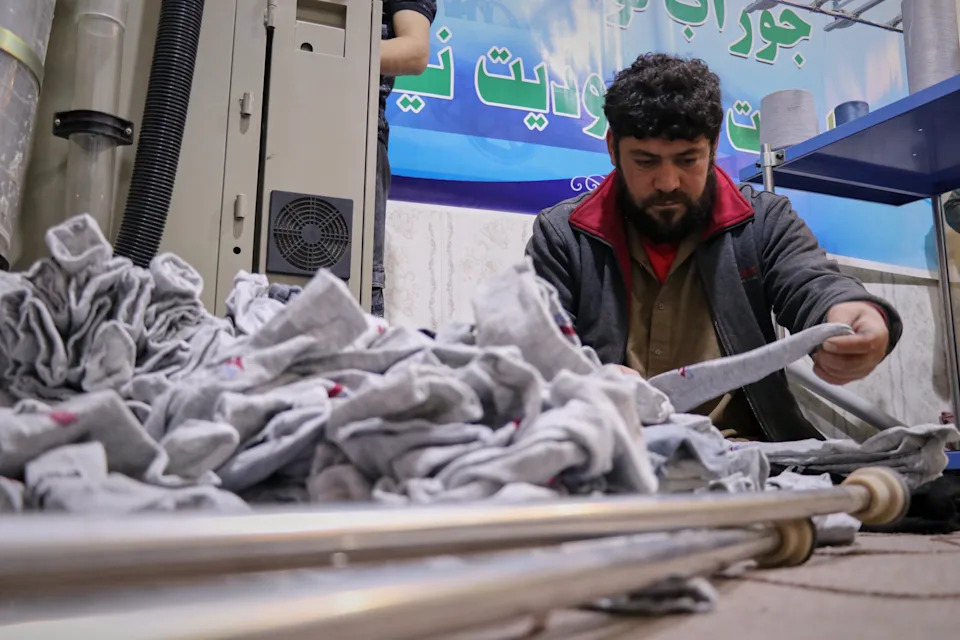
Shahabuddin, a double amputee since a roadside bomb took both his legs a decade ago, sorts freshly made socks to be packaged in a sock workshop staffed entirely by men with disabilities in the western Afghan city of Herat, Afghanistan, Monday, Dec. 8, 2025. (AP Photo/Omid Haqjoo)(ASSOCIATED PRESS)
The factory was launched about a month ago by 35-year-old Mohammad Amiri, a childhood polio survivor and former grocery worker. Amiri joined forces with another polio survivor to create a business that intentionally hires only people with disabilities — many of them injured in conflict, born with congenital conditions, or affected by disease. The workshop currently employs roughly 50 disabled workers and produces four types of socks: long and short styles for both winter and summer use.
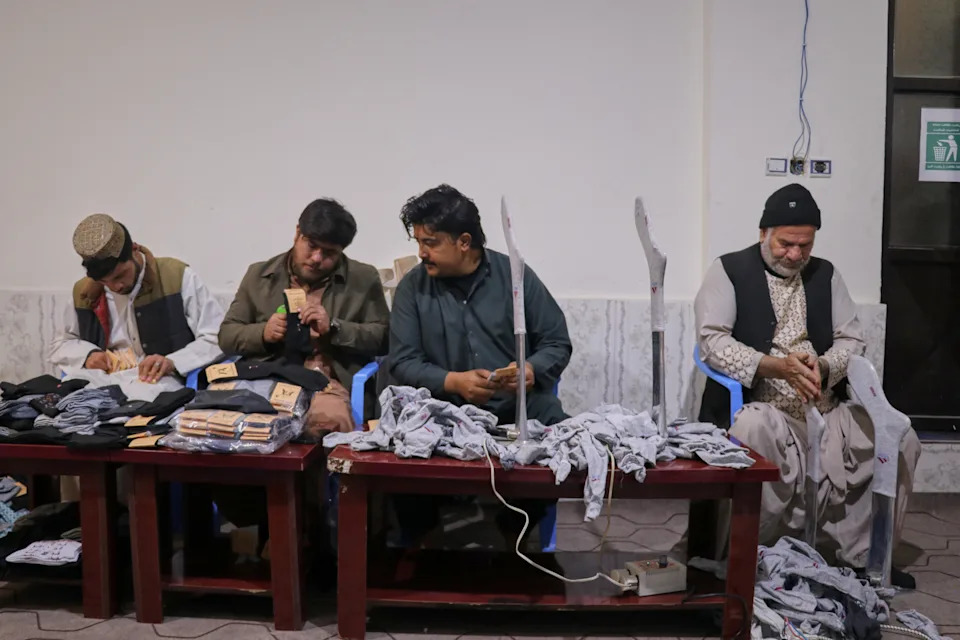
Local businessman Mohammad Amiri, 35, second from left, labels a pair of socks as he works with his staff, all of whom have disabilities, in his sock production workshop in Herat, western Afghanistan, Monday, Dec. 8, 2025.(AP Photo/Omid Haqjoo)(ASSOCIATED PRESS)
'I became disabled due to the explosion. Both my legs were amputated,' Shahabuddin said during a brief break in early December. 'Now I work here in a sock factory, and I am very happy that I have been given a job here.'
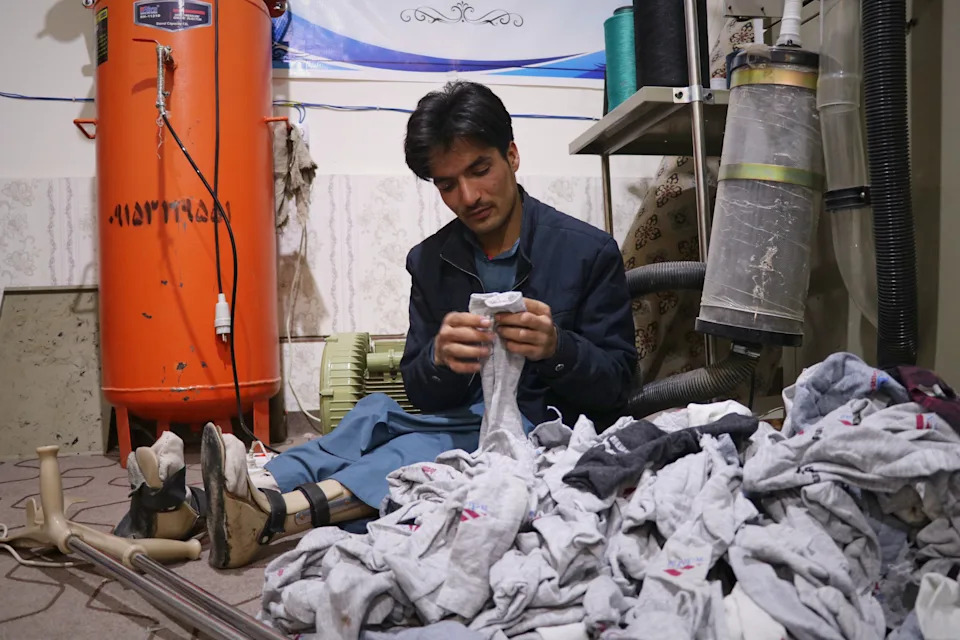
Masood Khan, sorts freshly made socks to be packaged in a sock workshop staffed entirely by men with disabilities in the western Afghan city of Herat, Afghanistan, Monday, Dec. 8, 2025. (AP Photo/Omid Haqjoo)(ASSOCIATED PRESS)
Amiri says the enterprise is funded and supported by people with disabilities and covers production, packaging and local sales. The founder hopes to secure larger contracts — including supplying socks to Afghan security forces — and to expand employment substantially, with a long-term goal of providing thousands of jobs.
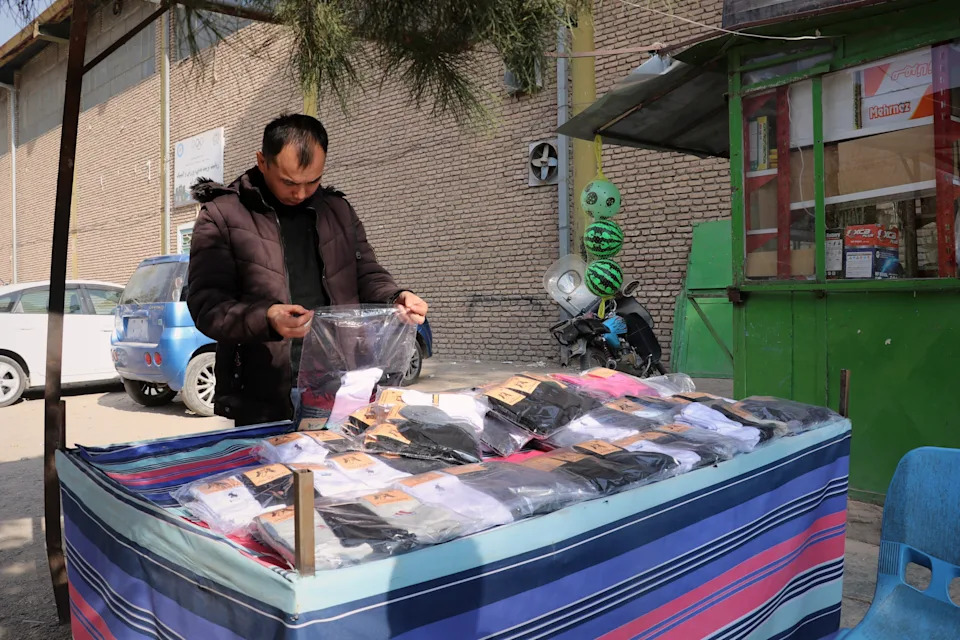
Mohammad Arif Jafari, 40, prepares his stall to sell socks made in a workshop staffed entirely by men with disabilities, in Herat, western Afghanistan, Monday, Dec. 8, 2025. (AP Photo/Omid Haqjoo)(ASSOCIATED PRESS)
Disability and Context
Decades of conflict, a fragile health system and economic hardship have contributed to widespread disability in Afghanistan. A 2019 Model Disability Survey by The Asia Foundation found that about 25% of adults experience a mild disability, 40% a moderate disability and roughly 14% a severe disability. The U.N. Assistance Mission in Afghanistan has urged that persons with disabilities be fully included in planning and service delivery, calling for accelerated action and greater commitment.
'Persons with disabilities must not be treated as an afterthought; they must be fully integrated into every stage of planning, decision-making, and service delivery.'
Afghanistan is also one of only two countries, along with neighboring Pakistan, where wild poliovirus remains endemic. The virus can cause flu-like illness but may also lead to paralysis, lasting disability or death. The Afghan Ministry of Martyrs and Disabled Affairs reports that 189,635 people with disabilities are registered and receive financial support from the government.
Challenges and Aspirations
Amiri acknowledges several challenges: competition from inexpensive imported textiles, limited access to capital and market barriers. He is pressing for government measures to limit unfair import competition and is actively pursuing contracts to scale production. Many employees are returnees who spent years abroad; among them is Mohammad Arif Jafari, a 40-year-old economics graduate and polio survivor who previously lived in Iran. 'I suffered a lot due to unemployment. But fortunately, now I produce several types of socks,' Jafari said while selling goods from a street stall in Herat. 'I am happy that I am working here and earning an income.'
Small, locally driven ventures like this workshop demonstrate how targeted social entrepreneurship can provide dignity, income and community reintegration for people with disabilities — even amid ongoing national challenges.


