
New genomic analysis of New World wood warblers (about 115 species) finds repeated transfers of carotenoid-processing genes—most notably BCO2—across species via hybrids that can backcross. The study used a dataset of more than 2 trillion base pairs and shows that carotenoid genes are shared more frequently than most other genes. Sexual selection likely helps spread these variants because brighter plumage provides an honest signal of mate quality. These results indicate that adaptive gene flow among close relatives is an important evolutionary force.
Warblers Borrow Color Genes From Neighbors: How Songbirds Swap Plumage Traits Across Species

Some bird species on neighboring tips of the evolutionary tree can interbreed, with interesting genomic results. Kaleb Anderson
Evolution is often portrayed as a strictly vertical story—mutations arise within a species, selection acts, and isolated populations slowly diverge into distinct branches of the tree of life. New genomic evidence from New World wood warblers, however, reveals a more nuanced picture: closely related species sometimes exchange entire genetic solutions across species lines, enabling rapid shifts in traits such as plumage coloration.
Massive Genomic Sleuthing
In work led by Kevin Bennett and colleagues, my team assembled an enormous dataset—more than 2 trillion base pairs sampled from nearly every wood warbler species. The warbler family (roughly 115 species) radiated within the last ~10 million years, making them close evolutionary neighbors ideal for detecting gene flow between species.
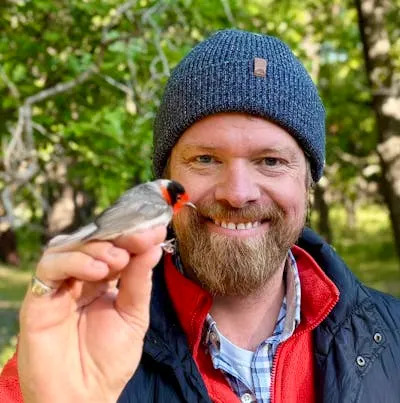
The author with a red-faced warbler (Cardellina rubrifrons), one of the wood warbler species included in the study. Kevin Bennett
Hybrids as Genetic Bridges
Genetic sharing occurs through hybrids—offspring of matings between two species. Unlike sterile hybrids such as mules, many natural warbler hybrids can backcross (breed with a parent species), which allows donor genes to enter and spread through the recipient species' gene pool. Although textbooks emphasize reproductive isolation, speciation is usually gradual and can leave blurry boundaries where interbreeding is biologically possible.
Carotenoid Genes Turn Up Again and Again
Our analyses show that genes involved in carotenoid processing—which produce yellow, orange and red plumage—are shared among warbler species more often than other gene classes. Vertebrates cannot synthesize carotenoids and must obtain them from diet, then biochemically convert them into the pigments seen in feathers. Efficient processing is therefore a complex, adaptive challenge.
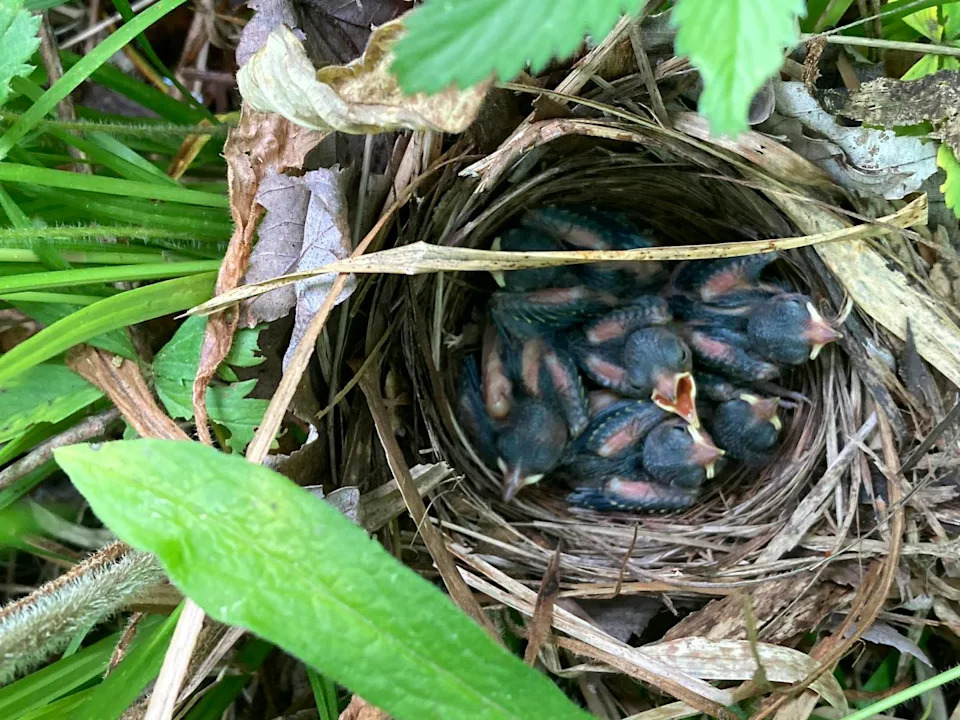
Nestlings in a hybrid zone between golden-winged (Vermivora chrysoptera) and blue-winged warblers (V. cyanoptera). Hybrid chicks that grow up to ‘backcross’ with one of their parent species can introduce new genes into the mix for a population. Abigail Valine
A standout example is the gene beta-carotene oxygenase 2 (BCO2). We detected multiple, independent transfers of BCO2 across warbler species and at least one instance of second-order sharing—the gene moved from species A to B, then from B to C. That pattern points to repeated, adaptive reuse of the same genetic variant.
Why These Genes Spread
Sexual selection likely helps explain BCO2’s popularity. Male warblers obtain dietary carotenoids from insects and display bright carotenoid-based plumage as an honest signal of diet quality and overall fitness. Males that process carotenoids more efficiently will appear more colorful, secure more mates, and thus increase the frequency of those beneficial processing variants in the population.
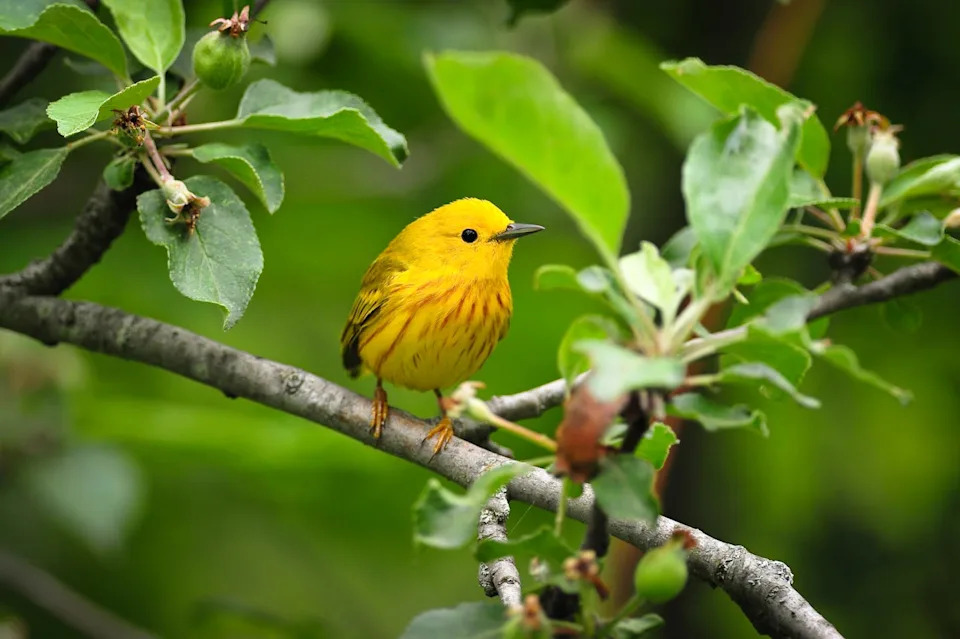
Wood warblers need particular genes to help them process and deposit certain pigment molecules in what they eat to make brightly colored feathers, like in this yellow warbler.Marc Guitard/Moment via Getty Images
Broader Implications
Warblers join other well-documented examples of adaptive gene flow—Amazonian butterflies, African cichlid fishes, and traces in the hominid lineage—demonstrating that horizontal gene flow among close relatives is an important evolutionary mechanism. Rather than isolated narratives, genomes can be interwoven tapestries of shared solutions, especially among recently diverged lineages.
Takeaway: Hybridization and backcrossing can move ready-made adaptive variants—sometimes entire gene complexes—between species, enabling rapid phenotypic change that pure mutation-driven models alone would predict more slowly.
Author and Funding: David Toews, Pennsylvania State University. Research supported in part by the National Science Foundation.


