Mearns Castle High School has appointed Jamie Laycock as the UK's first principal teacher of AI literacy to teach pupils and staff how to evaluate and use AI responsibly. The programme covers spotting deepfakes, recognising AI "hallucinations", avoiding anthropomorphising chatbots and understanding bias. Lessons are age-tailored, include an elective for seniors and will be supported by staff training and shared resources.
Scotland Appoints UK's First AI Literacy Teacher — 'Question, Don't Blindly Trust AI'
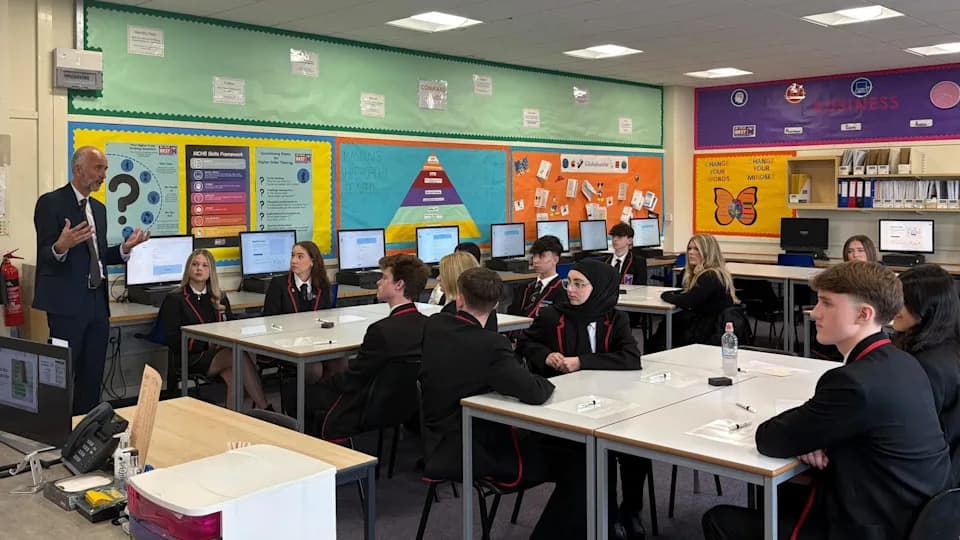
Laycock warns that AI often flatters users and agrees with users rather than challenging their ideas [BBC]
Mearns Castle High School in East Renfrewshire has created what is believed to be the UK’s first dedicated principal teacher of AI literacy, appointing Jamie Laycock to lead lessons for pupils and training for staff. The role is designed to teach young people how to evaluate, question and use artificial intelligence responsibly rather than to promote uncritical adoption.

Tomo wonders whether AI could transform his chosen profession before he even graduates [BBC]
What Pupils Will Learn
Laycock's lessons combine practical exercises and critical thinking. Students are taught to:

Anna said the deepfake exercise left her less confident about her ability to distinguish real images from fake ones [BBC]
- Spot deepfakes and manipulated images through hands-on comparison exercises.
- Recognise "hallucinations," where AI confidently presents fabricated or inaccurate information.
- Avoid "anthropomorphisation"—treating chatbots like trusted friends or experts simply because they sound human.
- Understand how bias in training data can shape AI outputs and reflect social norms.
Teaching Approach
Lessons are tailored by age: S1 and S2 pupils will focus on foundational knowledge and critical thinking, while older students will explore practical uses through citizenship and personal and social education (PSE). A senior elective will be offered and staff training and classroom materials will be developed to support broader roll-out.

Head teacher Stuart Clark says it is clear that the implications of AI will be profound [BBC]
"We can't just hope AI goes away," Laycock says. "Our learners need to know how to use it appropriately so it doesn't erode their ability to think and critically evaluate things."
Why This Matters
The post was created after growing interest from pupils and parents about how AI will affect future careers. Students voiced mixed views: some see AI as a helpful tool for learning, while others worry about overreliance and job disruption. Practical exercises—such as identifying AI-generated images—have left some pupils less confident in spotting fakes, underscoring the need for education.
Context and Guidance
The move follows a report from the University of Edinburgh that found Scottish schools lacked time and capacity to prepare adequately for AI’s rapid rise. The Scottish government published national guidance in March urging ethical, cautious use of AI in education and warning against replacing meaningful human interaction. Education Secretary Màiri McAllan said the guidance supports local decision-making as AI evolves.
Head teacher Stuart Clark emphasised balance: "Acting on AI is not the same as advocating for it or promoting it. There will be risks and opportunities, and we must avoid repeating the mistakes made with social media by not educating young people on the implications."
Help us improve.