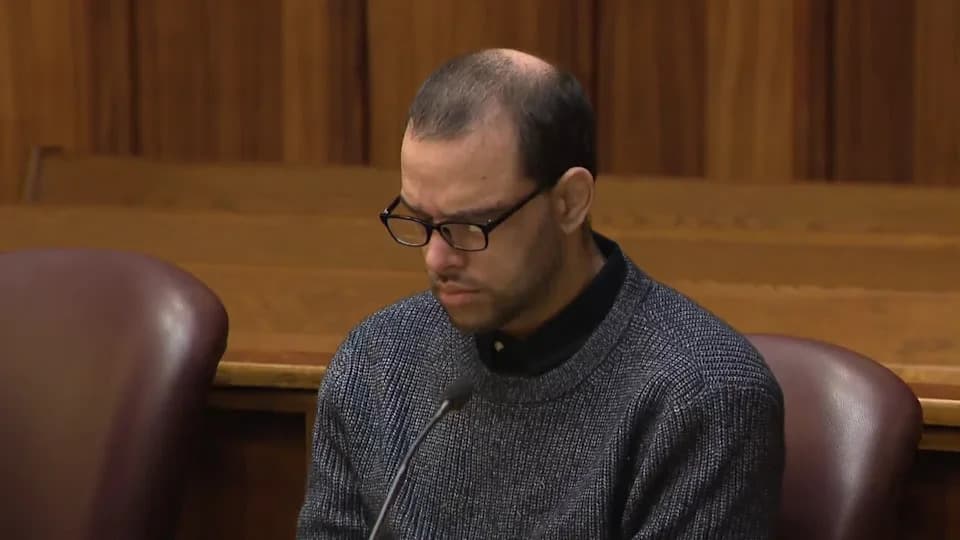
Detective Juan Carlos Chavez testified that Alberto Sierra confessed to killing his estranged wife, Gladys del Carmen Sierra, and her daughters, Julia (6) and Daniela (4), then sexually abusing the victims' bodies and concealing them in a closet. The confession came after investigators confronted Sierra with DNA evidence. Sierra described suffocating his wife with a plastic bag and said he turned his face away so he "wouldn't have to look" while she struggled; he later admitted to killing both children and committing postmortem abuse. Sierra pleaded guilty to multiple counts; jurors will now decide punishment while the defense cites severe frontal-lobe damage as mitigation.
Detective: Alberto Sierra Said He Looked Away While Suffocating Wife, Then Admitted Postmortem Abuse of Wife and Daughters
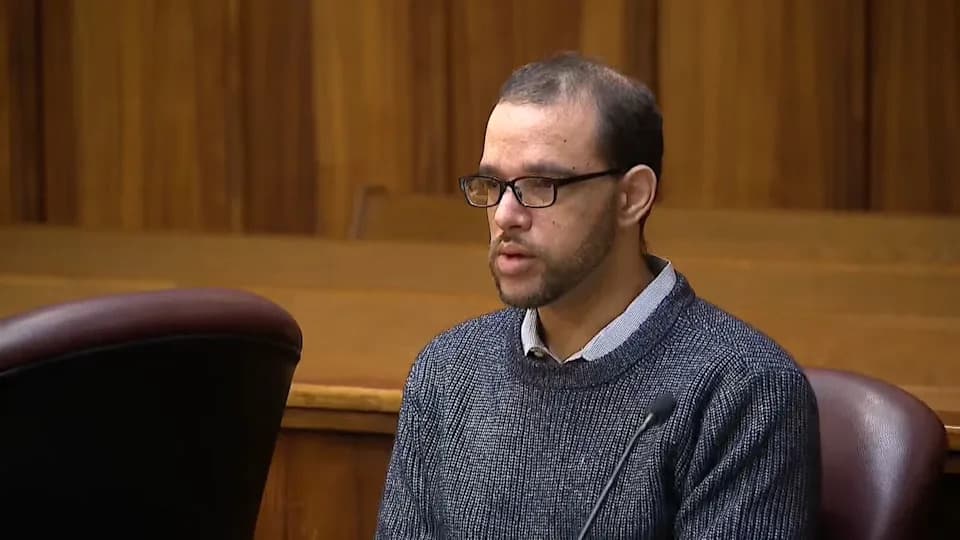
Alberto Sierra sits in court on Oct. 5, 2026. (Court TV)
A Miami detective told jurors that 42-year-old Alberto Sierra confessed to killing his estranged wife, Gladys del Carmen Sierra, and her two young daughters, then sexually abusing their bodies and hiding the remains in a closet. Sierra has pleaded guilty to murder, burglary, kidnapping and abuse of a dead body; the jury is now limited to deciding his punishment, with prosecutors seeking the death penalty and the defense arguing he should receive life without parole because of severe frontal-lobe brain damage.
Detective’s Account of the Confession
Detective Juan Carlos Chavez testified that Sierra initially denied involvement, saying he had been at his apartment all day. Chavez said Sierra changed his story after investigators told him DNA found in one of the girl’s underwear linked him to the scene. At that point, Sierra "dropped his head," began to quiver and offered a full confession, according to Chavez.
What Sierra Told Investigators
Chavez recounted Sierra’s account of the events: the group had spent the day at the Mall of the Americas. On the drive home, Sierra confronted Gladys about suspected infidelity after she rejected two phone calls. A struggle followed, during which Gladys reportedly reached for a kitchen knife. Sierra said he took the knife, forced Gladys to change seats, then drove them to her home.
Once inside, Chavez said, Sierra locked the children in a bedroom, bound Gladys’s wrists with a nylon rope and demanded the passcode to her phone, repeatedly pricking her with the knife in the process. After obtaining the code and reviewing messages and call logs, Sierra became enraged. Chavez said Sierra described pinning Gladys down, placing a plastic bag over her head and deliberately turning his face away so he "wouldn't have to look" while she struggled to breathe.
"His body language... he did drop his head for several seconds, while clasping his hands. He began to quiver and then he decided and stated that he was going to tell me what happened." — Det. Juan Carlos Chavez
Postmortem Actions and Additional Killings
Chavez testified that Sierra waited about an hour after killing Gladys before cutting her clothing and sexually abusing her body, stopping only when he "realized it wasn't right." The detective said Sierra then killed 6-year-old Julia after she discovered her mother’s body and screamed; he used the same plastic bag. He returned to suffocate 4-year-old Daniela while she slept, then moved the girls’ and Gladys’s bodies into a closet and admitted to sexually abusing Julia’s corpse after viewing pornography.
Chavez said Sierra also admitted collecting items from the bed, handling personal belongings and cleaning the apartment in an effort to remove evidence linking him to the scene before leaving.
Legal Status and Defense Argument
Because Sierra pleaded guilty to the murders and related counts, the trial has entered a penalty phase in which jurors will weigh aggravating and mitigating factors. Prosecutors are seeking the death penalty. Sierra’s attorneys say he suffers severe frontal-lobe damage — which they described as a "broken brain" — and argue that his neurological impairments warrant a life sentence without parole instead of death.
The testimony described by Chavez was presented during the Miami penalty-phase proceedings as jurors consider whether aggravating factors outweigh mitigating evidence of brain injury and other circumstances.
Help us improve.