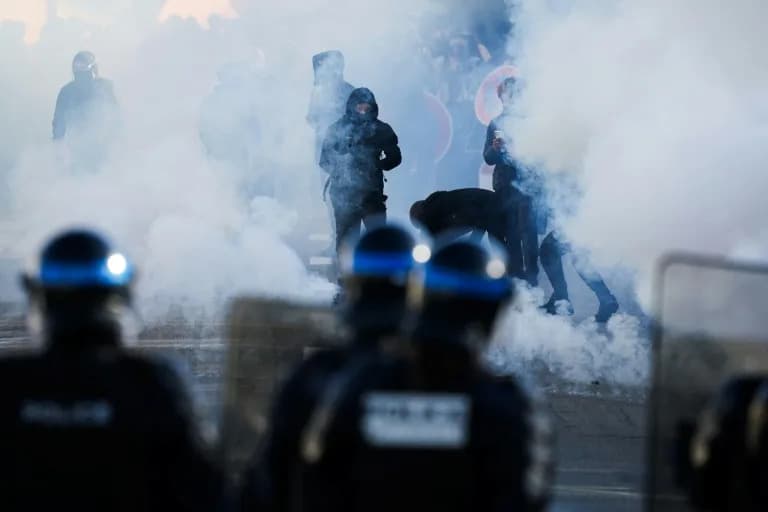
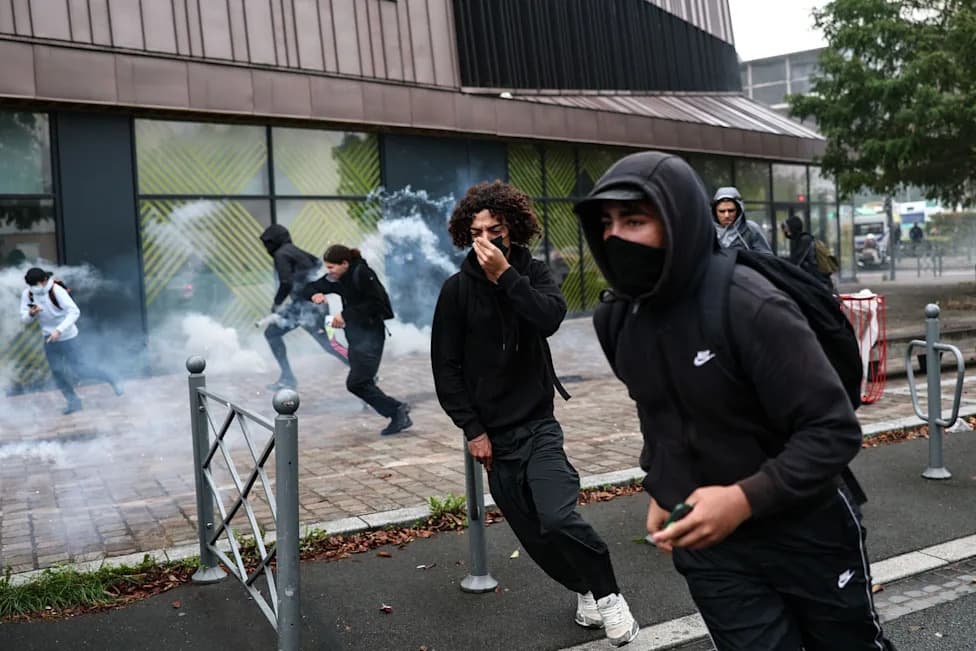
The student protest that began on 17 September in Créteil over overcrowded classes and staff shortages has escalated into widespread unrest, with roughly 500 lycées closed and dozens of schools damaged by fire. Hundreds of police and pupils have been injured amid attacks on staff, journalists and passers-by. Far-Left politicians from La France Insoumise have been accused of amplifying the crisis, while analysts point to declining educational standards and rising polarisation as deeper drivers. With presidential elections approaching, the unrest raises the risk of a broader political confrontation.
Student Protests in France Spiral Into Nationwide Unrest as Politics Intensify
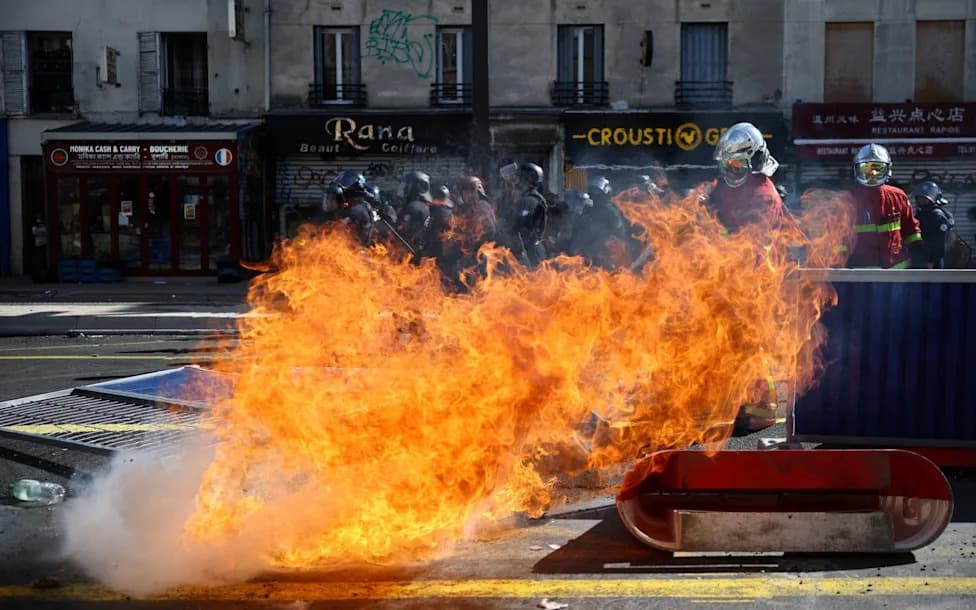
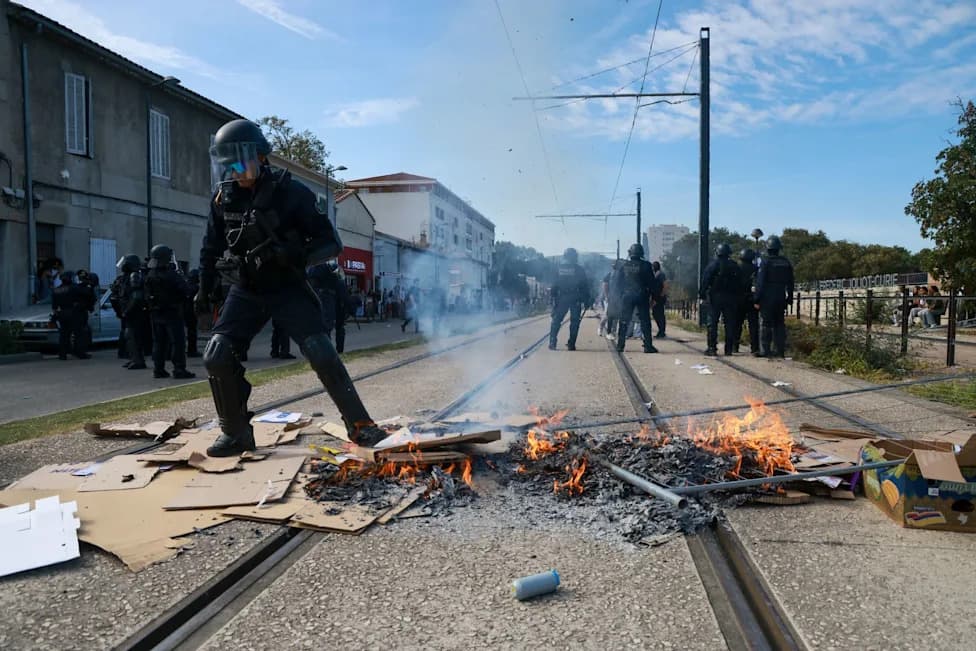
French firefighters extinguish barricades set alight by protesters amid clashes outside the Lycée Berthelot high school in Aubervilliers near Paris - Reuters/Sarah Meyssonnier
What began on 17 September outside a lycée in Créteil, southeast of Paris, as a protest by secondary-school pupils over overcrowded classes, ageing buildings, teacher shortages and, in some cases, a lack of nurses, has escalated into widespread civil unrest.
From Local Grievance to National Crisis
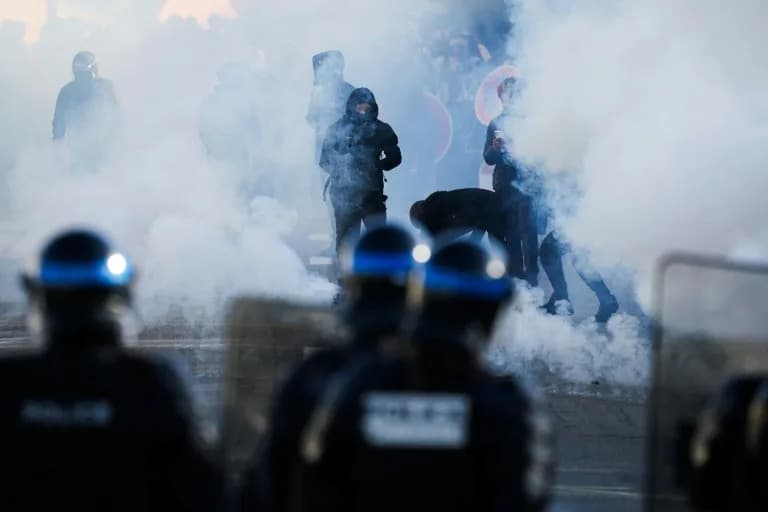
Protesting has long been part of French civic life since 1968, typically theatrical and largely nonviolent. But within two weeks the situation changed dramatically: roughly 500 lycées were reported closed with lessons moved online; 24 high schools were described as "severely damaged" after fires; and dozens of violent incidents left many people hurt.
Scale and Scope of the Violence
Authorities and news reports say about 305 police officers and some 170 pupils have been injured. Headteachers have been doused with petrol, journalists attacked, firefighters assaulted, passers-by burned with blowtorches, and thousands of rubbish bins melted into sticky, malodorous puddles on pavements. Police have come under attack with firework mortars and, in some incidents, corrosive substances such as hydrochloric acid. Demonstrations have also been infiltrated by older, organised provocateurs, according to official accounts.
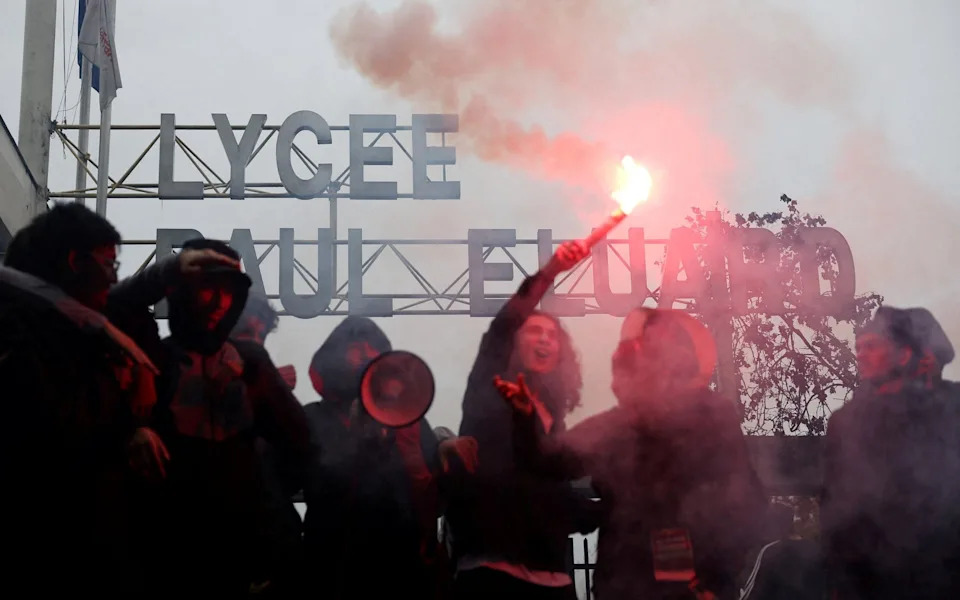
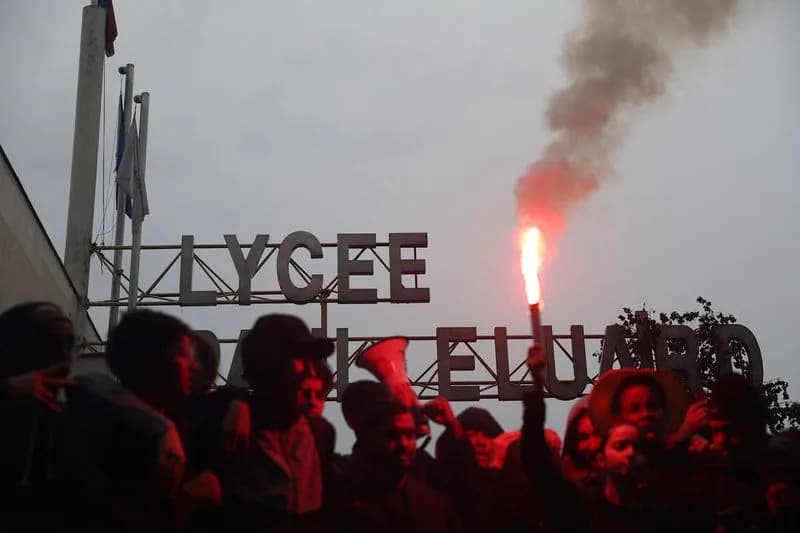
Protesting French high school pupils block access to the Lycée Paul Eluard in Saint-Denis, near Paris, last week - Reuters/Abdul Saboor
Political Amplification
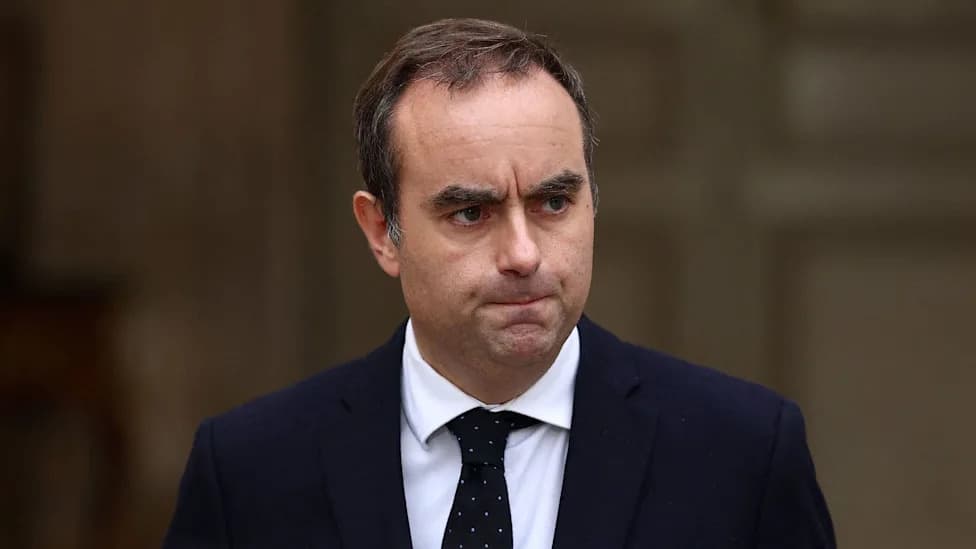
Far-Left MPs from Jean‑Luc Mélenchon’s movement, La France Insoumise, have been visible at some blockaded schools. Mélenchon and his lieutenants have used strong rhetoric; for example, he was quoted saying,
"We are proud to be at the high school gates to defend our kids. Mobilise yourselves to intervene against police savagery."Such language has alarmed many observers who say it risks normalising confrontation between protesters and authorities.
Public Reaction and Political Stakes
Polls suggest nuanced public reactions: a survey for Le Figaro found that while a clear majority sympathises with pupils' demands (62%), a much larger share (78%) disapproves of far-Left involvement in the violence. With the presidential election months away, commentators note that political actors may be using unrest to energise supporters or to position themselves for a contested campaign.
Root Causes: Education and Social Divisions
Analysts and commentators point to longer-term problems in France’s education system. Economist Pierre Bentata has argued that lowering pedagogical standards and replacing traditional authority with a culture of constant conviviality have undermined discipline and outcomes: "In our eagerness not to frustrate, we have ceased to educate," he wrote, noting that roughly 90% of an age cohort now obtain the baccalaureate, which some say dilutes its value.
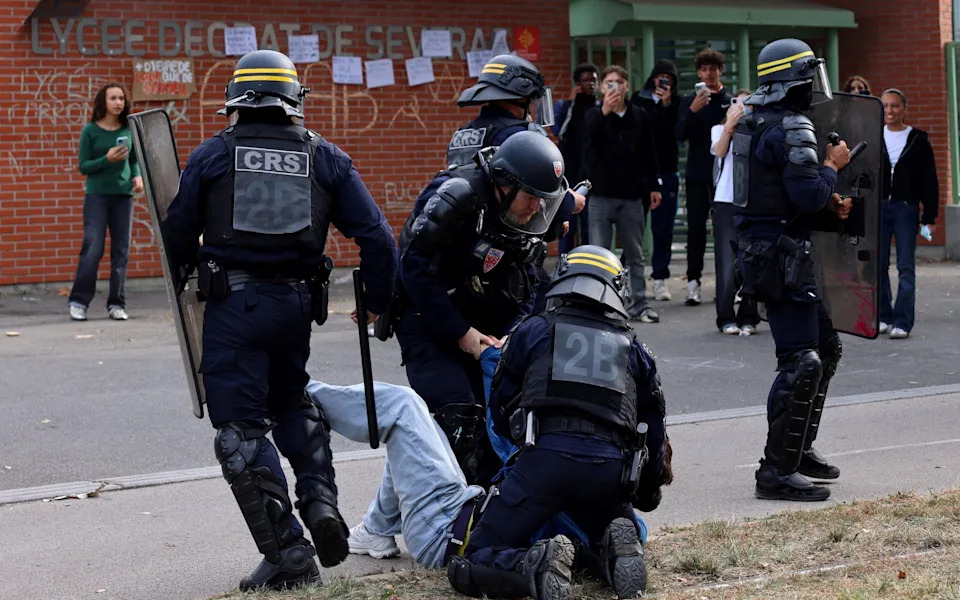
Riot police apprehend a protestor outside a school in Toulouse; over 300 policemen and 170 pupils have been injured in the protests - Reuters/Nacho Doce
A report by Fondapol, a centre-Right think tank, also highlights that Mélenchon’s appeal is strong among groups with high abstention rates—particularly younger voters and French Muslims—making the youth vote a key battleground in upcoming elections.
What Comes Next
Universities and student unions have called further coordinated actions, and political tensions are high as Parliament prepares for budget debates. Whether the unrest will subside or widen into a larger political confrontation remains uncertain, but the episode has already exposed deep grievances over schooling, policing and political polarisation.
Note: Figures and incidents are drawn from contemporary reports and polls cited in the original article. Where possible, readers should consult multiple sources for the latest updates.
Help us improve.