Human rights groups warn that demolition activity at Gohardasht (Raja'i Shahr) Prison risks erasing vital evidence linked to the 1988 mass executions and decades of abuse. Video shows one of the last watchtowers being dismantled after the facility was closed and reportedly sold in 2023 for 10,000 billion tomans (€200 million). Advocates point to the site's role in prosecutions such as the Swedish trial of Hamid Nouri and urge urgent international action to document and preserve remaining evidence.
Iran Demolishes Gohardasht Prison Watchtower, Threatening Evidence of 1988 Massacre
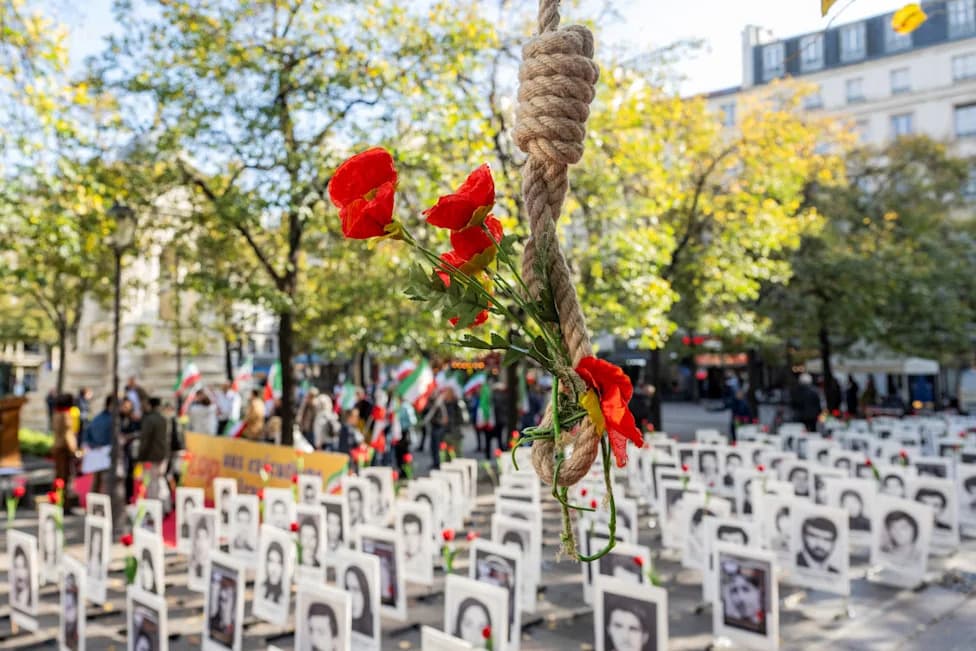
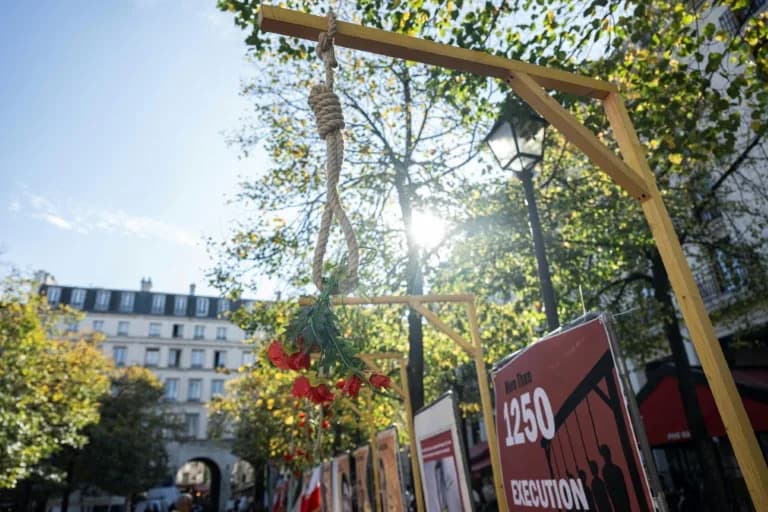
A noose with mock flowers next to portraits of executed Iranian prisoners, and anti-regime activists in the background denouncing Iran
Human rights advocates warn that recent demolition work at Gohardasht Prison (also known as Raja'i Shahr) risks destroying critical physical evidence tied to decades of abuses, including the mass executions of political prisoners in 1988.
Footage circulating on Persian-language social media shows one of the last remaining watchtowers being brought down. Observers say the images raise serious concerns that material evidence documenting crimes against humanity could be irreparably lost if the site is redeveloped or demolished.
Closure, Sale and Local Reaction
The prison was evacuated and officially closed in 2023 after decades of documented torture, ill-treatment and executions dating to the aftermath of the 1979 Islamic Revolution. An informed source told Iran Human Rights that prison authorities said the site had been sold for 10,000 billion tomans (approximately €200 million) without naming a buyer and that inmates would be relocated.
Historical Significance
Gohardasht was long notorious for the abuse of political detainees. Thousands of prisoners were executed there through the 1980s and later, including hundreds killed in the 1988 mass executions ordered by then–Supreme Leader Ayatollah Ruhollah Khomeini. The site was central to international accountability efforts, including the Swedish prosecution of Hamid Nouri, who was convicted and sentenced to life for his role in the executions and later returned to Iran in 2024.
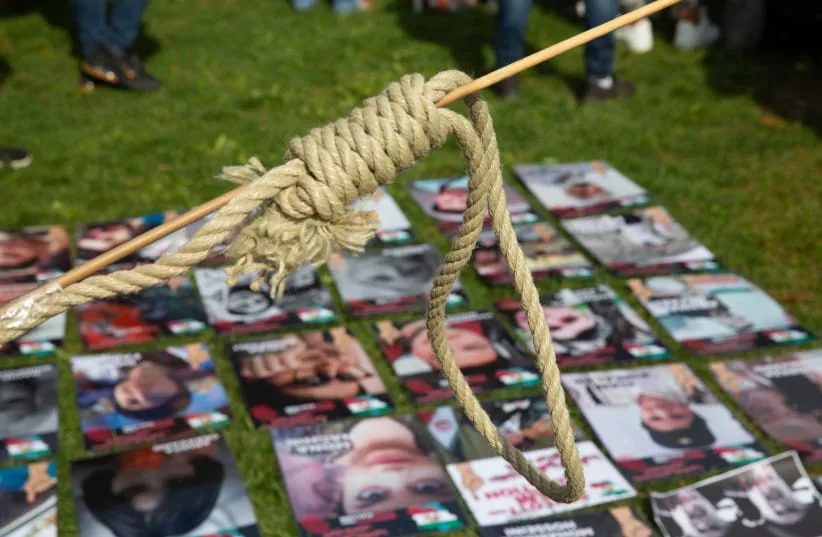
A WOMAN in the Netherlands holds a noose while standing near images of killed Iranian political prisoners, in 2024. (credit: Michel Porro/Getty Images)
Calls for Preservation
Human rights groups and former inmates have repeatedly warned that demolishing or redeveloping the prison complex would eliminate key forensic and documentary evidence needed for truth, justice and historical record. Mahmood Amiry-Moghaddam, director of Iran Human Rights, said shortly after reports of the sale:
"Gohardasht Prison is the place where crimes against humanity were committed by those who currently hold key positions in the Islamic Republic. We still don't know the full scope of those crimes, and destroying the evidence is without doubt one of the key motivations behind its closure. The justice movement, Iranian civil society and the international community must do everything in their power to prevent the prison's demolition."
Former inmate Mehdi Aslani described the demolition as an attempt to "erase the geography of blood" and warned that transforming the site into parks or university facilities would be a bitter irony on ground where atrocities occurred.
What Comes Next
Rights groups are urging international bodies, forensic specialists and preservation advocates to document the site while any remaining material evidence can still be accessed. They say rapid, independent assessment and protection measures are needed to safeguard evidence for future accountability and to preserve the memory of victims.
Why this matters: Destruction of physical sites connected to mass atrocities can permanently hinder investigations, prosecutions and historical record-keeping, denying victims and families the possibility of truth and justice.
Help us improve.