The Millennial Internet — an era of amateur mashups, rooftop videos and participatory social networks — has largely been replaced by algorithmic, broadcast-style platforms shaped by corporate incentives and political pressure. Data from academic papers and surveys show declines in posting and public engagement, while laws, litigation and regulatory threats (from FOSTA to age-verification proposals) have encouraged platforms to tighten moderation and surveillance. The result is less anonymity, less spontaneous creativity, and more passive consumption — a profound shift with consequences for civic life and culture.
How Politics Killed the Millennial Internet: From Rooftop Mashups to Algorithmic Broadcasts

Illustration: Joanna Andreasson; Source images: Unsplash, iStock
In 2019 a clip of Rep. Alexandria Ocasio-Cortez dancing on a rooftop exploded across Twitter, accompanied by ridicule from an anonymous account calling her a "clueless nitwit." The video, actually shot in 2010 while she was a Boston University student, was part of a wider, playful moment in early social media culture — an era of amateur mashups, rooftop stunts and casual participation that many remember as the Millennial Internet.
What That Era Looked Like
In March 2009, a Brat Pack mashup set to Phoenix's "Lisztomania" helped spawn a wave of rooftop dance videos and improvised viral clips. Friends recorded each other for fun — not to monetize, brand, or optimize for engagement metrics. People planked in strange places, shared #ThrowbackThursday photos, and traded blog-length replies in what felt like a vast virtual writers' workshop. Early campaigns, notably Barack Obama's, also used these channels to reach audiences that traditional media missed. The result: a participatory, messy, collaborative web that privileged connection over commerce.
The Shift: Mid-2010s Onward
By the mid-2010s the tone changed. "Cancel culture," polarized politics, and the rise of professional influencers shifted attention away from amateur mashups and toward content optimized for reach and monetization. Lawmakers began summoning tech executives to testify, and public scrutiny of platforms intensified. Social media remained creative and communal in places, but the baseline expectations had changed: posts became "content," platforms prioritized algorithmic attention, and moderation became central to corporate strategy.

Photo: Rep. Alexandria Ocasio-Cortez (D–N.Y.) dances in a 2010 video produced at Boston University while she was an undergraduate; YouTube
Politics, Pressure, and Regulation
Political pressure played a major role in that transition. Laws and high-profile campaigns pushed platforms toward stricter moderation and risk-averse policies. Examples include the 2018 FOSTA law, which targeted online sexual exploitation but also incentivized platforms to suppress a broad range of sexual content. Repeated hearings, threats to Section 230 protections, antitrust scrutiny, and public pressure over teen mental health and radicalization created incentives for platforms to preemptively restrict speech.
"Social media gave the public the ability to speak freely and connect freely. And very quickly, governments and people in power realized that that's a liability for their ability to maintain control." — Tech journalist Taylor Lorenz
Evidence Of Decline And Changing Use
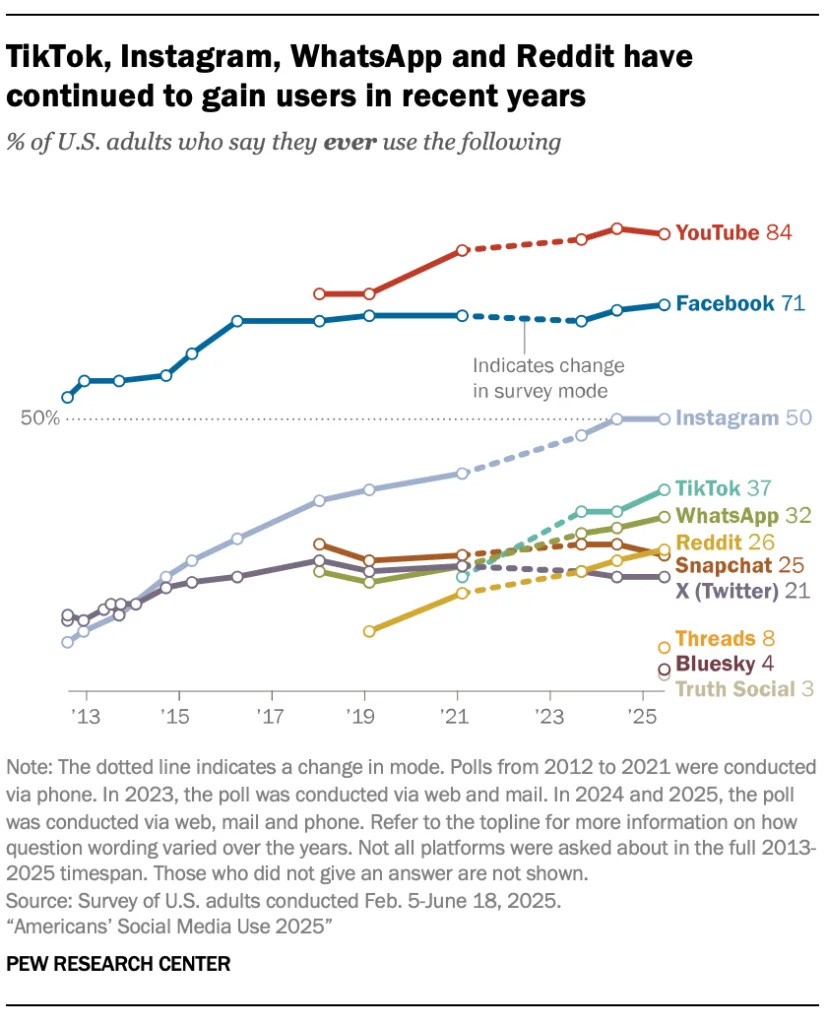
Data suggest engagement patterns have changed substantially. Petter Törnberg's March 2026 paper, "Shifts in U.S. Social Media Use, 2020–2024," reported declines and fragmentation in visits and posts. Pew Research Center shows Facebook's "ever-used" share rose only modestly from 68% (2016) to 71% (2025), while Twitter/X peaked at 24% in 2018 and has fallen since. Research cited in 2025 by the Financial Times found fewer people using social platforms primarily to keep up with friends or do creative work; a 2025 Morning Consult poll found 57% of users used social media daily for entertainment but only 33% for posting (74% vs. 31% among Gen Z).
Incogni's June 2026 survey found more than half of respondents posting less than five years earlier. Törnberg reported visits and posts on Facebook and Twitter/X dropped almost 50% between 2020 and 2024. These trends indicate fewer public, conversational interactions and more passive consumption.
Pew Research Center
Legal And Financial Pressure
New legal strategies have targeted platform design and consumer harms instead of only content. Plaintiffs and state attorneys general have brought cases under unfair-practices and product-design theories. Notable outcomes include a New Mexico state court ordering Meta to pay $567 million under that state's Unfair Practices Act and a multistate settlement in which Meta agreed to pay $16.68 billion and to implement stricter rules for minors' accounts. These rulings and settlements raise the financial and regulatory stakes for platforms, encouraging further caution and filtering of user speech.
Policy Proposals That Threaten Anonymity And Participation
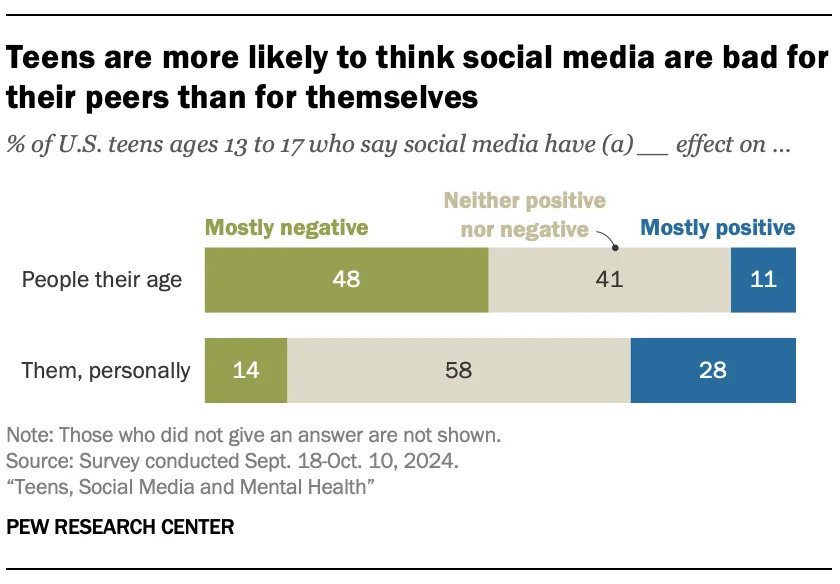
Age-verification proposals and similar laws would require platforms to identify users — by ID, facial scans, or parental verification — and could chill speech and discourage participation. Some countries and states have already moved on these fronts: Australia limited younger teens' access in 2025; France enacted an age-verification law in 2026 later struck down by its high court; at least 11 U.S. states have passed laws restricting minors' access or requiring parental consent (some blocked by federal courts).
Studies illustrate the chilling effect. A Carnegie Mellon experiment showed only 22–28% of participants continued in a study when asked to verify age with government ID. That reluctance translates into fewer voices and less spontaneous sharing.
Pew Research Center
Where People Went
Many users have migrated to semi-private spaces like Discord, WhatsApp, and Signal, or to smaller niche platforms such as Bluesky. TikTok remains a growth area, but its short-video, consumption-first model functions more like Netflix than a conversational town square; only about half of adult TikTok users have ever posted videos. Platforms across the industry now imitate TikTok's vertical-video format (Reels, Shorts), often at the expense of friend-centered posts.
What Was Lost — And What Might Be Salvaged
The Millennial Internet was imperfect: noisy, sometimes cruel, occasionally mob-driven. But it also represented an unprecedented period of decentralized participation. Political pressure, regulation, litigation, and monetization reshaped the web into a more broadcast-oriented, risk-averse ecosystem. Reclaiming the internet's social vitality will require careful policy choices that protect safety without needlessly undermining anonymity, creativity, and informal community.
Note: This article synthesizes reporting, opinion, and public data sources, preserving the original piece's perspective that political and legal pressures were central to social media's evolution.
Help us improve.