A 10-student team from Queen's University Belfast will compete in NASA's international Lunabotics final in Florida after winning the UK qualifier. Their 52-kg aluminium-frame rover is built to autonomously navigate a lunar-simulated arena, excavate regolith simulant and deposit material to build a wall. The students split into software, electronics and mechanical teams, used detailed simulations to validate controls, and credit hundreds of hours of work and university support for their success.
Queen's University Belfast Team Heads To NASA Lunabotics Final In Florida With Home-Built Moon Rover
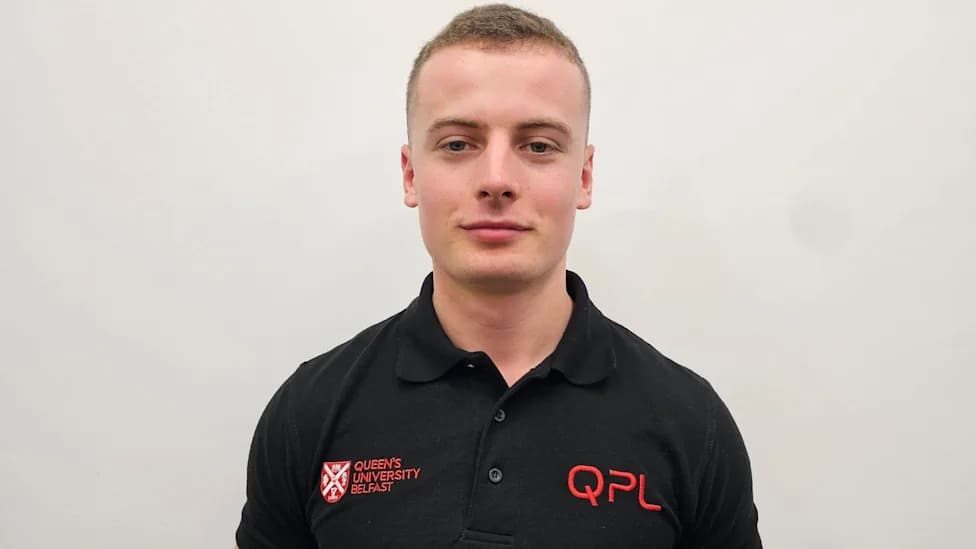
Queen's University students blast off to US for Nasa robotics competition
A team of 10 engineering students from Queen's University Belfast (QUB) will travel to Florida later this month to compete in NASA's international Lunabotics competition at the University of Central Florida. The students earned their place after winning the UK qualifier and will face teams from Australia, India and the United States.
The Rover And The Mission
The group has built a 52-kg aluminium-frame rover designed to autonomously navigate a lunar-simulated arena, excavate regolith simulant, negotiate obstacles and deposit collected material to build a retaining wall. The competition asks entrants to apply NASA's systems-engineering process to design, build and operate a robot for realistic lunar tasks.
Team Structure And Development
The 10-member team split into three specialist subgroups — software, electronics and mechanical — to cover design, control and durability. The software team created rover simulations to validate autonomous navigation and control algorithms before testing on the physical vehicle. The mechanical subgroup focused on structural strength, traction and survivability in demanding conditions.
“Being invited to compete is a great feeling,” said Jack Fitzpatrick, a PhD student in mechanical engineering. “It’s a real opportunity to demonstrate everything we’ve learned and to represent Northern Ireland, the UK and Europe.”
“Our role was to control the rover and give it autonomous capabilities,” said Jamie Smith, a third-year electrical and electronic engineering student who led the software team. “Simulations let us test safely before we ever ran the physical rover.”
Recognition And Next Steps
QUB’s Head of Robotics, Caolán Boyle, praised the students’ commitment: “Hundreds of hours have gone into making the rover mission-ready for the event.” The team says this competition is both a valuable learning experience and a platform to build on — they expect to refine their design and return stronger in future contests, regardless of the outcome in Florida.
The project highlights interdisciplinary teamwork, hands-on engineering education and the practical application of autonomous systems — all skills that are increasingly important to planetary exploration and future human missions to the Moon.
Help us improve.