Must Farm near Whittlesey has exposed exceptionally well-preserved Bronze Age houses and multiple earlier occupations preserved in alternating peat and silt layers. Directed by Mark Knight since 2004 and investigated alongside Forterra’s clay extraction, the 37-hectare project has yielded houses, log boats, fish traps, animal tracks and Beaker-period pottery. The stratified sequence offers a rare, ordered view of how prehistoric communities adapted to rising waters and a partly aquatic landscape.
Must Farm Quarry: A Layered Window Into 3,000 Years of British Prehistory
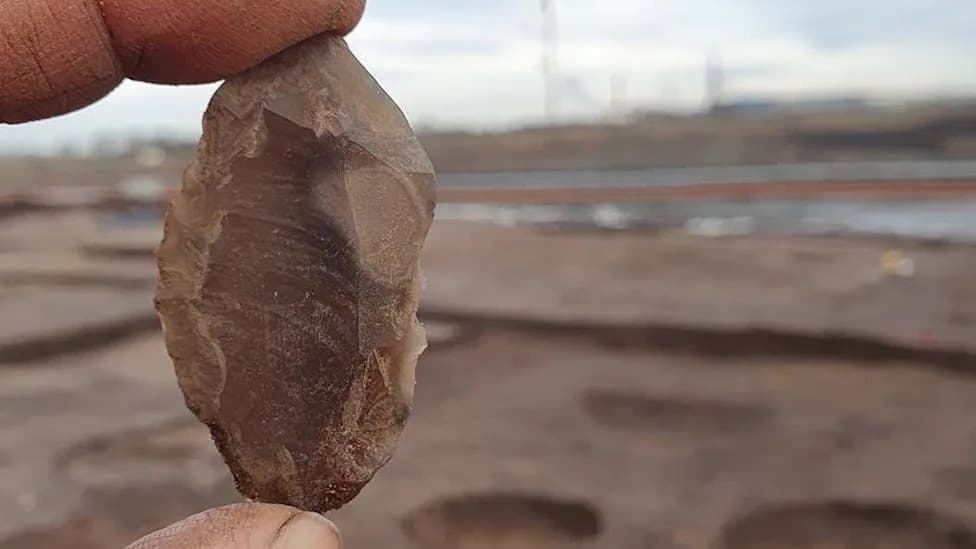
Lots of flint blades and scrapers, dating to the late Neolithic to early Bronze Age, were found alongside pottery and animal bones [Cambridge Archaeological Unit]
Must Farm, near Whittlesey in Cambridgeshire, is revealing an extraordinary sequence of prehistoric life beneath an unassuming industrial landscape. Directed by Mark Knight of the Cambridge Archaeological Unit since 2004, the long-running excavations have exposed exceptionally preserved remains — from Bronze Age houses to earlier Neolithic activity — sealed in peat and silt layers for millennia.
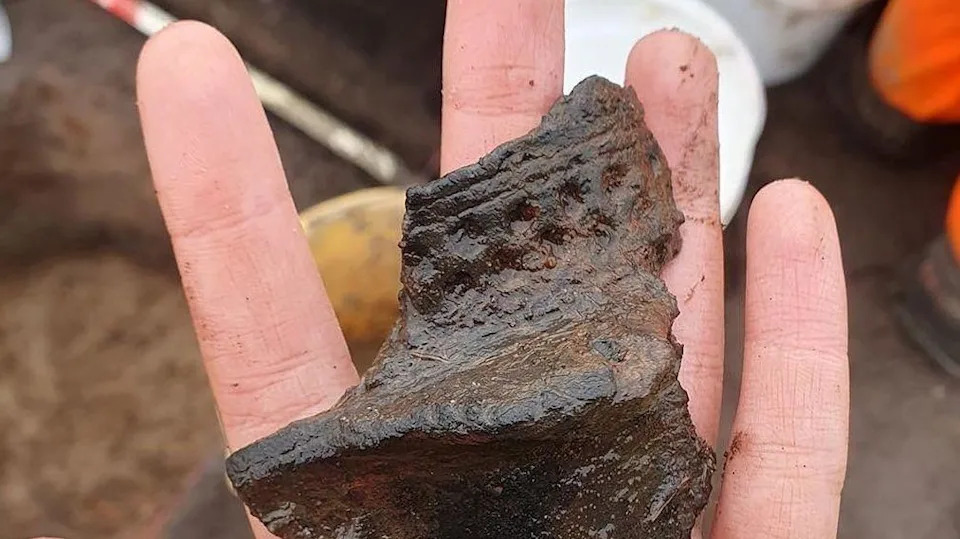
Recent finds include pieces of pottery made by the Beaker people, who migrated from central Europe to the British Isles about 4,400 years ago [Cambridge Archaeological Unit]
Remarkable Preservation
The site is most famous for a cluster of circular, timber-built houses on stilts dating to about 3,000 years ago — frequently described as the "best-preserved Bronze Age dwellings ever found" and nicknamed "Britain's Pompeii." Alongside the houses, archaeologists have recovered log boats, fish traps and weirs, river channels, trackways, fence-posts, and intact animal hoof prints.
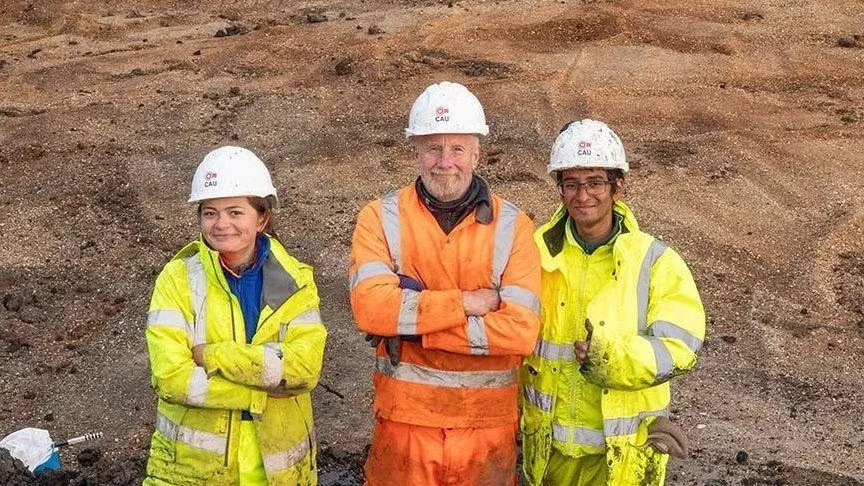
Mark Knight (middle) with colleagues during the latest excavations, which took place over the autumn and winter [Cambridge Archaeological Unit]
Long-Term Project and Landscape Context
The excavations form part of a long-term programme carried out with landowner Forterra, which extracts Oxford clay for brickmaking. So far teams have investigated roughly 37 hectares (about 91 acres) ahead of clay extraction, revealing multiple, stratified episodes of occupation preserved by alternating layers of peat and marine silt.
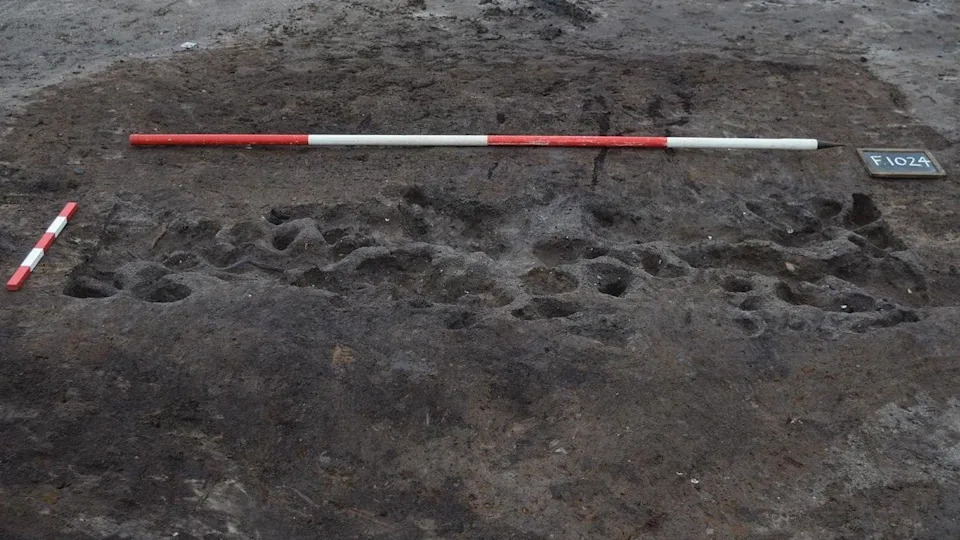
These preserved animal tracks were found last winter and were probably left behind by cattle, herded by early farmers to fresh pasture [Cambridge Archaeological Unit]
People, Animals and Environmental Change
Finds include pottery linked to the Beaker people (migrants from central Europe around 4,400 years ago), flints, and evidence for both domestic stock (cattle, pigs, sheep) and wild species (aurochs, boar, deer). This mix indicates a landscape where farming, herding and hunting coexisted. Environmental data show the fen was repeatedly inundated by rising waters from about 2,400 BC for roughly two centuries before freshwater and peat formation returned.
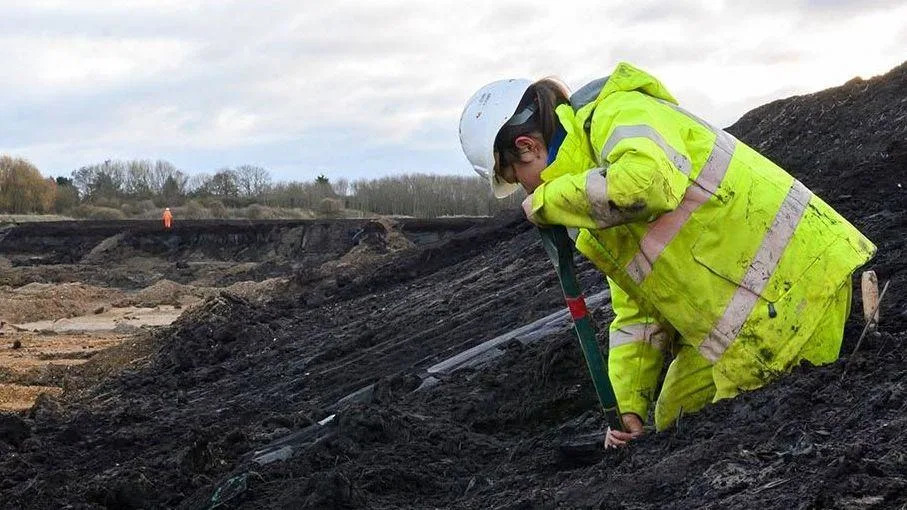
Archaeologists have been excavating at a quarry ahead of clay extraction for more than 20 years [Cambridge Archaeological Unit]
“All of British prehistory is being played out here,”
said Knight, reflecting on how the stacked peat and silt preserve distinct moments in time that are usually mixed or truncated at other British sites.
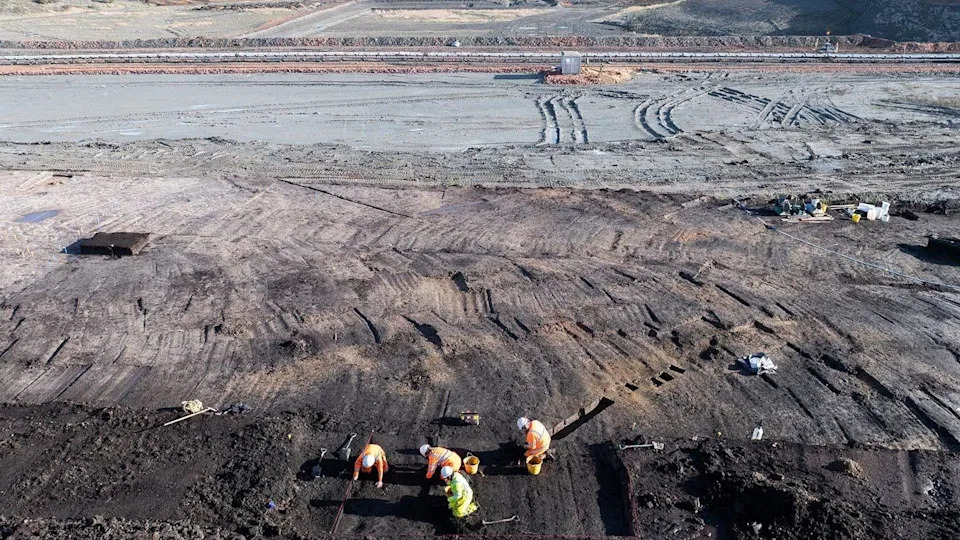
The scale of the excavation is enormous, which is actively helped by Forterra quarry staff, said Knight [Cambridge Archaeological Unit]
Significance for British Archaeology
Because of its extraordinary preservation, Must Farm has become a reference site for interpreting finds from other locations. Metalwork, domestic assemblages and environmental evidence from Must Farm are used to contextualize less well-preserved discoveries elsewhere in Britain.
Institutions Involved: Cambridge Archaeological Unit in partnership with Forterra and other project collaborators. Excavations and specialist analyses continue to broaden our understanding of prehistoric life and human responses to changing wetland environments.
Help us improve.