Alleged overboard escape: Jey Gonzalez-Diaz reportedly jumped from Royal Caribbean's Rhapsody of the Seas during a U.S. Customs inspection in Puerto Rico carrying cash and multiple IDs. Debt and charges: Royal Caribbean says he owed about $16,700 from casino play; Gonzalez-Diaz says he jumped to avoid currency taxation. Consequences: He is out on bail and could face up to five years in prison and fines up to $250,000. Safety risk: From 2009–2019, 212 people fell overboard and 170 died, underscoring how perilous such actions are.
Passenger Allegedly Jumps From Cruise Ship to Avoid Casino Debt — Now Faces Arrest, Fines and Risk
Ruth Peterkin/Getty Images
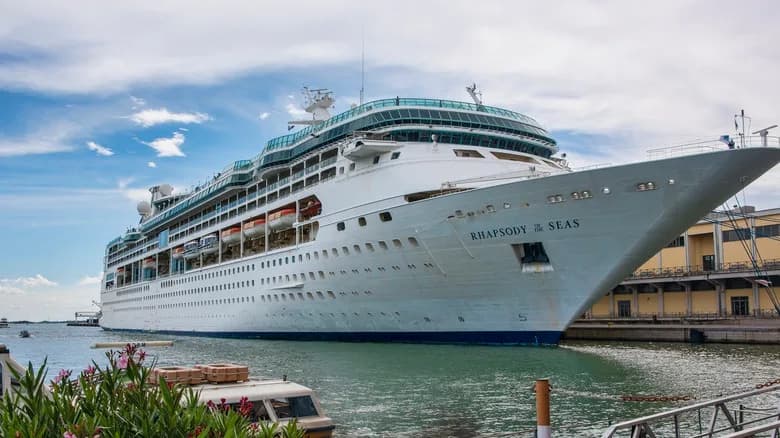
A passenger allegedly jumped from Royal Caribbean's Rhapsody of the Seas during a U.S. Customs and Border Protection inspection in Puerto Rico in what investigators say was an attempt to avoid paying a casino debt. Surveillance footage and subsequent reports identify the man as Jey Gonzalez-Diaz, who reportedly went into the water carrying cash, multiple phones and several forms of identification.
What happened: According to reports, Gonzalez-Diaz entered the water with about $14,600 in cash, two mobile phones and five IDs and was later retrieved by someone on a jet ski and taken ashore. Royal Caribbean told investigators the passenger — who had booked under the name Jeremy Diaz — owed roughly $16,700 in gambling losses. Gonzalez-Diaz has said he jumped to avoid currency taxation, but investigators are treating the episode as an attempt to evade payment.
Legal exposure: Gonzalez-Diaz was released on bail and could face federal charges that carry up to five years in prison and fines up to $250,000 if convicted. Those potential penalties would far exceed the reported casino tab.
Dennis MacDonald/Shutterstock
Why jumping from a cruise ship is so dangerous
Beyond the legal consequences, falling overboard is extremely hazardous. Data compiled by the Cruise Lines International Association covering 2009–2019 shows an average of 19 overboard incidents per year (212 total), of which 170 resulted in death and only 28.2% of victims were rescued. These statistics underscore how rarely people are recovered alive after going overboard.
"It's a huge ocean. Just being found at all would be incredible," cruise-industry researcher Ross Klein told The Washington Post.
Rescue operations are difficult: incidents can go unreported for hours, ships take time to reverse course, and weather, water temperature, waves and currents all reduce chances of survival. Recent tragedies, including a 2024 case in which a Norwegian cruise line suspended its search for a missing passenger, illustrate the grim odds.
Takeaway
Attempting to flee a debt by jumping from a moving vessel can add severe legal and safety consequences far worse than the original obligation. Authorities and safety experts strongly warn passengers that going overboard is both life-threatening and criminally risky.
Help us improve.