
The Metropolitan Police has urged organisers of a pro-Palestinian student march planned for the third anniversary of the 7 October attacks to move the event because of concerns about timing, route and the potential impact on Jewish students and staff. Deputy Assistant Commissioner James Harman said police have been unable to identify the organisers and do not believe the high legal threshold to request a ban has been met. About 300 students are expected to march from King’s College London to UCL; the Met says it will impose conditions and take a zero-tolerance approach to hate crime if the demonstration proceeds. The operation sits alongside larger protests and a by-election, stretching policing resources across the week.
Met Urges Students To Move 7 October March Over Safety And Sensitivity Concerns
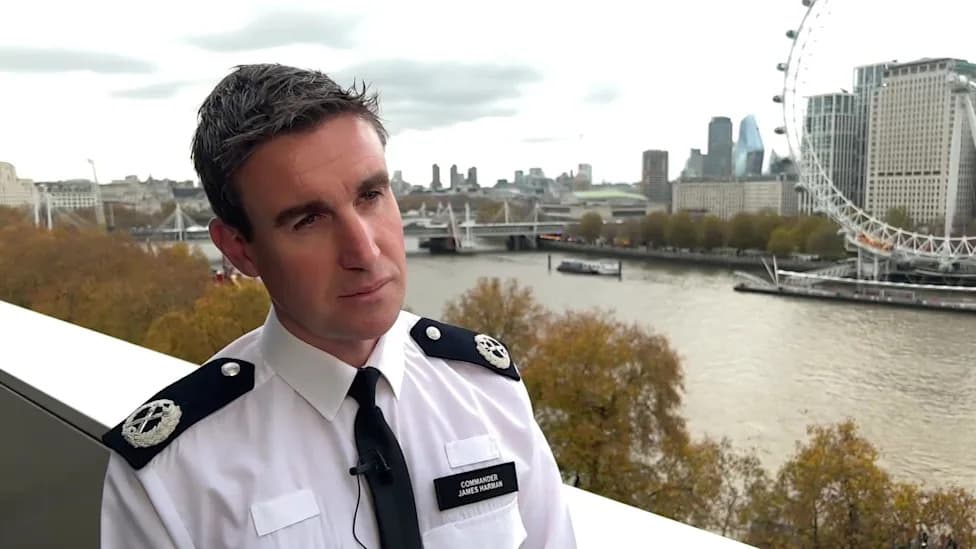
Deputy Assistant Commissioner James Harman says the march will cause distress if held on the anniversary of the attacks on Israel [BBC]
The Metropolitan Police has urged organisers of a pro-Palestinian student march scheduled for the third anniversary of the 7 October attacks on Israel to change the date, citing concerns about the timing, route and potential impact on Jewish students and staff.
Police Position and Legal Context
Deputy Assistant Commissioner James Harman said the force has so far been unable to identify the organisers using the name University of London Coalition, despite efforts through formal and informal channels. The march is expected to draw about 300 students and is due to assemble at King’s College London on the Strand before proceeding to University College London in Holborn.
“Serious concerns have been expressed about the impact of this march on students and staff, particularly those who are Jewish, the route, and the day it is being held,” Harman said. He asked potential participants to “reflect on the impact and distress it will cause on this very significant day, and exercise your right to protest on a different date.”
Harman explained that the legal threshold for asking the home secretary to ban a march is high: police must reasonably believe a protest would lead to serious public disorder and that imposing conditions would not prevent it. He said the force does not believe that threshold has been met in this case. The police and home secretary cannot ban static demonstrations, although conditions can be imposed on them.
Policing, Conditions and Safeguarding
The Met has written to four London universities asking them to engage with students and staff and to take "all reasonable steps" to ensure people on campus do not feel excluded, targeted or unsafe. If the march proceeds, the force says it will impose appropriate conditions on timing and route and will use its full powers to enforce them. Anyone breaching conditions faces arrest, and officers will apply a zero-tolerance approach to hate crime.
Harman said the force is prepared to police the demonstration if necessary: “If it goes ahead, we will have to police it.”
Other Events and Resource Pressures
The Met said the student march comes during a busy week of events: a large pro-Palestinian demonstration planned for Saturday 10 October (organisers expect about 10,000 attendees) — along with a counter-protest that will face strict conditions — and a commemorative march in Whitechapel on Sunday 4 October marking the 90th anniversary of the Battle of Cable Street, when about 5,000 people are expected. The Holborn and St Pancras by-election for Sir Keir Starmer’s seat on 8 October further adds to the policing challenge.
The force expects to deploy more than 600 officers across the capital for the week’s events. Harman also noted recent arrests of three men following reports of intimidating or obstructive conduct during canvassing and clashes between canvassers and protesters, stressing that police action is aimed at preventing crime and disorder rather than reflecting political preference.
Background
The march falls on the third anniversary of the 7 October 2023 attacks, in which about 1,200 people were killed and 251 taken hostage in Israel, according to available reports. That attack was followed by a large Israeli military offensive in Gaza. Palestinian health authorities say more than 70,000 Palestinians have been killed during the offensive. In June, a UN commission of inquiry concluded that Israeli actions in Gaza may amount to genocide, and a resolution by the International Association of Genocide Scholars in September reached a similar conclusion. Gaza’s Hamas-run Ministry of Health reports that more than 900 people have been killed in the territory this year despite a ceasefire.
The BBC has contacted the group using social media accounts that appear linked to the organisers for comment.
Help us improve.





















