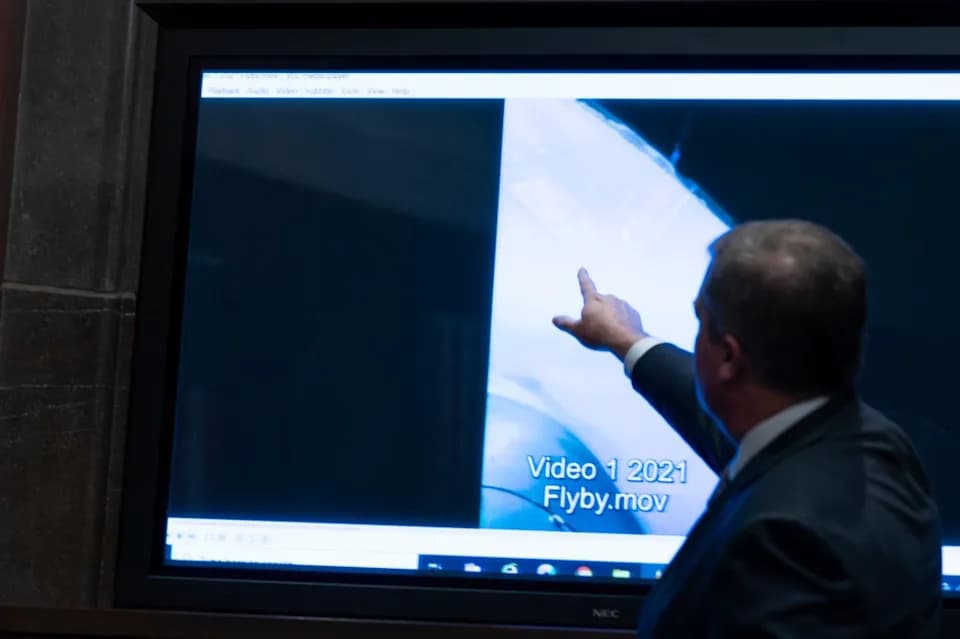
The UAP Science Advisory Council, chaired by Avi Loeb and formed in June 2026, is reviewing roughly 155,000 pages of declassified UAP records but serves only in an advisory capacity and has reached no definitive conclusions. The 2026 releases—spanning military, intelligence and sensor data—contain compelling episodes but no conclusive evidence of nonterrestrial origin according to The New York Times and AARO. Notable items include an October 2023 "orbs" sighting and 1949 Los Alamos "fireballs," yet experts say the records remain ambiguous. The council’s credibility will hinge on reproducible analysis, verifiable data and peer-reviewed publication to move the record beyond incomplete mystery.
Is the Truth Out There? What the Trump-Backed UAP Panel Actually Found
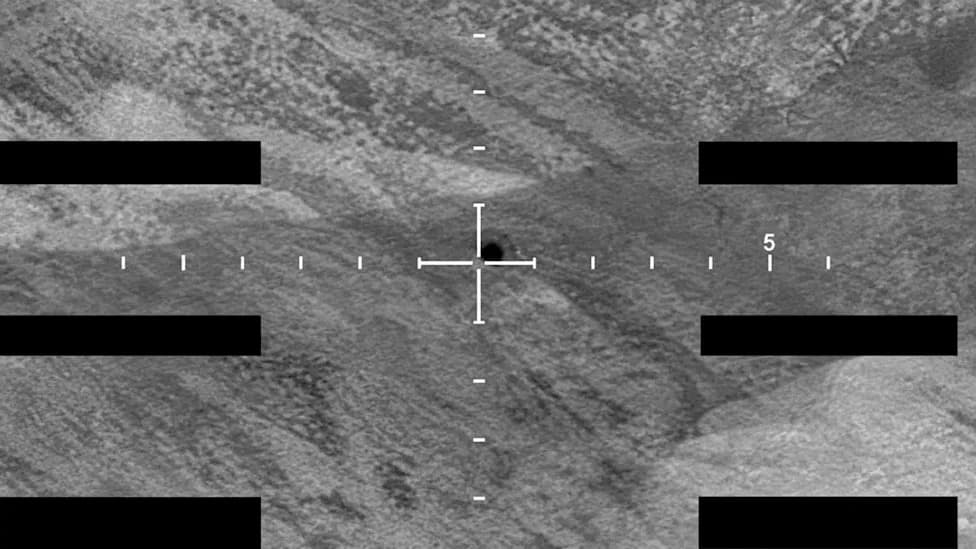
A still image of a reported unidentified anomalous phenomenon, or UAP, released by the U.S. Department of Defense in 2026. The image was included in a report the Federal Bureau of Investigation (FBI) submitted to the All-domain Anomaly Resolution Office (AARO). (Image credit: US Dept of Defense/FBI)
Six tranches of declassified records, a Harvard astrophysicist leading a White House advisory body, and still no smoking-gun proof that any unidentified aerial phenomenon (UAP) came from beyond Earth. After reviewing roughly 155,000 pages of UAP records spanning seven countries, The New York Times concluded the released material contains no definitive evidence of nonterrestrial origin.
What the Records Contain
The 2026 releases form a substantial, diverse archive: military and intelligence memoranda, video and audio clips, infrared sensor data, FBI and NASA records, and artist renderings tied to historical reports. Rather than delivering a single revelatory document, the trove reads more like an exhaustive government collection—detailed, sometimes baffling, but often ambiguous.
Notable Episodes
Two episodes in the newly released material have drawn the most attention. In October 2023, federal agents investigating drone activity near sensitive sites in the western United States reported fast-moving lights that converged into a bright orb, abruptly changed direction and produced additional colored lights. A Pentagon memorandum, cited by The New York Times, described agents observing “orbs launching other orbs.” The account is notable because it was recorded by government personnel, but the report itself does not establish that the objects were spacecraft or technologically anomalous.
The releases also include records from a 1949 Los Alamos conference convened to investigate unexplained green "fireballs" seen near nuclear-research facilities; physicist Edward Teller attended, and no definitive explanation emerged at the time.
"Even if one in a million happens to be of extraterrestrial technological origin, it would be the biggest discovery ever made by humanity in the context of science." — Avi Loeb, Chair, UAP Science Advisory Council
Who’s on the Council and What It Does
Formed in June 2026, the UAP Science Advisory Council is chaired by Harvard theoretical astrophysicist Avi Loeb and reports to the UAP Governance Board within the Office of the Director of National Intelligence (ODNI). The council coordinates with the Pentagon’s All-Domain Anomaly Resolution Office (AARO), the FBI and other intelligence agencies.
Membership was selected to reflect a range of perspectives: retired Rear Adm. Tim Gallaudet and Stanford Professor Garry Nolan serve alongside anthropologist Peter Skafish and the council’s designated skeptic, Michael Shermer. The panel’s role is advisory—improving evidence collection, reviewing unresolved cases and assessing potential national-security implications—not to issue definitive findings.
What the Evidence Actually Shows
So far, the empirical record remains ambiguous. Acting AARO director Tim Phillips said in a Defense Department transcript, "AARO has found no verifiable evidence that any UAP sighting has represented extraterrestrial activity." AARO’s historical review, which traces government investigations back to 1945, concluded that most sightings involved misidentified ordinary objects or natural phenomena, while a subset likely reflected experimental human technologies.
Independent analysts who reviewed the 2026 releases described them as interesting but not earth-shattering. As Penn State professor Greg Eghigian told The New York Times, "unidentified" often means the available data are insufficient for a definitive explanation—not that an extraterrestrial explanation is warranted.
Debate, Disclosure and What’s Next
Debate persists over whether the government has ever seriously investigated the most puzzling cases. Former AARO director Sean Kirkpatrick has criticized the council as unnecessary and said it risks promoting fringe theories. Supporters of Loeb argue that flawed sensor design and decades of excessive secrecy have left certain unusual incidents without adequate scrutiny.
Internal dynamics reflect that tension: Michael Shermer has reportedly wagered Avi Loeb $1,000 that evidence of extraterrestrials will not be found by 2030, while individual members such as Tim Gallaudet and Garry Nolan have publicly suggested a nonhuman presence might be possible—personal views rather than conclusions drawn from the released records.
The government continues to document persistent reports of unexplained observations by military and law-enforcement personnel. To move from "incomplete" to "explanatory," the council and participating agencies will need reproducible analyses, verifiable datasets and publications in peer-reviewed venues. Until those standards are met, the body of evidence is better described as ambiguous and incomplete than as proof of an extraterrestrial presence.
Help us improve.