Anna Sofía Benítez Silvente (Anna Bensi), 21, and her mother, Caridad Silvente, went on trial Oct. 1 in Cojímar after posting a video showing a plainclothes Interior Ministry officer delivering a State Security summons at their home. They face charges under Article 393 of Cuba’s Penal Code for alleged violations of personal and family privacy; the officer filed a formal complaint after initial proceedings were paused. Both women are under house arrest and barred from leaving the country. Rights groups, the U.S. Embassy and U.S. lawmakers have raised free-expression and due-process concerns.
Cuban Influencer Anna Bensi and Her Mother Stand Trial After Posting Video of Plainclothes Security Officer
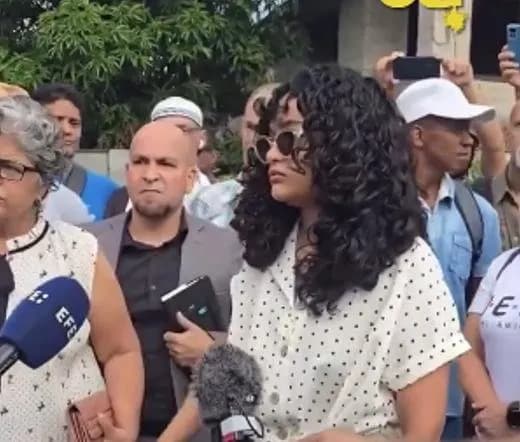
Cuban influencer faces trial over video of security officer
Oct. 1 (UPI) — Cuban social media creator Anna Sofía Benítez Silvente, 21, known online as Anna Bensi, and her mother, Caridad Silvente, appeared Thursday at the Municipal People’s Court of East Havana in Cojímar on charges stemming from a video they recorded and posted showing a plainclothes Interior Ministry officer delivering a State Security summons to their home.
The proceedings began at 10 a.m. EDT, according to reports from CubaNet and the Havana-based independent outlet 14ymedio. Authorities have charged the two women under Article 393 of Cuba’s Penal Code, accusing them of committing acts against personal and family privacy.
The case traces to a March 10 encounter when Interior Ministry officer Yoel Leodán Rabaza Ramos, dressed in civilian clothes, arrived at the family residence to hand a State Security summons to Caridad Silvente. Benítez and her mother recorded the interaction and later posted the footage online.
"It's not fair. We are not criminals," Benítez said before entering the courthouse. "We are simply expressing through a screen what we think. We don't agree with our country's political system. We don't agree with how our country's internal affairs are being handled, and that is not a crime."
Rabaza alleged that the publication of the video violated his privacy and exposed him and his family to possible reprisals, prompting him to file a formal complaint, Cubalex — a Cuba-focused legal-rights organization — said.
Initial proceedings were shelved in April after the defense argued prosecution could not proceed without a formal complaint from the alleged victim. Rabaza later filed such a complaint and the case was reopened in July. Benítez and her mother were formally charged on March 25 and placed under house arrest; both have also been barred from leaving Cuba.
According to Benítez’s account to CubaNet, Rabaza’s attorney is seeking two years of restricted liberty for each woman and a public video in which they retract their statements and apologize.
Cuba's National Revolutionary Police publicly defended the legal basis for the proceedings in a post on its "Héroes de Azul en Cuba" Facebook page, saying social media users are subject to laws protecting personal privacy and noting the prosecution followed a complaint from the person claiming harm.
Human-rights group Cubalex disputes that interpretation, arguing Article 393 should not apply when a citizen records a public official performing official duties. Cubalex characterized the prosecution as an improper use of privacy protections that can discourage public documentation of officials' actions.
A journalist inside Cuba who has followed Benítez's case told UPI that the influencer's run-ins with authorities began before the March incident as she increasingly used social media to discuss daily conditions in Cuba and to share personal experiences. The journalist said pressure later extended to members of Benítez’s family. UPI is withholding the reporter’s name at the source’s request because of concern about possible reprisals.
The journalist also said Benítez continued criticizing the government after the initial proceedings were shelved and met with U.S. diplomatic officials and independent civil-society members — activities the source said contributed to renewed pressure before the case returned to court. UPI could not independently verify whether Benítez’s public criticism or contacts with U.S. officials directly influenced the decision to reopen the matter.
Mike Hammer, chief of mission at the U.S. Embassy in Havana, visited Benítez and her mother at their home in April while meeting members of Cuban civil society. The case has also attracted attention in Washington: Rep. María Elvira Salazar (R-Fla.) publicly condemned the proceedings ahead of the trial.
Religious organizations in Cuba connected to the family have also spoken out. The Western Baptist Convention of Cuba, to which the Benítez family belongs through their church, issued a statement calling on authorities to respect due process and fundamental rights, including freedom of expression and freedom of religion.
This case highlights tensions over privacy laws, public documentation of state actors, and free-expression concerns in Cuba. Observers and rights groups say it raises questions about how privacy protections are applied when citizens record officials performing state duties.
Help us improve.