The Justice Department filed a judicial-misconduct complaint against nearly all federal judges in Minnesota after a New York Times article quoted judges criticizing DOJ compliance with immigration orders. Attorney General Todd Blanche said the remarks were "overtly political" and urged the judges to recuse from DHS-related cases. The complaint is pending before the federal appeals court, and legal experts say winning a disqualification is difficult. The episode has reignited debate over when judges may publicly criticize the government and follows recent Judicial Conference guidance urging measured public comments.
Justice Department Files Misconduct Complaint Against Minnesota Federal Judges Over Immigration Comments
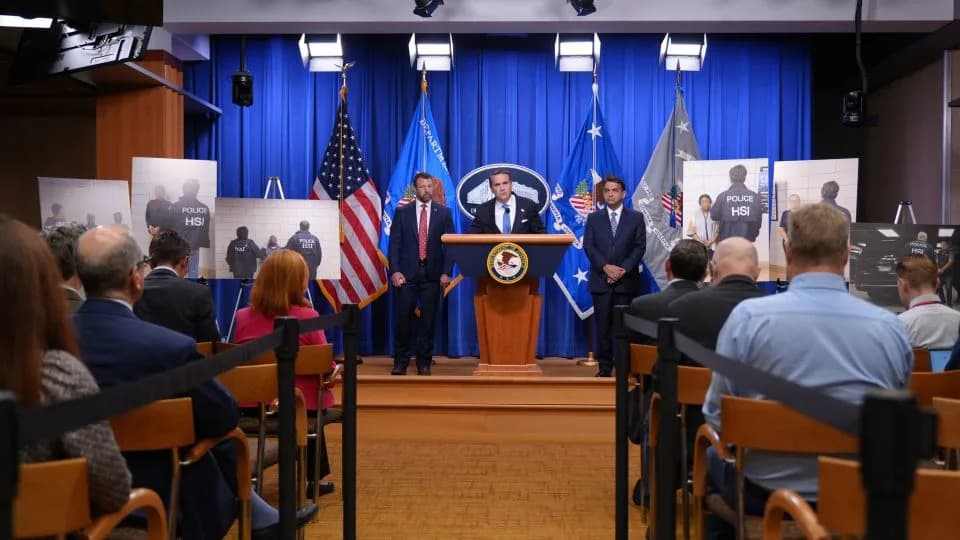
Attorney General Todd Blanche speaks during a news conference at the Department of Justice on September 30 in Washington, DC. - Jacquelyn Martin/AP
The Justice Department on Wednesday filed a judicial-misconduct complaint targeting nearly the entire federal bench in Minnesota, Attorney General Todd Blanche announced, escalating a high-profile clash between the Trump administration and the judiciary.
What Happened
The complaint asks that the judges be disqualified from handling immigration-related matters. The move was prompted by a New York Times article in which several federal judges described the Justice Department's failure to comply with court orders during a surge in immigration enforcement as a threat to the rule of law.
Officials' Response
Attorney General Blanche said the judges' public comments were "overtly political," violated judicial conduct rules and revealed "an obvious bias" against the Department of Homeland Security. While the ethics complaint is pending before the federal appeals court that oversees Minnesota's federal bench, Blanche has urged the district judges to recuse themselves from DHS-related cases.
"These judges talked to the media, or at least to the New York Times, about cases, some of which are ongoing, in a manner that the department views as a clear violation of their ethical duties," Blanche said.
Context And Reactions
The Times report quoted several judges who said DOJ staffing shortages hindered the department's ability to comply with court orders. Legal observers say past efforts to disqualify judges have typically failed because the legal standard for recusal is high.
The dispute taps into a broader debate about when judges may comment publicly on government actions. Republican leaders in Congress urged Chief Justice John Roberts to curb judges' interactions with the press, especially anonymous interviews. In response, the Judicial Conference's conduct committee issued nuanced guidance in February saying that, in some circumstances, judges may offer a "measured defense" of colleagues against illegitimate attacks while also urging careful attention to tone and context.
The Justice Department's complaint specifically named the six active judges who participated in the Times story; the outlet said it had spoken with seven judges in total. The matter now awaits review by the regional appeals court, and the broader legal community continues to debate how judges should balance judicial independence with impartiality.
Note: The situation is developing as the appeals court reviews the misconduct filing.
Help us improve.