The National Nutrition Agency said 480 kitchens for Indonesia’s free-meals programme will be activated in October, with 269 located across 16 eastern provinces including Papua. Launched in 2025 to feed 83 million schoolchildren and expectant mothers, the scheme has faced allegations of corruption, over 50,000 reported food-poisoning cases and closures of private kitchens. With this year’s budget cut to 229 trillion rupiah, authorities say they will prioritise remote, high-stunting areas while staff training and a gradual scale-up of meal production proceed through October.
Indonesia to Activate 480 Free-Meal Kitchens in October — Majority Deployed to Remote Eastern Provinces
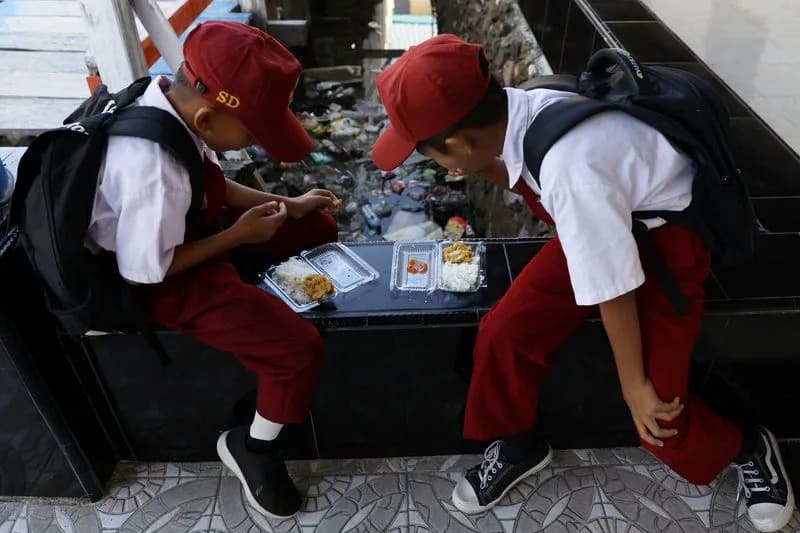
Students eat from plastic containers at a school in the fishing village of Torosiaje, Gorontalo province, Indonesia, July 27, 2026. REUTERS/Ajeng Dinar Ulfiana
Jakarta — Indonesia will activate 480 kitchens in October for its national free-meals programme, the National Nutrition Agency (NNA) said in a video post on Instagram. Most kitchens will be sited in remote and disadvantaged areas, with 269 clustered across 16 eastern provinces including Papua, Gorontalo and Maluku, and the remaining 211 in other parts of the country.
Scope and Objective: Launched in 2025 as a flagship pledge by President Prabowo Subianto, the programme aims to provide free meals to an estimated 83 million schoolchildren and expectant mothers to combat under-nutrition and reduce stunting.
Operational Plan: NNA head Sudaryono — who uses a single name — said the kitchens will be "activated" from Friday. Initial activities will focus on staff training and a gradual scale-up of meal production throughout October. Once facilities are operational, owners are expected to begin receiving government payments, though some payment and oversight details have not been fully disclosed.
Challenges and Controversies: The programme has faced serious implementation problems, including allegations of corruption, more than 50,000 reported cases of food poisoning, closures of privately run kitchens and concerns that its high cost could widen the national budget deficit. Reuters has reported that hundreds of private investors who built kitchens in remote areas were left exposed when government payments were delayed for budget-efficiency reasons, leaving some facilities idle for months.
Budget Priorities: This year’s budget for the initiative was cut to 229 trillion rupiah (about $12.8 billion) from 335 trillion rupiah. The proposed budget for next year is 240 trillion rupiah. The NNA said it will prioritise beneficiaries in remote, high-stunting areas as resources are concentrated on activation and delivery.
Outlook: Activating the 480 kitchens aims to address gaps in service delivery across hard-to-reach communities, but the programme’s long-term success will hinge on improved food safety, transparent payment processes and stronger oversight to restore public trust.
Reporting by Stanley Widianto; editing by John Mair. Exchange rate: $1 = 17,960 rupiah.
Help us improve.