The John D. and Catherine T. MacArthur Foundation named 20 recipients of its 2026 MacArthur Fellowships, popularly known as "genius grants." Each fellow receives $800,000 paid quarterly over five years with no restrictions on use. Selection emphasizes creativity, a strong record of accomplishments, and the fellowship's potential to enable future work. Fourteen of the 20 fellows hold U.S. academic or research appointments, representing disciplines from climate science and chemistry to music, literature, and visual arts.
MacArthur Foundation Awards 20 'Genius Grants' for 2026, Each Worth $800,000

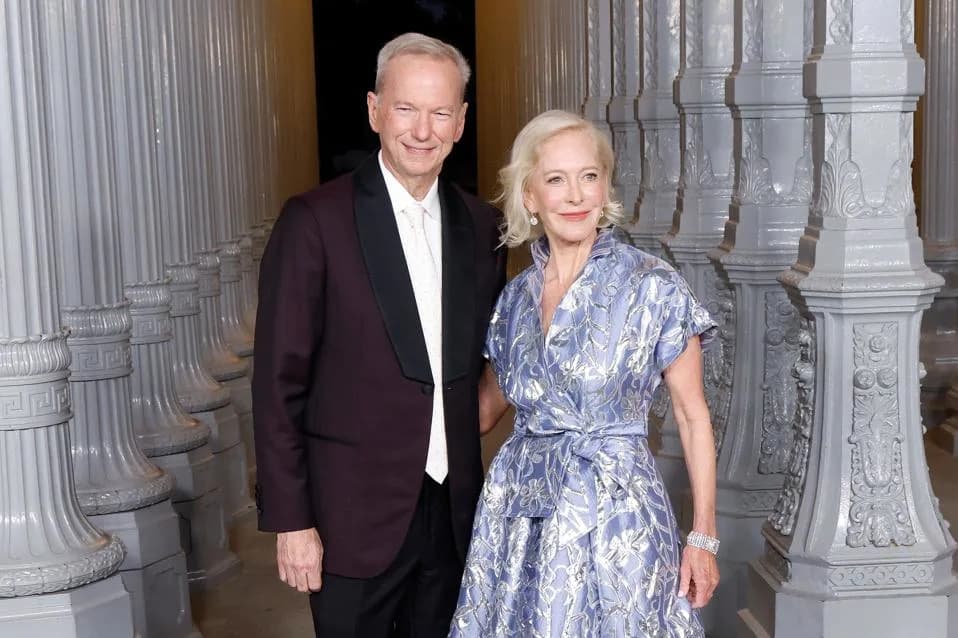
The MacArthur Foundation announces its 2026 class of MacArthur Fellows.getty
The John D. and Catherine T. MacArthur Foundation has announced its 2026 class of 20 MacArthur Fellows — recipients of the foundation's renowned "genius grants." Each fellowship carries an $800,000 stipend, paid in quarterly installments over five years, and may be used at the recipient's discretion.
The fellowships, first awarded in 1981, are given directly to individuals following a confidential nomination and rigorous vetting process that draws on expert evaluations from across disciplines. The foundation evaluates nominees using three core criteria:
- Exceptional Creativity
- Evidence of Significant Accomplishments Suggesting Future Advances
- Likelihood That the Fellowship Will Enable Further Creative Work
"For 45 years, MacArthur Fellows have defied boundaries, by questioning conventions, crossing disciplines, and driving collective progress," said Kristen Mack, Vice President, Communications, MacArthur Fellows and Partnerships. "The 2026 fellows continue that creative tradition — they explore the depths of our humanity; they reveal untold origins to modern challenges; they expand the edge of scientific inquiry and life-saving research. They show us new ways to understand the world."
Fourteen (70%) of this year's fellows hold appointments at U.S. colleges, universities, or research organizations. The 2026 cohort spans climate and polar science, chemistry, economics, history, anthropology, music, literature, visual arts, dance, and public health. Highlights include:
- Holly Jean Buck — Sociologist and energy policy researcher, University at Buffalo, cited for her work on equitable energy and climate transitions and rural innovation.
- Felipe De Brigard — Professor of Philosophy and Psychology & Neuroscience, Duke University, who studies memory construction and its links to moral judgment, imagination, and forgiveness.
- Ellora Derenoncourt — Assistant Professor of Economics, Princeton University, focusing on the roots of racial disparities in wealth and economic mobility.
- Elizabeth Ellis — Associate Professor of History, Princeton University, studying Indigenous politics and diplomacy in North America.
- Kaiyu Guan — Blue Waters Professor in Supercomputing and named professor, University of Illinois, researching agricultural-ecosystem optimization for sustainable yields.
- Marika Holland — Senior Scientist, National Center for Atmospheric Research, focused on polar climate variability, sea ice change, and predictability.
- Song Lin — Professor of Chemistry, Stanford University, using electrochemistry to build durable, complex organic molecules.
- Rodney McMillian — Professor of Sculpture, UCLA, whose artwork explores people and narratives outside the mythology of the American Dream.
- Maaza Mengiste — Professor of English, Wesleyan University, award-winning fiction writer whose novel The Shadow King was shortlisted for the 2020 Booker Prize.
- Ariel Ron — Glenn M. Linden Associate Professor of the U.S. Civil War, Southern Methodist University, studying 19th-century U.S. politics, economics, and agriculture's role in development.
- Kate Spradley — Professor of Anthropology, Texas State University, a forensic anthropologist who analyzes human remains to trace migrations.
- Vincenzo Vitelli — Professor in Physics and the James Franck Institute, University of Chicago, working on metamaterials, soft matter, active matter, and biological systems.
- Immanuel Wilkins — Adjunct Instructor of Jazz Studies, NYU, saxophonist and composer whose debut album Omega (2020) was named The New York Times' top jazz album of the year.
- Liangfang Zhang — Professor and Chair, Department of Chemical and Nano Engineering, UC San Diego, developing nanostructured biomaterials for drug delivery and vaccines.
The remaining fellows are prominent artists and writers whose work spans performance, visual art, poetry, and fiction: Trajal Harrell (dancer and choreographer); Layli Long Soldier (poet); Christine Sun Kim (artist and performer); Chip Thomas (public artist, photographer, and physician); Vincent Valdez (artist and printmaker); and Bryan Washington (fiction writer).
The MacArthur Fellowship is deliberately interdisciplinary and untethered to institutional constraints, giving recipients flexibility to deepen existing work, explore new directions, or change course entirely. The 2026 fellows reflect a broad range of approaches to pressing cultural, scientific, and social challenges.
Source: MacArthur Foundation announcement (adapted from coverage including Forbes).
Help us improve.