Key takeaway: A viral letter mocking Philippine lawmakers and attributed to Mark Zuckerberg originated on the satirical site Adobo Chronicles and is not an authentic statement from Zuckerberg or Meta. AFP found the original post dated Sept. 18 and captured a circulated screenshot on Sept. 25. The spread occurred as the DICT raised platform safety concerns and briefly (and later) retracted a social-media post about summoning Zuckerberg.
Viral 'Zuckerberg' Mocking Letter Targeting Philippine Lawmakers Traced to Satire, Not Meta
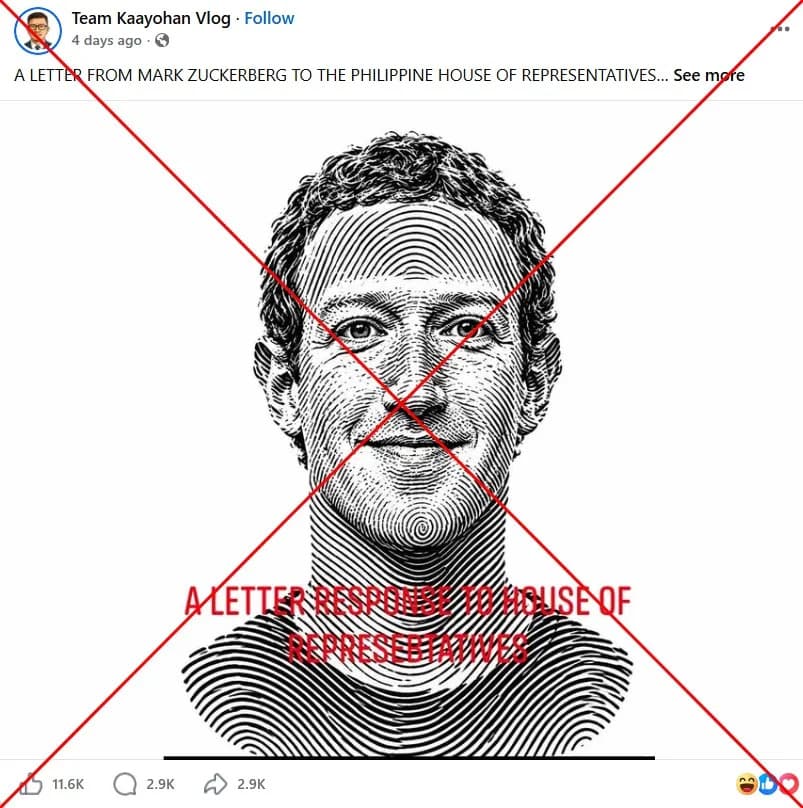
Screenshot of false Facebook post taken September 25, 2026, with red X added by AFP
As lawmakers in the Philippines debated whether to summon Meta CEO Mark Zuckerberg over harmful content on Facebook, a mocking letter purportedly from Zuckerberg circulated widely online. AFP traced the post back to a Philippine satirical site and found no evidence that Zuckerberg or Meta issued the message.
What Went Viral
A screenshot of the alleged letter was shared on Facebook on Sept. 20, 2026; AFP captured the post on Sept. 25 and flagged it as false. The post contained lines that ridiculed Philippine lawmakers and suggested that Facebook could not be held responsible for lies, scams and political conspiracies—language consistent with satire.
“I understand you would like me to explain why Facebook has become a place where misinformation, scams, political propaganda, conspiracy theories, cyberbullying and outrage can flourish.”
“You say our platform causes societal harm. I respectfully remind you that Facebook does not create every lie, scam or political conspiracy. Filipinos do that themselves.”
“And just for the record, I am an American citizen, sitting in the United States. Philippine laws do not magically acquire jurisdiction simply because a Filipino congressman sends me a summons.”
Origin And Verification
A keyword search located an identical post published on Sept. 18 by Adobo Chronicles, a Philippine website known for satirical and parody content. The tone, jokes and phrasing—describing a congressional summons as a “friend request with legal consequences” and quipping that Congress investigating Facebook on Facebook would boost engagement—are consistent with parody rather than a genuine corporate statement.
The satirical post included a digitally created image showing House Appropriations Committee chair Mikaela Suansing alongside Zuckerberg wearing a barong Tagalog; the image carried the logo of another page, Iskolar ng Bayan, which posted the visual a day earlier.
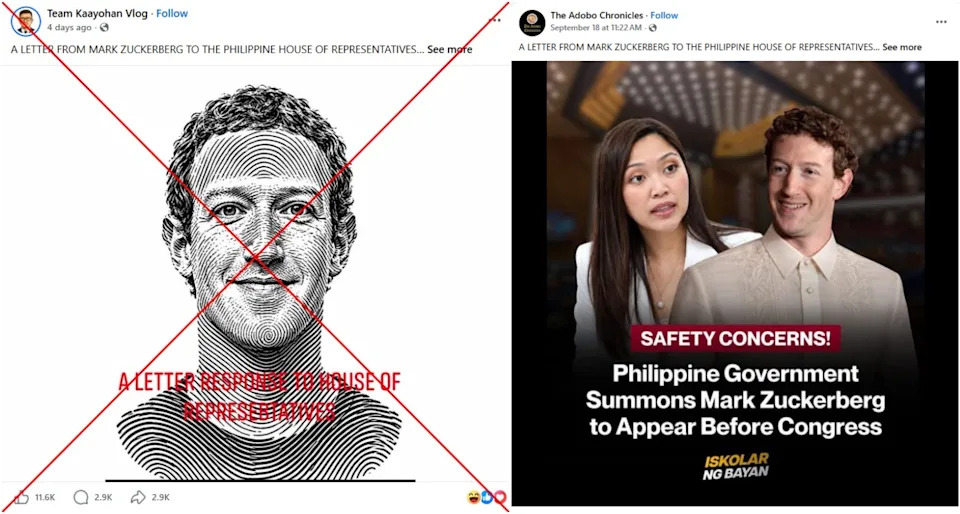
Image comparison of false Facebook post (L) and satirical news published by Adobo Chronicles
Context: DICT Statement And Public Reaction
The spread of the satirical post came amid scrutiny of Meta’s platforms in the Philippines. On Sept. 16, the Department of Information and Communications Technology (DICT) publicly backed concerns raised during congressional budget hearings that Meta had not done enough to protect users from online harms, including child sexual abuse material, online sexual exploitation, cyberbullying and illegal gambling.
Local reports later said DICT posted that Zuckerberg had been called to appear before a congressional hearing; that post was deleted and DICT retracted the statement on Sept. 21, clarifying that no House resolution had been issued directing or inviting Zuckerberg or Meta to appear.
Comments on the viral posts show many users believed the mock letter was authentic. Examples included praise for its blunt tone and metaphors criticizing politicians—signals that satire can be mistaken for real news when it aligns with public sentiment.
Checks By AFP And Meta
AFP reviewed Meta’s news page and Zuckerberg’s verified social accounts and found no record of the letter. AFP also reached out to Meta and Adobo Chronicles but did not receive responses. AFP works with Meta’s fact-checking programme across regions, including Asia.
What Readers Should Know
Key facts: the post originated on a satirical page, identical content appeared on Sept. 18, and there is no evidence that Zuckerberg or Meta issued the mock letter. Readers should be cautious about viral screenshots and check original sources—especially when a post uses exaggerated language, obvious jokes, or parody-style imagery.
Help us improve.